
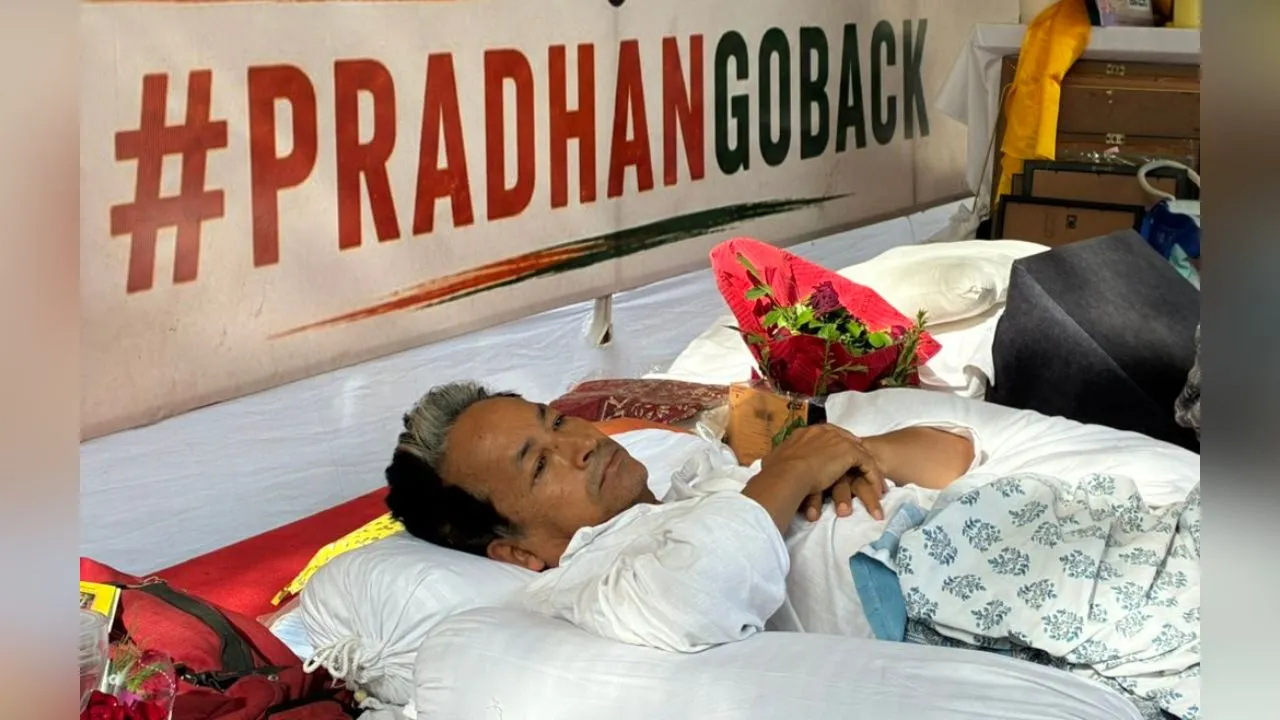
Activist Sonam Wangchuk has once again turned to a hunger strike, with his latest fast entering its 17th day. Nobody is quite sure what he is fasting for but the reported reasons mention drawing attention to issues concerning Ladakh, demands for greater constitutional safeguards, environmental protection, and political representation. The activist joined Cockroach Janta Party protest at Jantar Mantar in Delhi, and now has been fasting for 17 days. Notably, Cockroach Janta Party protest started against NEET exam paper leak, the exam has since been conducted but the protest is still going on.
However, despite the seriousness of the method Sonam Wangchuk has chosen, the response from the wider Indian public has been noticeably muted. There has been little support for the activist from wider Indian public. Maybe everyone is seeing it as a drama and an attempt to boost his own personal image? We don’t know, but maybe.
The lack of widespread attention does not necessarily indicate that people have stopped caring about Ladakh or its future. Rather, it reflects a broader phenomenon often described as “protest fatigue.” Most people remember the Jan Lokpal protest of Anna Hazare, which was used by Arvind Kejriwal to catapult himself into politics. Anna Hazare fasted, Arvind Kejriwal became a politician. Is something similar happening here with Sonam Wangchuk and Abhijeet Dipke? One can only wonder.
Meanwhile, the members of Cockroach Janta Party are devouring delicacies while Sonam Wangchuk is fasting at their protest, even the activist once couldn’t control himself and lashed out at this behaviour.
Sonam Wangchuk first rose to national prominence for his innovative work in education and sustainable development. Over the years, he has been advocating for Ladakh’s ecological preservation and constitutional safeguards following the region’s reorganization in 2019, when Ladakh was made a Union Territory.
However, repeated warnings, marches, and hunger strikes inevitably face the challenge of diminishing public impact. The first time a well-known activist announces a fast, it generates headlines and intense discussion. When similar methods are employed repeatedly, many observers begin to perceive them as predictable political theatre rather than extraordinary acts of sacrifice. Whether that perception is fair or not is open to debate, but it significantly influences public engagement.
There is also growing skepticism among sections of the public regarding the effectiveness of symbolic protests. Many people increasingly expect sustained political negotiations, legislative proposals, or institutional engagement rather than indefinite demonstrations. Hunger strikes, once among the most powerful forms of civil resistance in India, no longer command the same universal emotional response they did during earlier decades.
Ultimately, the muted response to Sonam Wangchuk’s 17-day hunger strike says as much about changing public attitudes as it does about the protest itself. In an era dominated by constant information and political messaging, maintaining public attention has become increasingly difficult. The challenge for activists today is not only identifying important causes but also finding new ways to engage an audience that has grown accustomed to continuous campaigns and increasingly resistant to repeated appeals. And most importantly, these hunger strike activists have to define what exactly the hunger strike is for, right now, hardly anyone knows what is the main demand of Sonam Wangchuk.

