
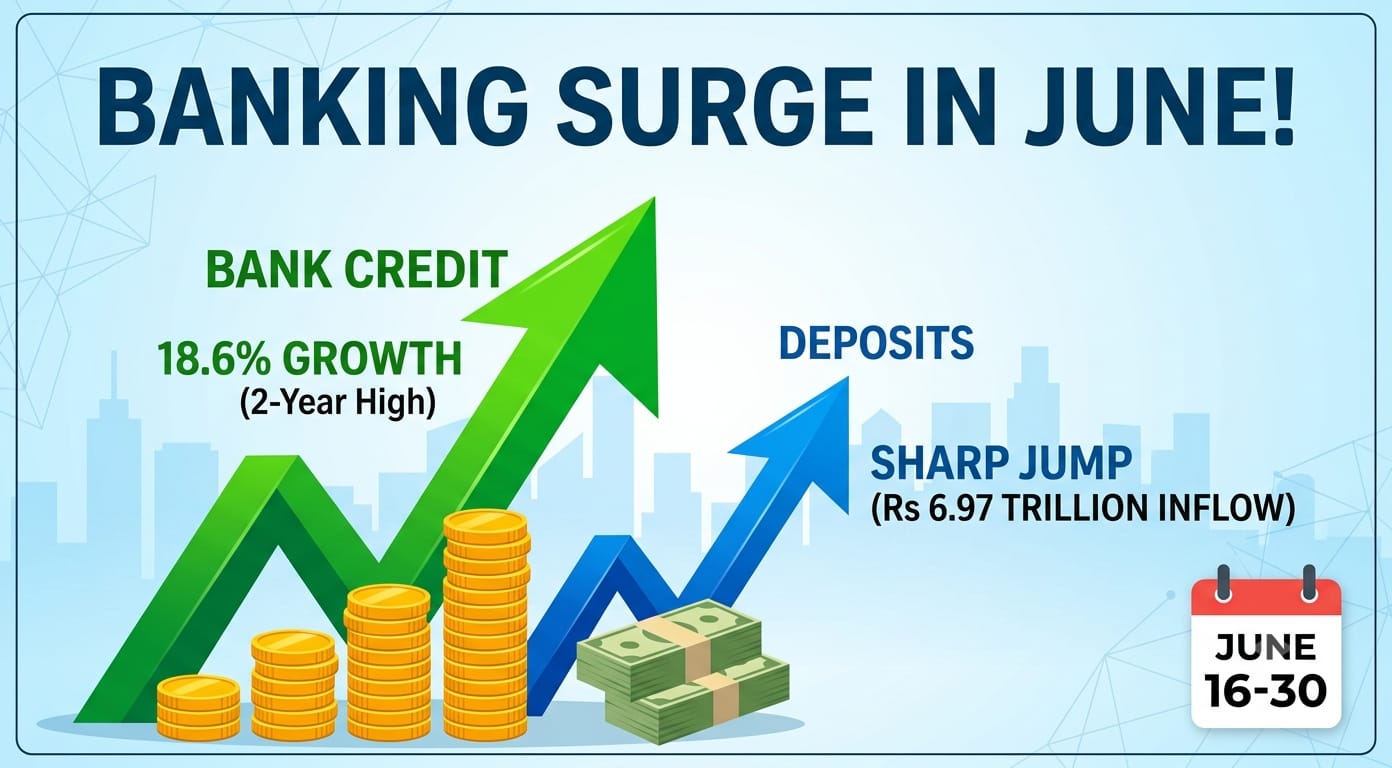
Bank lending picked up strongly in the fortnight ended June 27, with credit growth rising to 18.6% year-on-year, the highest in two years, while deposits also climbed by nearly Rs 7 trillion in the same period. The RBI data shows that banks disbursed loans worth Rs 3.8 trillion and gathered deposits worth Rs 6.97 trillion in the last fortnight of June.
This is important because it shows that the banking system is moving with more energy than before. When credit rises this fast, it usually means companies are borrowing more for business needs and people are taking loans for spending, expansion, or investment.
At the same time, the strong rise in deposits shows that money is still flowing into banks in a healthy way.
The gap between credit and deposits, however, is still wide. Business Standard reported that the credit-deposit growth gap remained above 500 basis points in the June-end period, which is a sign that lending is expanding faster than deposit mobilisation. A gap like this often makes banks pay closer attention to funding costs, especially when they need to keep lending without stretching balance sheets too much.
One major reason behind this strong credit growth is the push from lending to small and medium businesses under government-backed support schemes. The report notes that the Emergency Credit Line Guarantee Scheme, especially its 5.0 version, continued to support lending to MSMEs.
That matters because small businesses are often the first to feel pressure in the economy, and easier credit can help them keep running, hiring, and buying inventory.
The report also suggests that better demand from corporate borrowers played a role. In simple words, this means firms may be borrowing more because they see business opportunities, need working capital, or want to invest in growth. When credit demand is strong across sectors, it usually tells us that economic activity is not standing still.
A related sign comes from the market view on funding. The story said that elevated debt market yields have made bank borrowing more attractive for some borrowers, while eased tensions and softer yields may support corporate borrowing further. In plain language, this means businesses are still looking for funds, and banks remain an important channel for that money flow.
Earlier, we had discussed this same broad trend of banks lending more while deposits lag a bit behind. The same pattern is visible again in the June-end data, which reinforces the idea that credit demand is staying firm even when the funding environment is tighter than before. This is also why the market keeps watching the credit-deposit gap so closely, because it gives a quick picture of how balanced the banking system is.
Changed lending norms, even with credit appetite still strong, suggest that individuals and business entities are not under severe economic stress. It also shows that banks are comfortable enough to keep lending, and that most stakeholders appear assured about the economic future.
In simple terms, this is a sign of an active economy. People are borrowing, businesses are borrowing, and banks are still willing to lend. That usually suggests that confidence has not broken down in the system, even if funding conditions need careful watching.

