
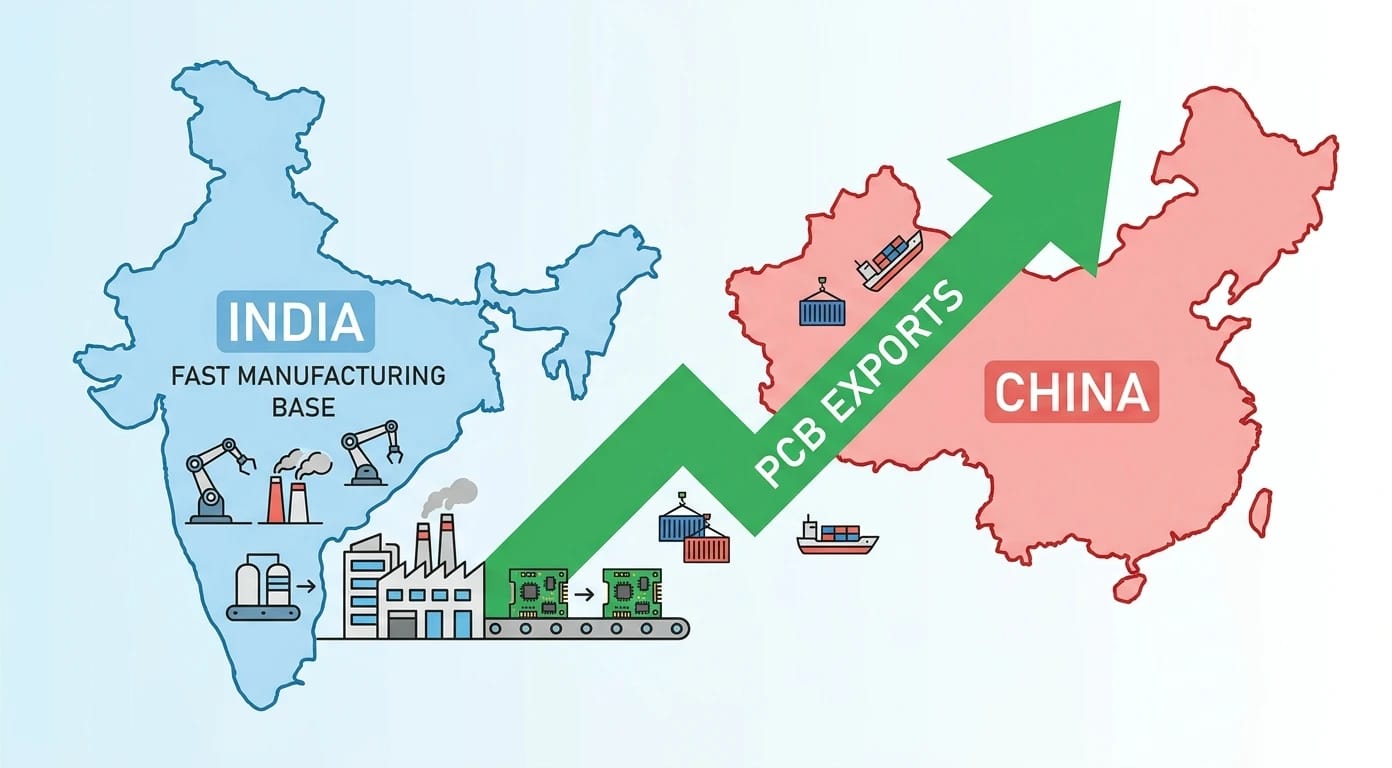
A small but powerful shift is taking place in the electronics trade. Printed circuit boards, or PCBs, which were once imported in large amounts, are now being sent from India to China in much larger volumes, and the change has become one of the strongest export stories of FY26.
In simple terms, a product category that used to play a quiet role in trade has suddenly become a major earner, and that makes the story worth noticing.
The rise is striking because the figures moved from about $36 million in FY25 to $1.5 billion in FY26, which means the increase was not just large but extraordinary.
That is why the term multifold fits well here, because the growth was far beyond a normal rise and showed a dramatic jump in just one year. For many readers, the scale can be easier to understand this way: a figure that was once small enough to be overlooked has now become large enough to shape export headlines.
This is especially interesting because China has long been seen as a major source of electronics parts, while India was often a buyer in the supply chain. The current trend shows a reversal in a limited but important segment, where simpler and lower-value electronic assemblies are now being sourced from Indian manufacturers. That reversal gives the report its real importance, because it suggests a changing role in the electronics world rather than just a one-time trade gain.
The growth also reflects a broader change in the electronics manufacturing base. Government support for component manufacturing, along with investment from suppliers linked to large global brands, helped expand production capacity and improve shipment volumes.
When factories grow stronger, exports usually become more steady, and this case shows how that pattern can turn a small product line into a major trade contributor.
Another useful point is that the PCB story is not happening in isolation. Total PCB exports from India also rose sharply in FY26 to around $1.9 billion, and nearly 80 percent of that amount went to China alone. This means the China market became the main destination for these shipments, making it central to the whole export surge.
The story also connects with the larger electronics chain. As global companies look for efficient production locations, different parts of the supply chain are being spread across countries in a more practical way.
Boards, sub-assemblies, and other simpler parts can move faster and at lower cost when suppliers are ready, and that is where Indian manufacturers appear to have gained ground. For everyday readers, this can be seen as a clear sign that factory skills, policy support, and market demand can work together to create export growth.
Even so, the story should be read with balance. A large share of one category going to one market can be a strength, but it can also create dependence if that market slows down or changes its rules.
For that reason, the next stage of growth will likely depend on whether producers can widen their customer base and move into more advanced work, not just continue shipping the same kind of board.
In simple language, the message is clear that a product that once sat quietly in the background has moved into the center of trade growth, and the jump from FY25 to FY26 shows how quickly an industry can change when demand, policy, and production line up. This is why the PCB export story stands out as a rare and meaningful success in the electronics space, and why it deserves attention beyond the trade numbers alone.

