
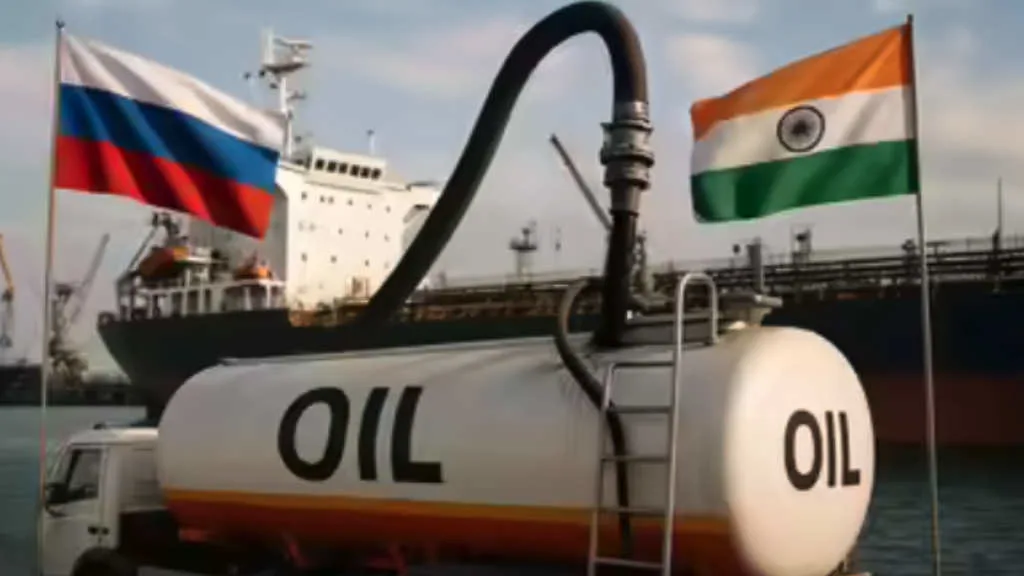
Crude imports from Russia to India hit 2.35 million barrels per day as West Asian oil flows tighten, forcing refiners to pivot toward discounted alternative sources.
Imagine running a large kitchen that needs to cook meals for millions of people every day. Suddenly, the main road where most of the vegetables arrive gets blocked by traffic. What would you do? You would quickly find another supplier, maybe someone offering good prices and reliable delivery.
This is exactly what happened in the global energy world in June 2026, when the major waterway called the Strait of Hormuz faced serious disruptions. Around half of the oil that many countries rely on passes through this narrow strait, and when flow tightened, refiners everywhere had to rethink their sourcing strategy.
The country at the center of this story, India, started shifting its crude import strategy sharply after March 2026. Before this, it mostly relied on oil from West Asia, especially from nations like Iraq, Saudi Arabia, the UAE, and Kuwait. But when the Strait of Hormuz disruptions began, those traditional flows became risky and expensive.
The solution came from a surprising place: Russia. Ship tracking data from the commodity analytics firm Kpler shows that Russian crude supplied 53.5% of the country’s total oil imports in June, averaging 2.6 million barrels per day during the first 19 days of the month . For the full month, experts expect Russian volumes to exceed 2.35 million barrels per day, which is a new record .
This number is not just a little higher than before. It surpasses the previous monthly record of 2.2 million barrels per day set in May 2023 . To put this in perspective, the combined oil imports from all the traditional Middle Eastern suppliers—Iraq, Saudi Arabia, the UAE, and Kuwait—stand at around 2 million barrels per day for June. So Russian oil alone is now bigger than all of them together .
This is a massive change. In just over two years since Western sanctions on Russia began in 2022, the share of Russian crude in the country’s import mix has risen from under 1% to over 40%, and now to more than 53% .
Why did this happen so quickly? The answer is simple: money and reliability. Russian crude has been offered at steady discounts, making it cheaper for refiners. Plus, with the Hormuz route risky, Russian barrels arrived without those freight dangers . The country is essentially grabbing all the Russian crude it can get its hands on because it makes commercial sense .
There was also another helpful factor: a US sanctions waiver that allowed Indian refiners to purchase Russian oil without fear of secondary sanctions . This reduced the legal risk and made the switch even smoother.
But the story does not end with Russia alone. The country also boosted imports from another distant supplier: the United States. Oil imports from the US jumped sharply from 280,000 barrels per day in May to 439,000 barrels per day in June . This pivot toward Russian and American crude reflects a proactive strategy to reduce dependence on the volatile Gulf region amid geopolitical uncertainties . Middle Eastern imports fell in the second quarter to the lowest level since at least 2013, according to Kpler data .
Think about how this affects everyday life. When oil supplies shift, prices change, and those changes eventually touch the cost of fuel, transportation, and even the goods we buy. The country’s oil import strategy shows how quickly global energy flows can reshape when a critical pathway like the Strait of Hormuz faces trouble.
Instead of waiting for the problem to resolve, refiners acted fast, securing discounted barrels from Russia and adding spot cargoes from South America as alternative options . This flexibility helped meet domestic demand while reducing risk.
What does this mean for the future? As long as Hormuz disruptions continue, the energy supply mix will likely stay shifted. The country is building resilience through strategic reserves and flexible refining strategies to handle potential disruptions . The lesson is clear: in a world of sudden geopolitical shifts, adaptability is key.
Just like our kitchen finding a new vegetable supplier, the global energy market is learning to move fast when the old roads get blocked. And in June 2026, that new supplier was Russia, offering record volumes at a price that made sense for everyone involved.
Do you think this shift toward Russian and American oil will stay permanent, or will the country return to Middle Eastern suppliers once the Hormuz situation improves?

