
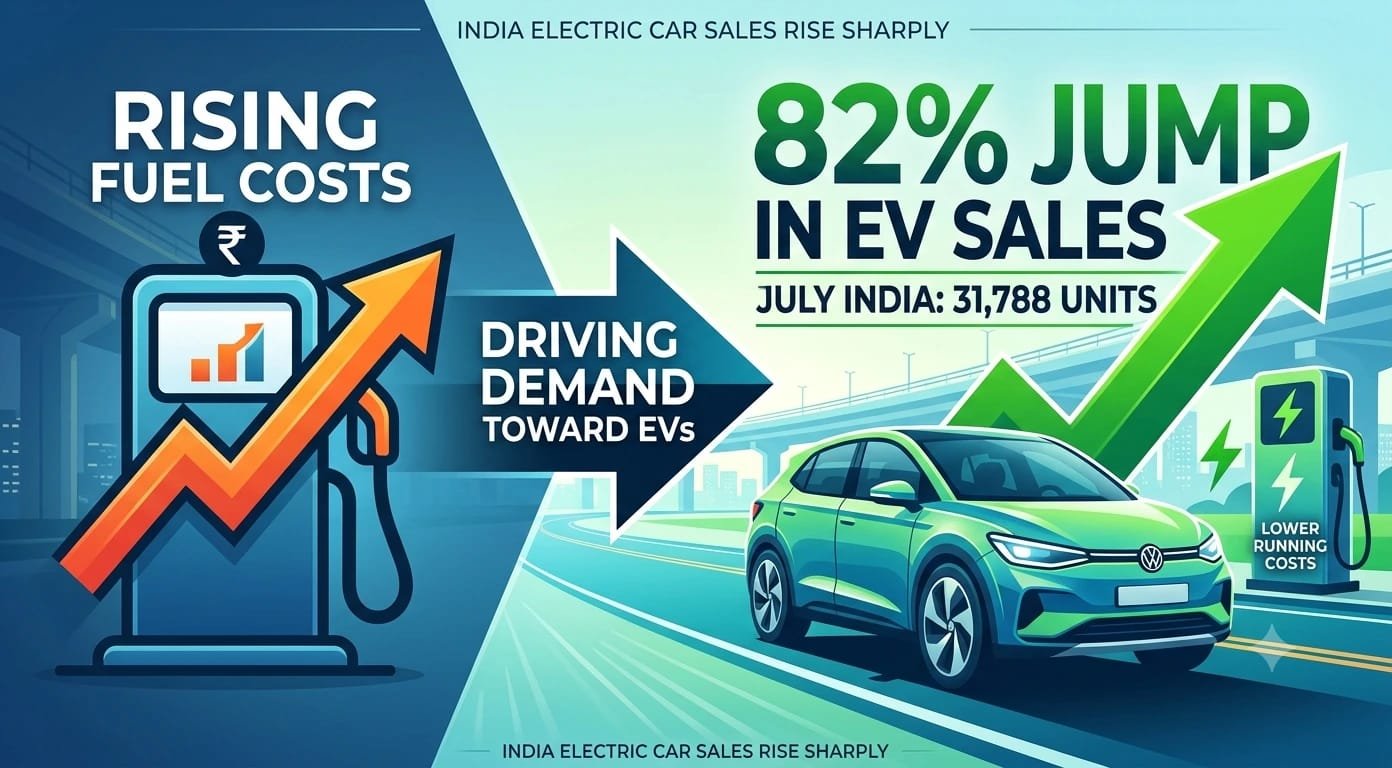
The electric car market experienced a strong surge in July, with the primary reason being simple: Higher fuel prices made electric cars appear more practical to many buyers.
According to road ministry registration data, 31,788 electric vehicles were sold in the month, representing an 82% increase from the 17,509 units sold a year earlier. This rise also pushed the electric share in new car sales to 7.8% in July, compared with 5% in July 2025 and 4% in calendar 2025.
This growth matters because it shows that electric cars are no longer being seen only as a niche choice. More buyers now appear willing to compare long-term savings instead of looking only at the purchase price.
As fuel costs rose sharply after the West Asia conflict, many households started paying closer attention to daily travel expenses, and the lower running cost of EVs became more attractive.
The market numbers also show that the bigger auto industry remained healthy in the same period. Total car sales, including petrol, diesel, EV and CNG models, grew 18% in July, while industry estimates put total factory dispatches at about 4.69 lakh passenger vehicles, which was up 34% from a year earlier. This suggests that the EV rise is happening alongside broader car demand, rather than replacing the overall market.
Company-level trends also reveal how fast the segment is changing. Tata Motors stayed the leader in India’s EV market with a 43% share in July, while Mahindra & Mahindra held 24%, JSW MG Motor India had 18%, and Maruti Suzuki stood at 5%. Tata Motors said demand is still rising faster than supply, and Mahindra said concerns around range, charging and reliability are slowly fading as real-world experience improves.
Another important point is that the shift is not being driven by one company or one model. Maruti Suzuki said bookings for its electric SUV e-Vitara had doubled since the war began, and monthly demand was running above its current production capacity.
Kia India also said EV demand improved after the fuel price shock, and it introduced a new electric model to capture the trend. These developments show that more brands are preparing for a market where EVs could become a normal option rather than a special purchase.
The bigger picture is encouraging for the auto sector and for clean transport, but the shift still depends on supply, charging support and price balance. Industry experts expect India to move toward around one million electric cars sold annually by the end of the decade, compared with 176,817 units in calendar 2025. That is a very large jump, and it will need stronger manufacturing, better charging access, and continued consumer confidence.
In simple terms, July’s sales data shows a clear change in mood. When fuel becomes costly, more people start looking at electric cars as a sensible money-saving choice, and the market is responding quickly. The latest numbers make one thing easy to notice: India’s EV story is no longer waiting for the future, because it is already moving faster in the present.

