
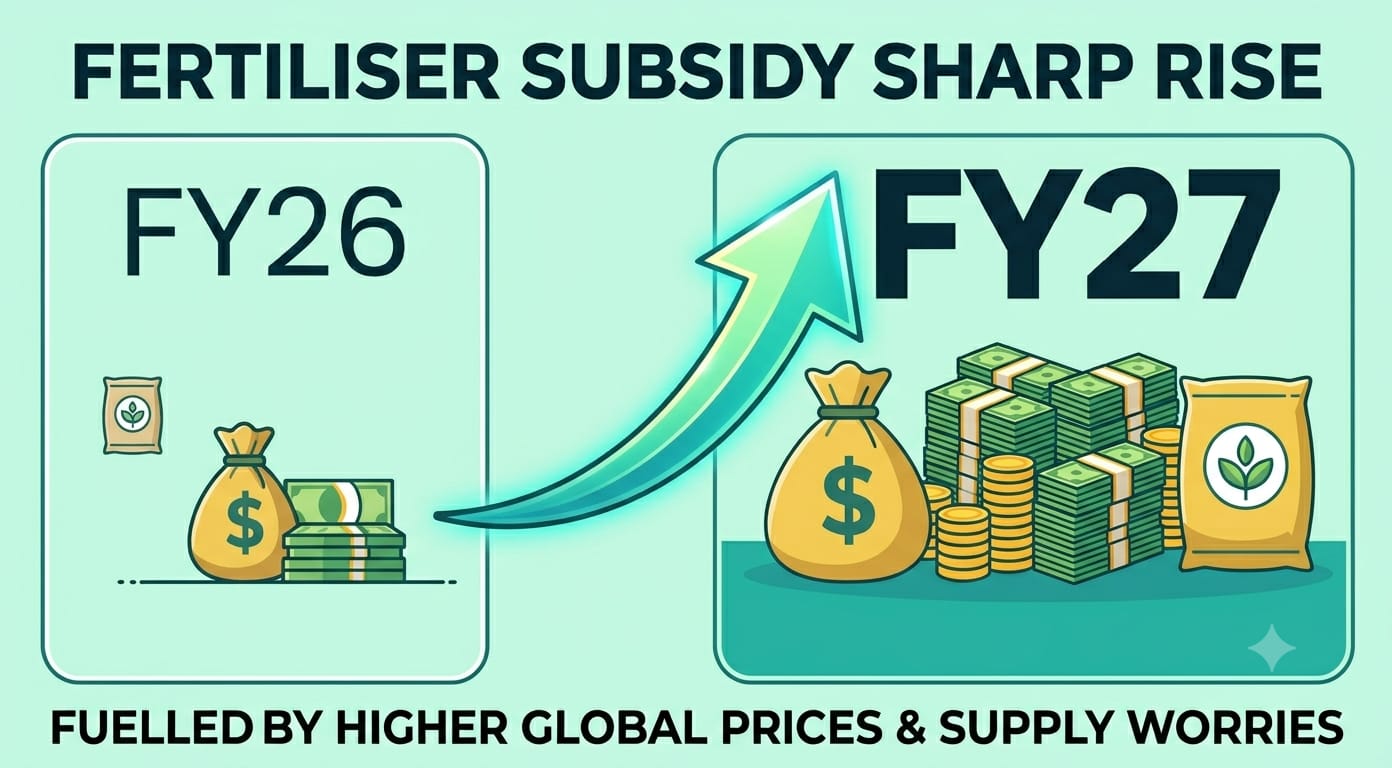
The fertilizer subsidy bill is likely to rise sharply in FY27, with the central government expected to spend about ₹3.4 trillion, nearly double the FY26 budget estimate of ₹1.7 trillion. This rise is mainly linked to higher global fertilizer prices, especially because of disruptions in West Asia, which have made the market more uncertain.
For many people, this issue may sound technical, but the effect is simple and direct. When fertiliser becomes costly, the government often steps in to keep it affordable for farmers, and that support shows up as a larger subsidy bill.
The concern has grown because fertilizer prices have not stayed stable. Officials are watching the market closely, since even a small increase in input costs can create a much bigger burden when purchases run into large volumes.
In simple terms, a small jump in price for each bag can become a very large cost for the country when the same support has to be given to millions of farmers. That is why the subsidy figure is being seen as a major budget pressure point for the coming year.
The government is also trying to manage supply risks. Fertilisers are important for crop production, and any shortage can quickly affect farming activity and food security.
Because of this, the policy focus is not only on price control but also on keeping supply steady. If global supplies remain tight, India may have to spend more to secure enough fertilizer for domestic needs. This makes the subsidy less of a routine expense and more of a protection measure against market shocks.
Another reason for the increase is the difference between market cost and the price farmers can reasonably afford. If fertiliser prices rise in world markets, the gap between actual cost and selling price widens.
That gap is usually covered through subsidy support. In effect, the government absorbs part of the cost so farming remains viable. This is important because higher input costs can reduce farm profits and may eventually affect crop output and rural incomes.
This also points to wider financial stress in the system. A subsidy of this size can put pressure on the fiscal balance, especially if other expenses are also rising. Even so, fertilizer support is often treated as a necessary spending item because it protects the farming sector.
Many households depend on agriculture either directly or indirectly, so changes in this area can have a broad impact. A rise in subsidy may look like a budget burden, but it can also be seen as a shield against larger problems in the food supply chain.
There is also a global angle to the issue. Fertiliser prices do not move in isolation; they are affected by international tensions, shipping costs, energy prices, and export restrictions. When any of these factors worsen, the effect reaches countries that import large amounts of fertilizer or raw materials. India is not outside this cycle. So, the expected jump in subsidy is not only a domestic policy choice but also a response to a difficult global market.
For any ordinary person, the matter can be seen in a very practical way. If a farmer needs fertilizer for the next crop and market prices rise suddenly, the state steps in to reduce the shock.
That support helps keep farming workable, food production steady, and prices for consumers less volatile. This is why the subsidy figure matters far beyond government accounts. It affects farm decisions, crop planning, and the stability of essential food supplies.

