
The World Bank chief economist, Indermit Gill, has raised a serious warning about the world economy, saying that global growth could slow sharply in 2026 and may even fall to 1.3% in a severe case if the Middle East conflict grows worse and continues to disturb energy markets, trade, and financial confidence.
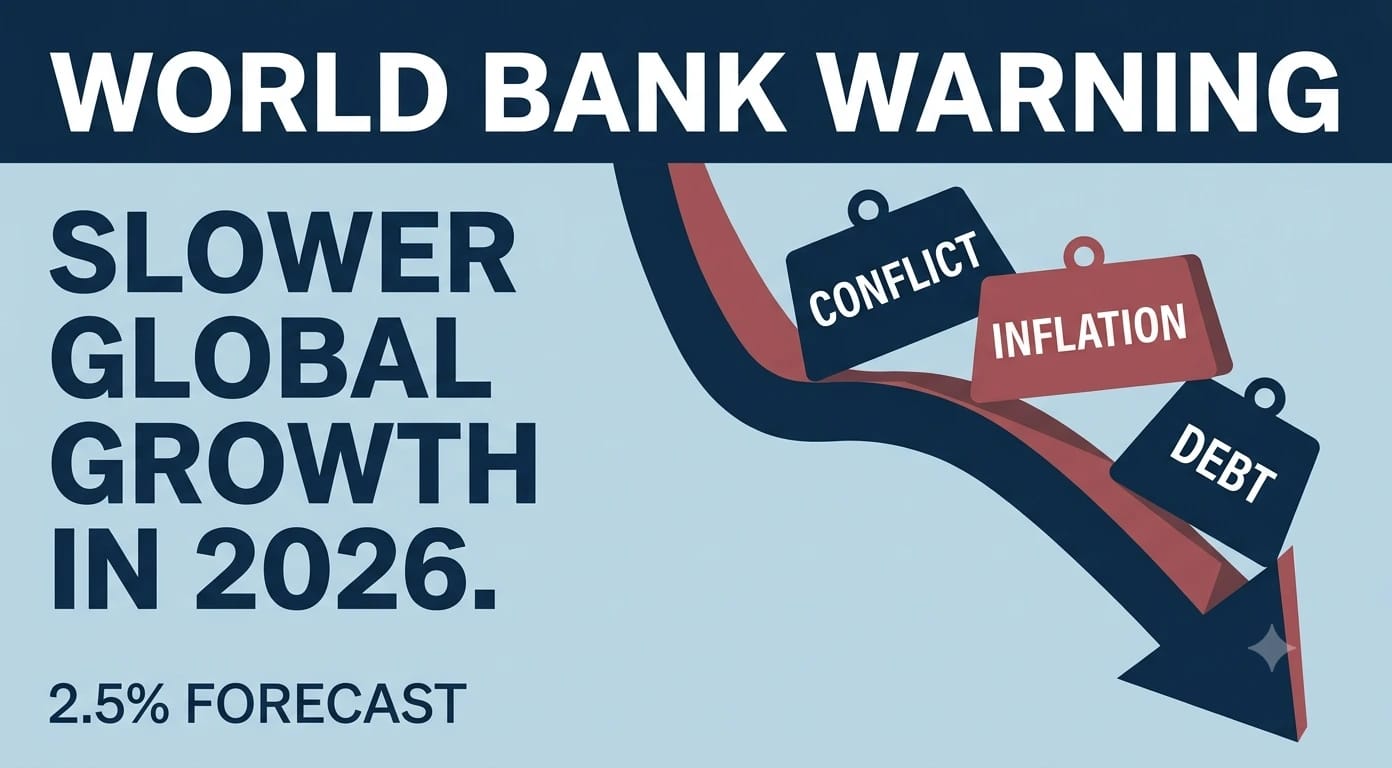
The bank’s main view is already cautious, with global growth expected to remain around 2.5% in 2026, which is not strong enough to create broad comfort for businesses, governments, or households. This kind of forecast matters because slower growth often shows up in daily life through higher prices, fewer jobs, tighter budgets, and weaker business activity.
The situation sounds worrying but clear. It shows that the world economy is not in free fall, yet it is moving under pressure from several directions at once . One big problem is inflation, which can rise again when energy becomes costly and shipping gets disrupted . Another problem is debt, because many governments already owe large amounts of money and find it difficult to spend on public needs while also paying interest . When debt is high and borrowing is expensive, growth becomes harder to support, and recovery can take longer than expected .
The picture becomes even more serious when trade is weak. Trade growth is soft and private investment is not strong enough to push the global economy forward with confidence . In simple terms, if businesses hesitate to invest and countries buy less from one another, the whole system loses energy. That is why this warning is not only about one region or one event. It is about a broader slowdown that can spread through markets, prices, and confidence across many parts of the world . A small shock in one area can quickly create wider pressure when the global economy is already fragile.
Debt distress is another major concern. The World Bank said 32 countries were already in or at high risk of debt distress in its June outlook, which means many governments are under heavy strain even before new shocks arrive . This is important because debt pressure can reduce money for schools, hospitals, roads, and other public services that people rely on every day . When governments struggle to manage their finances, ordinary life becomes harder in quiet but powerful ways. Prices can rise, services can weaken, and support for poor families can become limited.
The Middle East conflict is being watched so closely because it can affect the global economy in several ways. If the conflict continues or becomes worse, global growth could be pulled down sharply through higher oil prices, more expensive transport, and greater fear in financial markets .
These effects do not stay in one place. They travel quickly through trade routes, consumer costs, and investor behavior. That is why the warning from Indermit Gill is being treated as a global issue rather than a local one . The world economy today is closely connected, so stress in one region can affect people far away.
A useful way to understand this is to think of the global economy like a long chain. When one strong link weakens, the rest of the chain feels it too. If energy becomes expensive, inflation can rise. If inflation rises, borrowing can stay costly. If borrowing stays costly, businesses may delay expansion and governments may cut spending. In that way, one problem can slowly touch many areas of life, even for those who do not follow economic news closely . That is what makes the warning important and easy to relate to.
In conclusion, this warning is not saying the world economy has broken, but it is saying the road ahead may become rougher and less predictable . According to chief economist Indermit Gill, the main risks are conflict, inflation, debt pressure, weak trade, and low investment, all of which can drag growth down further .
The message is simple and serious: when the world faces many weak points at the same time, even small troubles can grow larger. This stands as a careful reminder that stability, cooperation, and responsible policy will matter greatly in 2026 .

