
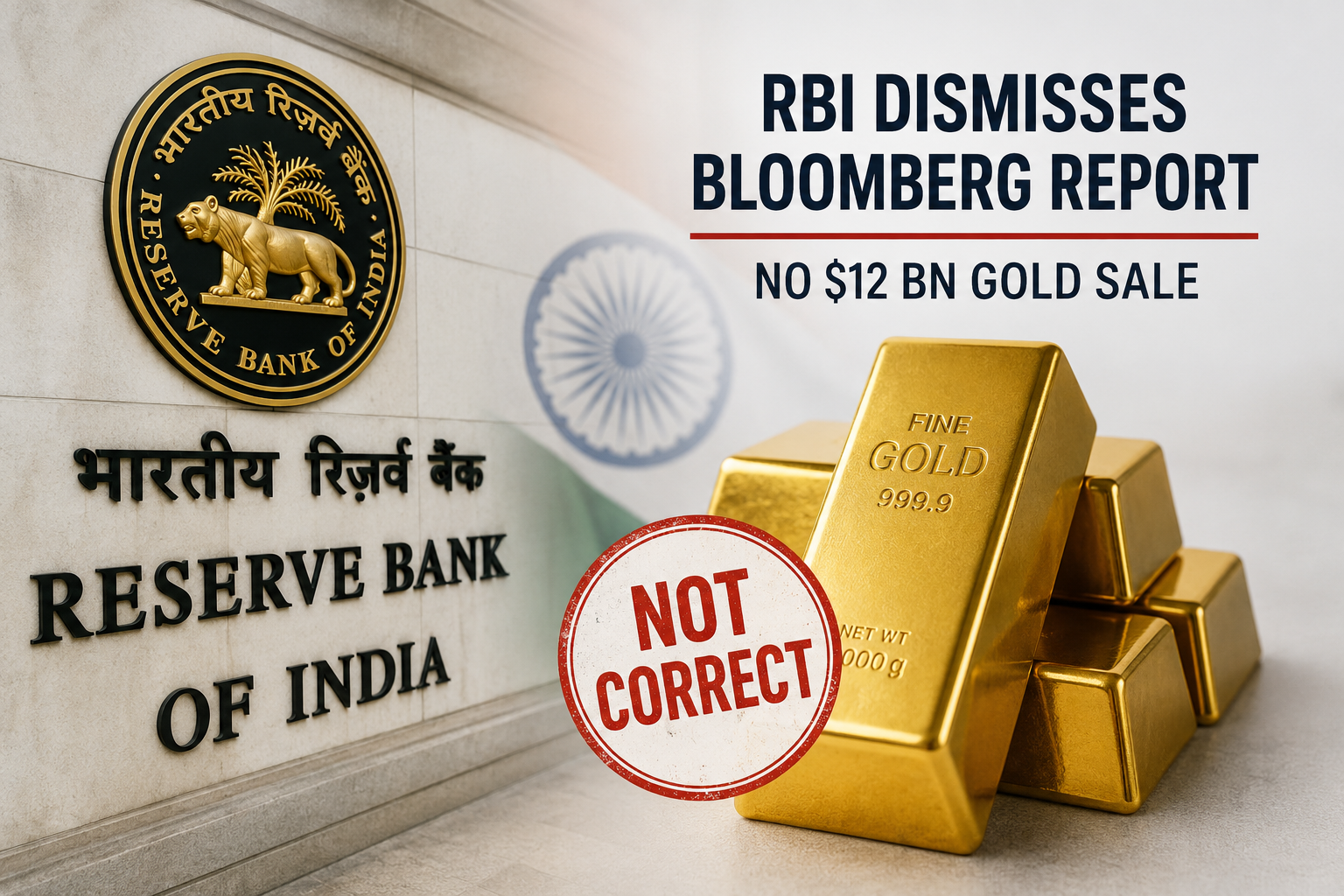
On Tuesday, June 2, Bloomberg published a report that India’s central bank, Reserve Bank of India, may have sold Gold worth $12 Billion in order to protect Indian foreign reserves. Alas, just like most of the coverage of India in western media, this also turned out to be a fake news.
The Reserve Bank of India (RBI firmly dismissed these reports suggesting that it sold nearly $12 billion worth of gold reserves to protect the country’s foreign exchange holdings amid growing economic pressures arising from the ongoing conflict in West Asia.
Bloomberg Economics analysis claimed that the RBI may have sold this gold during the two weeks ending May 22, while simultaneously increasing its foreign currency assets by about $7.5 billion. Expectedly, Bloomberg didn’t offer any concrete proof for these claims, it was all sources said and all that.
According to the report, the move appeared to be aimed at safeguarding India’s foreign exchange reserves and supporting the rupee, which has been under pressure due to rising crude oil prices, capital outflows, and disruptions caused by the Iran-related conflict in the region. However, the RBI has categorically rejected the claim.
In an official statement issued on June 3, the central bank stated that reports suggesting it had sold gold reserves were “not correct.” The RBI clarified that its physical gold holdings remain unchanged at 880.52 tonnes, directly contradicting speculation that a significant portion of India’s bullion reserves had been liquidated.
The central bank’s clarification came after the report gained widespread attention across financial markets and social media, where concerns were raised about whether India was being forced to draw down its gold reserves to defend the rupee and maintain foreign exchange stability.
Government sources also moved quickly to rebut the allegations. Officials dismissed suggestions that the RBI had undertaken an emergency sale of gold worth $12 billion to curb the rupee’s decline, emphasizing that no such extraordinary intervention had taken place.
The Bloomberg Economics analysis was based on publicly available reserve data and attempted to infer gold sales from changes in the composition of India’s foreign exchange reserves. The report argued that a decline in the value of gold holdings despite higher import duties and rising gold prices could indicate that the RBI had sold part of its reserves. However, it did not cite any official confirmation from the central bank and repeatedly described the transaction as something that “may have” occurred.
The episode highlights the sensitivity surrounding India’s reserve management strategy at a time when global markets are grappling with geopolitical uncertainty. Rising oil prices, volatility in currency markets, and concerns over disruptions to global trade routes have prompted central banks worldwide to closely monitor their reserve portfolios. India, one of the world’s largest oil importers, faces particular challenges whenever geopolitical tensions threaten energy supplies and increase pressure on the current account.
For now, the RBI’s position is unequivocal. India’s gold stock remains intact at 880.52 tonnes, and the central bank has rejected claims that it sold billions of dollars worth of bullion to shore up foreign exchange reserves. The statement is expected to reassure investors and markets that India’s reserve management remains stable despite the economic uncertainties generated by the conflict in West Asia.

