
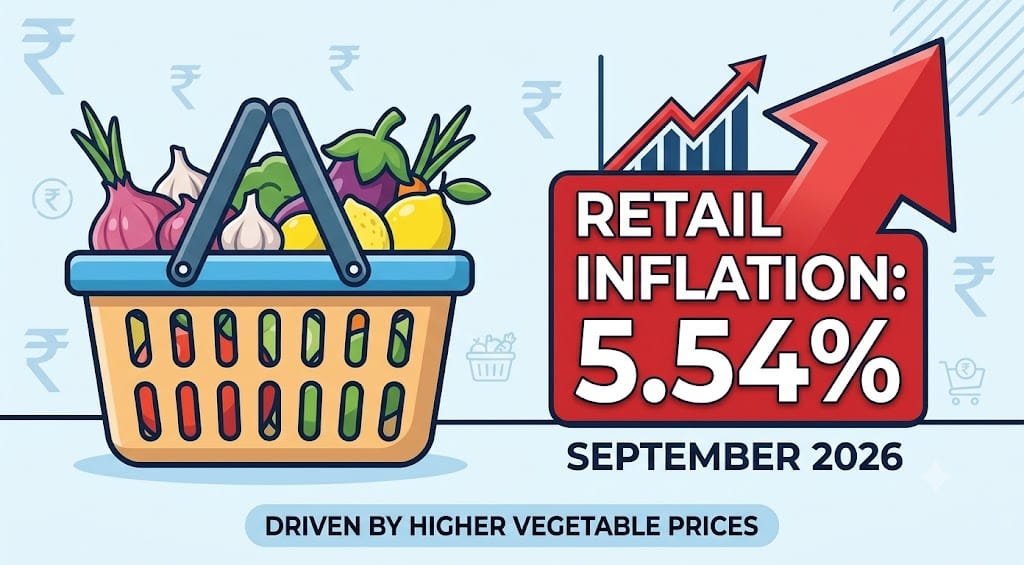
A familiar grocery basket became more expensive in September as rising food prices pushed India’s retail inflation to 5.54%. The increase shows how quickly changes in everyday essentials can affect household budgets.
According to the Business Standard report dated October 13, 2026, economists expect inflation to rise further in the October–December quarter. Some forecasts place it close to 6%, increasing expectations that the Reserve Bank of India may raise its policy interest rate again.
Retail inflation measures changes in the prices paid by consumers for goods and services. When it rises, the same amount of money buys less than before. For families managing fixed monthly incomes, this can mean spending more on groceries while reducing spending elsewhere.
September’s figures show that food was a major source of pressure, making the increase particularly noticeable in daily shopping rather than only in occasional purchases.
Food inflation, measured through the Consumer Food Price Index, climbed to 7.74% in September from 5.97% in August. This was its highest level since December 2024, when it stood at 8.39%, according to the report.
Vegetables were among the biggest contributors. There was some relief in other vegetables. However, these improvements were not enough to offset stronger increases elsewhere. This explains why a household might notice a smaller increase in the cost of one vegetable while still paying more for its total grocery basket.
Rajeev Sharma, head of research at Brickwork Ratings, linked the rise to vegetable-supply disruptions and an uneven monsoon withdrawal. Weather-related interruptions can affect the availability of produce and put pressure on prices.
Economists also expressed concern about inadequate replenishment of reservoirs. That concern matters because water availability influences the outlook for the rabi sowing season, adding uncertainty beyond the immediate rise in vegetable costs.
The wider inflation figures showed differences across spending categories. Food and beverages recorded inflation of 7.36%, while restaurant and accommodation costs rose 9.36%. Personal care, social protection, miscellaneous goods and services registered 13.75%.
Transport stood at 5.01%, and pan, tobacco and intoxicants at 4.80%. These figures show that pressure extended beyond vegetables, although the size of the increase varied considerably.
Other categories recorded more moderate increases. Education services rose 3.94%, clothing and footwear 3.93%, and household furnishings and maintenance 3.11%. Housing, water, electricity, gas and other fuels recorded 2.74%.
Information and communication stood at 2.44%, recreation, sport and culture at 2.16%, and health at 1.40%. Together, these numbers explain why different households may experience the overall rise differently, depending on where their money goes.
The report said RBI expects inflation to rise to 6% in the October–December quarter and average 5.2% in FY27. Aditi Nayar, chief economist at Icra, described the monsoon outcome as fairly weak and highlighted uncertainty around rabi sowing.
Madan Sabnavis, chief economist at Bank of Baroda, expected inflation to peak at 6%, potentially strengthening the case for another rate hike in December. For households, the immediate concern remains straightforward: essential purchases are taking a larger share of monthly income, while the timing of meaningful relief remains uncertain.

