
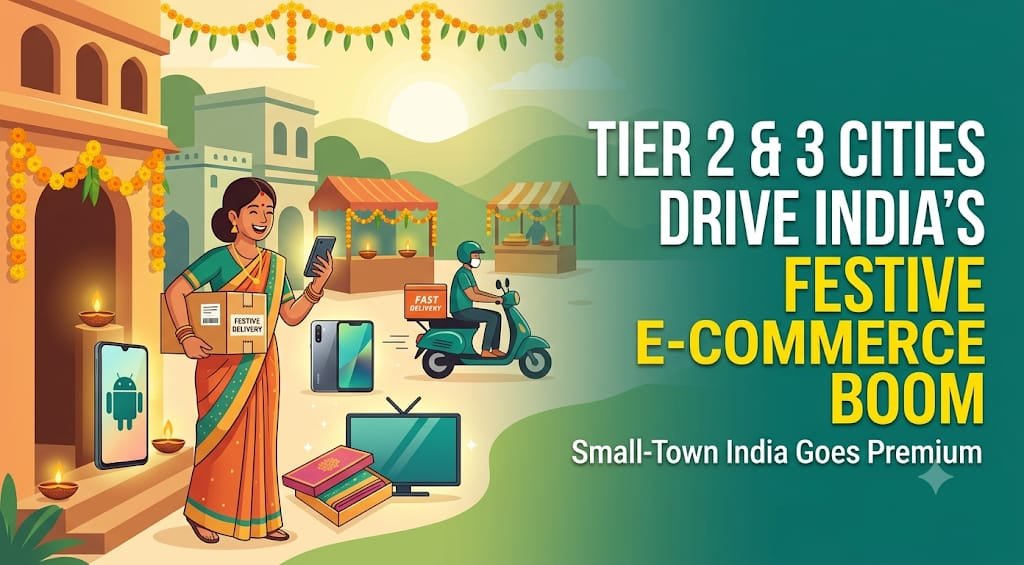
India’s festive online shopping season has started with remarkable energy, and one of the biggest changes this year is the growing role of smaller cities. Platforms such as Flipkart, Amazon, Myntra and Meesho have reported a sharp rise in orders, new customers and participation from Tier-2 and Tier-3 towns. What makes this trend important is that shoppers from these places are not only buying low-cost items; many are also upgrading to premium products, showing that online shopping has become a normal part of festive life far beyond the big metros.
The contribution of smaller towns has become especially clear in the early numbers. During the opening hour of Flipkart’s Big Billion Days sale, nearly half of the visits came from Tier-3 towns and beyond, while non-metro customers made up around 60 per cent of demand. Myntra reported that Tier-2 and Tier-3 cities contributed more than half of first-day orders during its Big Fashion Festival.
Meesho also saw customers from Tier-3 and smaller markets nearly triple during its sale. These figures show that the festive market is no longer concentrated mainly in Delhi, Mumbai, Bengaluru or other large cities; it is spreading across many smaller towns where digital access, delivery networks and payment options have improved.
This rise is also connected to affordability. Many shoppers are using exchange offers and no-cost EMI options to buy products that may have felt expensive earlier. Flipkart said one in four mobile shoppers chose an exchange offer, while one in three selected no-cost EMI.
Amazon reported that one in two customers shopped using EMI. In simple terms, people are managing their budgets carefully but still choosing better products when payment flexibility is available.
Premium products have become a major part of this festive demand. Premium Android smartphone sales on Amazon grew 70 per cent year-on-year, showing that many customers are willing to spend more on better phones. Large televisions are another premium choice, as televisions measuring 55 inches and above made up 65 per cent of Amazon’s TV sales.
Laptops, premium wearables and large home appliances also saw strong demand. On Flipkart, large appliance sales grew 30 per cent in the opening hour, while tablet sales increased 73 per cent. These products show that households are using the festive season not only for routine shopping but also for meaningful upgrades.
Fashion and beauty are equally important premium categories. Myntra recorded strong demand for occasion wear, beauty products and premium brands, along with men’s T-shirts, jeans, sneakers, women’s tops and dresses.
Amazon’s fashion sales reached seven times the level of a normal day, with footwear, denim and ethnic wear leading the demand. Beauty sales on Flipkart rose 42 per cent, driven by men’s grooming and personal care products. This suggests that people in smaller cities are becoming more style-conscious and are using online platforms to access brands and products that may not always be easily available locally.
Home and everyday essentials have also remained strong. Meesho saw high demand for sarees, kurta sets, children’s clothing, beauty products and home essentials. Its branded shopping platform, Meesho Mall, recorded more than 200 per cent year-on-year growth in orders.
This indicates that festive shopping includes both aspirational purchases and practical household needs. Families are buying clothes for celebrations, beauty products for the season, and useful items for the home at the same time.
Quick commerce has added another layer to the festive shopping experience. Flipkart Minutes recorded a 3.5-fold increase in order volumes compared with regular days, and new customers grew 11-fold in the first hour. People purchased premium electronics, grooming products and wearables through quick delivery.
Myntra’s M-Now recorded double the orders on the first day of its sale, while Amazon said that in more than 120 cities served by Amazon Now, one in every two products was delivered within minutes. Faster delivery is making online shopping more convenient, especially during a season when people need products quickly.
Overall, the early festive trends point to a wider and more confident Indian consumer market. Tier-2 and Tier-3 cities are now major contributors to e-commerce growth, and their shoppers are combining value with aspiration.
They are seeking discounts, exchange benefits and EMIs, but they are also choosing premium smartphones, large televisions, laptops, fashion, beauty and home appliances. This shift suggests that smaller-town India is becoming a powerful engine for festive consumption, giving online platforms a much larger and more diverse customer base than before.

