
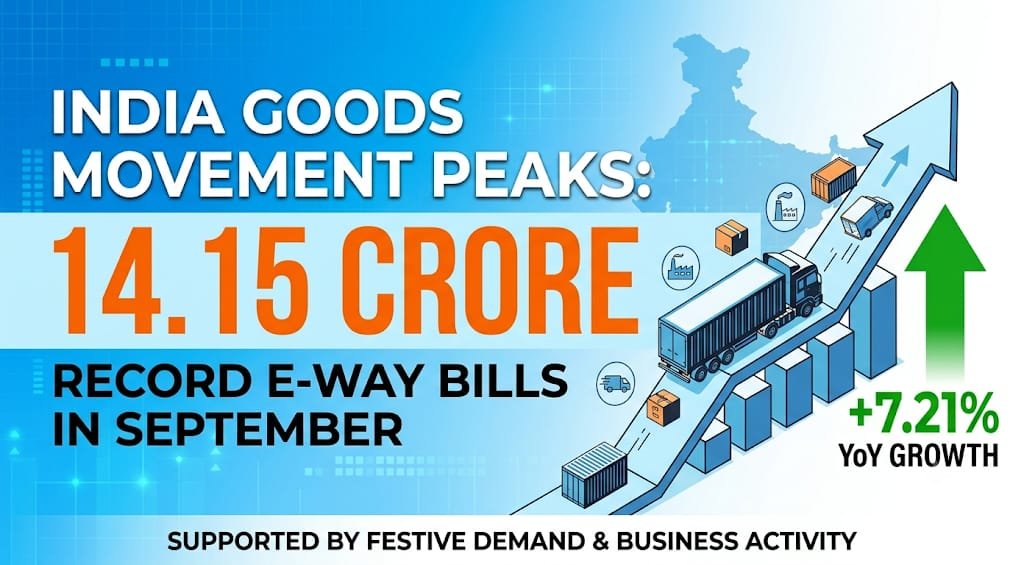
India’s goods movement reached a new high in September as e-way bill generation rose to a record 14.15 crore, according to Goods and Services Tax Network data. The number was 7.21% higher than the level seen a year earlier and 1.75% above August’s 13.91 crore e-way bills.
The previous monthly record had been set in March 2026, when around 14.06 crore e-way bills were generated. Crossing the 14-crore mark is being seen as an important sign of active trade, stronger supply chains and growing formalisation of business activity under the Goods and Services Tax system.
An e-way bill is an electronic document needed when goods valued above ₹50,000 are transported within a state or from one state to another under the GST framework. It contains basic details of the goods, the seller, the buyer and the transporter.
In simple terms, it creates a digital trail for large-value goods moving by road. When more such bills are generated, it usually means that more consignments are being dispatched from factories, warehouses, wholesale markets and retail supply centres.
The September rise comes at a time when markets begin preparing for the festive season. Retailers generally increase orders for products such as garments, electronics, consumer goods, packaged food, home items and festival-related supplies before major festivals.
Manufacturers and distributors also start sending higher volumes to shops and warehouses. This seasonal build-up may have added to the rise in e-way bills, although the data covers movement of goods across many sectors and cannot by itself show demand in every individual industry.
The numbers also underline the growing role of digital systems in tax administration. Earlier, tracking the movement of goods across state borders involved several paper-based processes and checkpoints.
The e-way bill mechanism has made information available electronically, helping tax authorities monitor consignments while also giving transporters a standard digital document for movement. For businesses, this can reduce uncertainty during transit when documents are correctly prepared and available.
The record does not automatically mean that every part of the economy is expanding at the same pace. E-way bill generation measures the number of documented consignments, not the total value of goods sold or the profit earned by companies.
A rise can reflect higher demand, more frequent shipments, better reporting, a broader GST taxpayer base or changes in supply-chain practices. Still, when the increase continues despite a higher base, it offers a useful signal that the flow of goods through the formal economy remains healthy.
Tax experts have linked the latest milestone with the strengthening of domestic trade and the continued deepening of the GST system. The September data arrived shortly after the GST Council discussed steps to limit routine checks of goods being transported by road, a move that could help reduce unnecessary disruption for compliant businesses.
Smooth movement matters especially for small traders, truck operators, warehouse owners and manufacturers, since delays can raise logistics costs and affect deliveries.
For the broader economy, the figure will be watched alongside GST collections, factory output, retail sales and freight activity. September’s e-way bill record suggests that commercial activity was gathering momentum ahead of the festive period.
The real test will be whether this momentum continues in the following months and translates into sustained sales, production and income growth across businesses of different sizes.

