
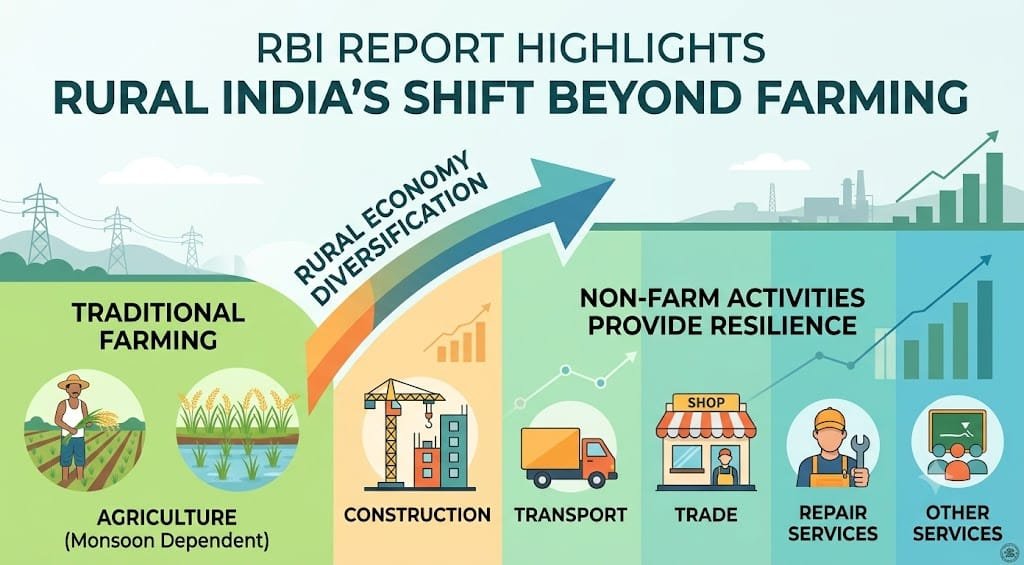
India’s rural economy appears to be becoming more resilient to changing monsoon conditions. A recent analysis by the Reserve Bank of India (RBI) shows that rural incomes are no longer linked only to farming. Activities such as construction, small businesses, transport, trade, and other services are increasingly helping rural households manage periods of weak rainfall.
For many years, a poor monsoon directly affected rural earnings because farming was the main source of income. A weak rainfall season often reduced crop production, lowered demand for farm workers, and affected spending in villages. However, the situation is gradually changing. The growth of non-farm activities is creating additional income opportunities and reducing the pressure caused by uncertain weather.
The RBI analysis examined the relationship between rainfall shortages and the performance of agricultural and non-agricultural activities in rural areas. The findings suggest that non-farm activity remains comparatively stable even when rainfall is below normal. In contrast, agricultural growth is more sensitive to rainfall conditions because farming depends directly on water availability.
The analysis found that when rainfall was more than 10% below normal, agricultural growth declined sharply. However, non-agricultural rural activity continued to record positive growth. Even during periods of severe rainfall deficiency, non-farm activity remained stronger than farming. This difference shows that rural households are slowly developing alternative sources of income.
Construction has played an important role in this transition. Government infrastructure projects, housing activity, roads, and local development work have created employment opportunities beyond agriculture. Rural trade, transport, repair services, education, healthcare, and small manufacturing have also expanded in many areas. These activities help maintain income and demand even when farm production is affected.
The shift is especially important because rural demand has a major influence on the wider economy. When rural households continue to earn through non-farm work, spending on food, clothing, household goods, transport, and services is less likely to fall sharply. This can support local businesses and reduce the impact of a weak monsoon on overall economic activity.
The RBI study also indicates that better access to roads, financial services, communication networks, and markets may have supported this diversification. Greater movement of workers and improved connectivity have made it easier for rural families to find income opportunities outside farming.
However, agriculture remains important and cannot be ignored. Millions of households still depend on farming, and a severe weather shock can affect food prices, wages, and household income. Strong irrigation facilities, crop insurance, rural infrastructure, skill development, and access to formal credit will remain necessary.
The larger message is clear that India’s villages are gradually building a broader economic base. Farming continues to matter, but rural prosperity is increasingly being supported by construction, trade, transport, services, and other non-farm activities. This change may help rural India handle uncertain monsoons with greater stability in the coming years.

