
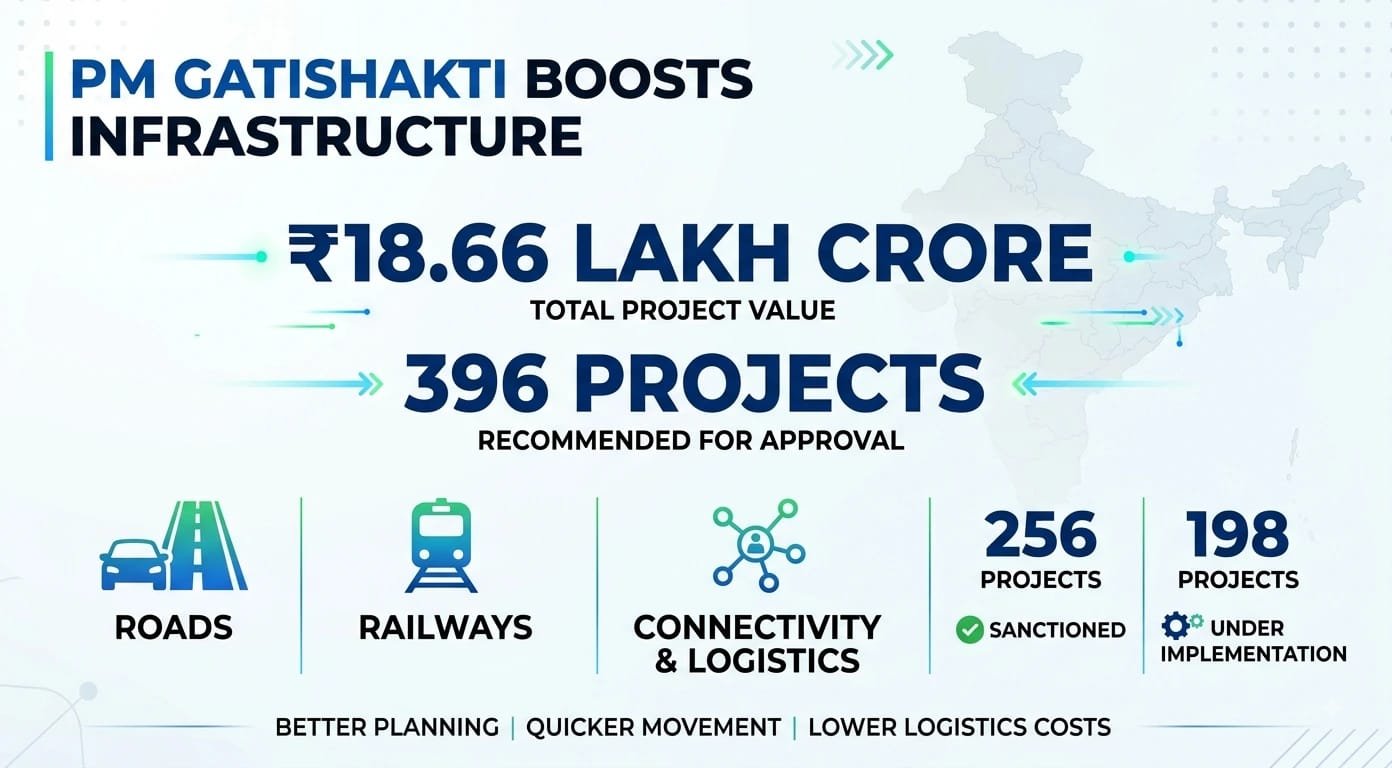
India’s PM GatiShakti initiative has reached a major stage, with 396 infrastructure projects from different ministries recommended for approval, and their total estimated cost is about Rs 18.66 lakh crore.
These projects cover important areas such as roads, railways, and other connectivity works, and they have been reviewed through the Network Planning Group, which works under the PM GatiShakti framework.
This development matters because it shows how large public projects are being planned in a more connected way rather than in separate pieces. The main idea behind PM GatiShakti is simple: if roads, rail lines, and other transport links are planned together, then movement becomes smoother, delays can be reduced, and the overall cost of logistics may come down.
The initiative was launched in October 2021, and since then it has been used to examine big projects that need coordinated planning. According to the government data, 256 of the 396 projects have already been sanctioned, and 198 projects are under implementation, which means work has begun on a large share of the approved plans.
The number of projects also shows the scale of the effort. A total project value of Rs 18.66 lakh crore is not small; it reflects a strong focus on building long-term public infrastructure that can support business, transport, and daily life. In practical terms, this kind of planning can help goods move faster from factories to markets, and it can also support better links between cities, ports, and interior regions.
The government has also kept a clear rule for large logistics and connectivity projects. Any project with investment above Rs 500 crore is routed through the Network Planning Group, so that planning is checked more carefully before approval. This is meant to avoid waste, improve coordination, and make sure that different ministries work in a more unified manner.
The message is clear to understand. Better roads, better rail connections, and better planning can save time, reduce pressure on transport systems, and make everyday movement more efficient. For businesses, this can mean faster delivery, lower costs, and better competitiveness, while for people it can mean smoother travel and better access to services.
The recent update also fits the larger national push for faster and more seamless connectivity. The scale of the approved and under-implementation projects suggests that PM GatiShakti is moving beyond planning on paper and into real execution on the ground.

