
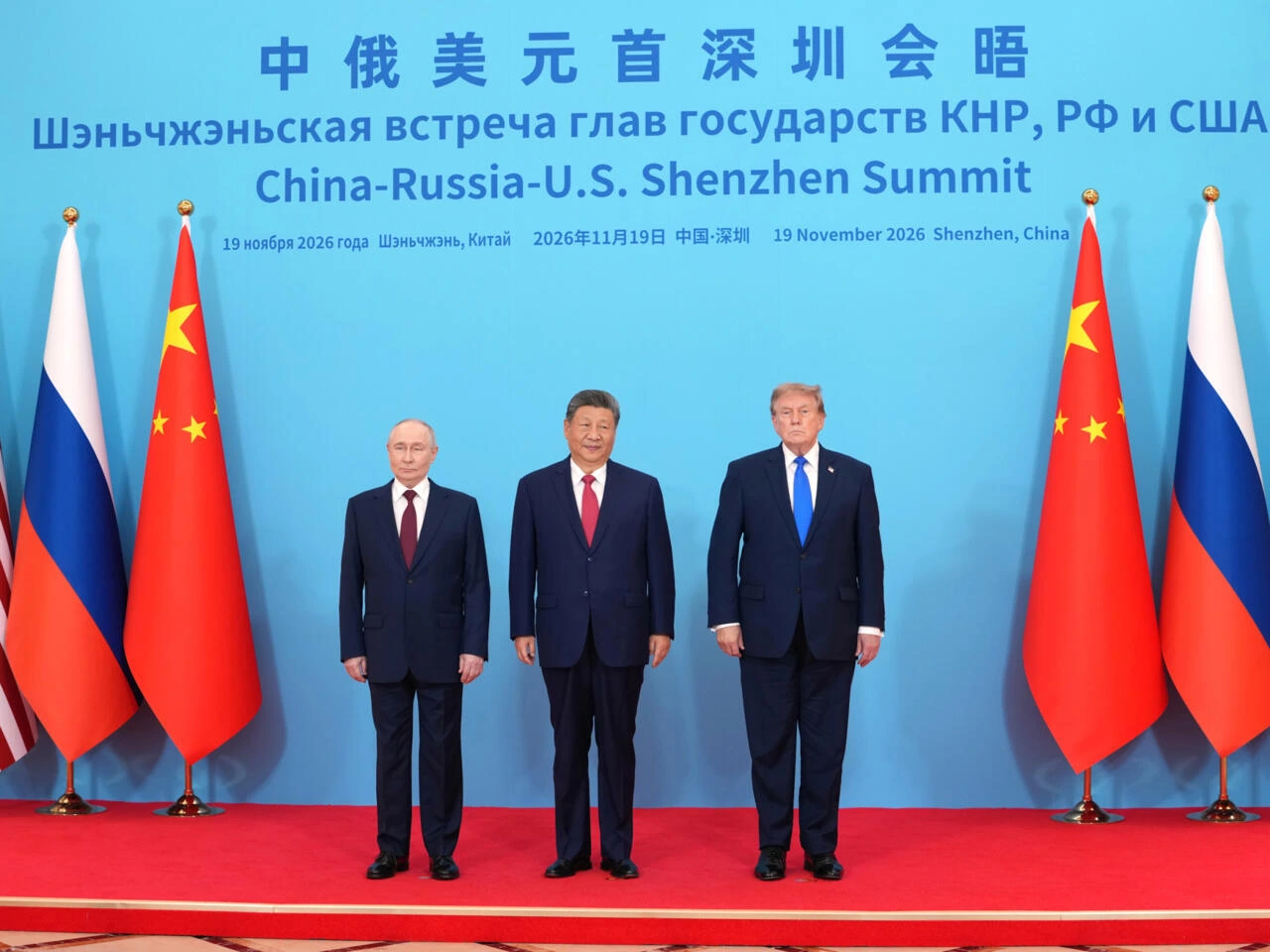
Donald Trump, Vladimir Putin and Xi Jinping, between them, they command the world’s three largest nuclear powers, control enormous economic resources and possess the ability to reshape international geopolitics. And then they ended up in the same room. Very few meetings in modern history can claim to have such an extraordinary concentration of power.
That is precisely what happened in Shenzhen, China, on November 19, 2026, when the American, Russian and Chinese presidents held their first-ever trilateral meeting.
Trump described it as a historic moment, and it is difficult to argue otherwise. But beyond the photographs, handshakes and diplomatic theatre, what actually came out of this extraordinary gathering? Well, nothing much.
The three leaders issued a four-point peace declaration, signalling their willingness to cooperate on some of the world’s most consequential issues.
The three permanent members of the UN Security Council agreed to pursue reforms to make United Nations more effective in addressing global challenges. Considering how frequently the Security Council has been paralysed by disagreements among its permanent members, nobody is too impressed with this declaration and most see it as just a token announcement.
The three countries also agreed to increase the production and supply of refined petroleum products, emphasising the importance of stable energy flows. At a time when geopolitical conflicts can send oil prices soaring and disrupt international supply chains, this commitment carries considerable economic significance, especially in the light of the Iran War and the closure of Strait of Hormuz which has sent oil prices skyrocketing.
Perhaps the one consequential announcement was their agreement to engage in dialogue to reduce nuclear risks and prevent nuclear proliferation. All three leaders reaffirmed that a nuclear war cannot be won and must never be fought. However, this is only a commitment to dialogue, not an agreement to reduce existing nuclear stockpiles.
However, the most interesting aspect of the meeting is not what it achieved, but what it did not achieve.
There was no breakthrough on Ukraine where Russia has been busy fighting a war for well over 4 years now. Putin discussed the conflict with Trump, but the joint declaration contained no concrete roadmap for ending the war. Iran was also absent from the final declaration, despite being among the issues Trump wanted to discuss. There was no major breakthrough on nuclear disarmament either.
Nevertheless, the meeting has enormous geopolitical significance.
For decades, Washington, Moscow and Beijing have viewed one another through the prism of strategic competition. Bringing their leaders together creates an opportunity for direct communication between countries whose disagreements can have consequences for virtually every corner of the planet.
There is, however, another important consideration. Smaller countries will be watching closely. When three powerful nations begin discussing the future of international institutions, energy security and global conflicts, the rest of the world naturally wonders how much of their voice will be heard or will these major powers decide the fate of the world among themselves.
The Shenzhen meeting has not created a new world order overnight. But it has demonstrated that even the world’s biggest rivals recognise the importance of talking to one another.
And sometimes, in geopolitics, getting the most powerful people in the room is the first achievement. Whether they can turn that conversation into something concrete is an entirely different question.

