
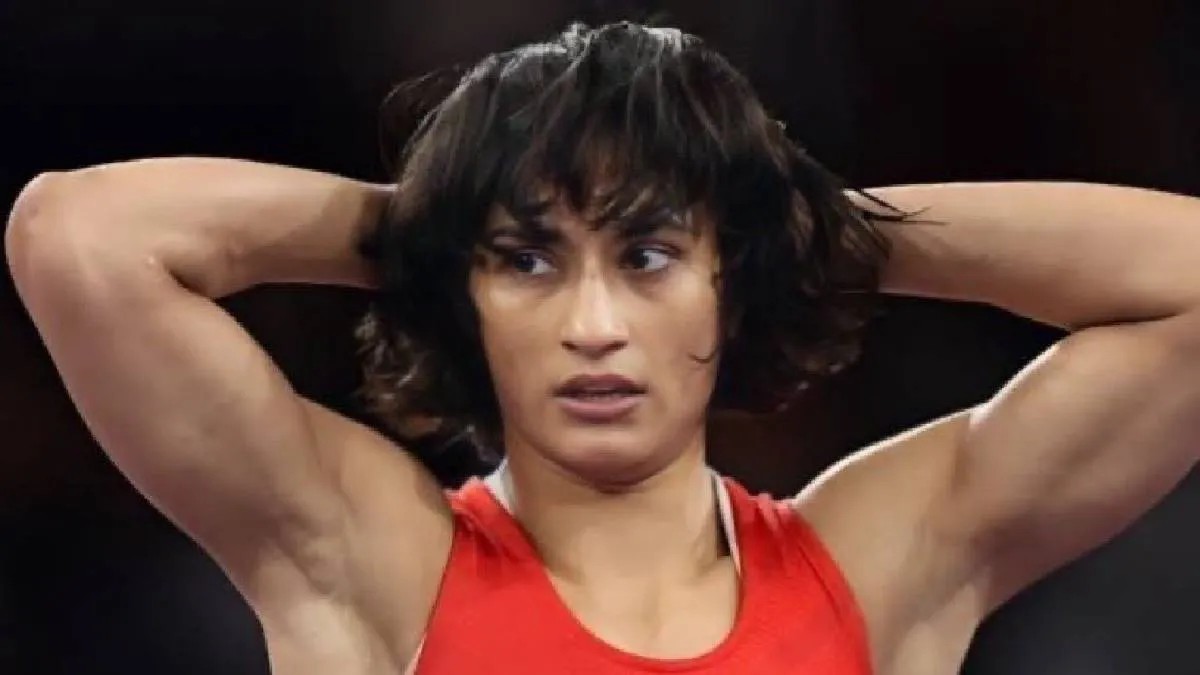
When wrestler Meenakshi Goyat defeated Vinesh Phogat in the Asian Games 2026 trials, one would have expected the bigger conversation to be about an emerging athlete making her mark through hard work and consistent performance. Instead, much of the attention shifted to the defeat of a wrestler-turned-politician and the controversy that followed.
On May 30, at Delhi’s Indira Gandhi Indoor Stadium, the trials for the 2026 Asian Games took place. In the women’s 53 kg semifinal, Vinesh Phogat — one of India’s most recognizable wrestling names and now also a Congress MLA from Julana in Haryana faced 22-year-old Meenakshi Goyat from Chabri village in Haryana’s Jind district.
The result was clear: Meenakshi Goyat won 6–4.
It was not a disputed outcome, not a controversial decision, but a victory earned on merit by Goyat inside the wrestling arena.
Yet, within hours, headlines across many platforms focused less on Meenakshi’s breakthrough win and more on Vinesh Phogat’s exit from the Asian Games race. Discussions revolved around allegations of bias, disappointment, and reactions surrounding Vinesh’s defeat.
That raises a fair question — where did the winning athlete disappear? Because Meenakshi Goyat’s rise has not come out of nowhere.
Meenakshi is a two-time Senior National Champion. She has already won the U23 Asian Championship title and secured a silver medal at the Asian Wrestling Championships in April 2026. Earlier this year, she had also stunned Indian wrestling circles by defeating Antim Panghal during the trials.
This was not a lucky day. It was another step in a pattern of strong performances and years of preparation.
Meenakshi’s journey itself deserves attention. She comes from the family of a small farmer in Haryana. Inspired as a child after watching WWE on television and becoming a fan of John Cena, she reportedly copied wrestling moves at home before eventually entering the competitive wrestling system. Despite financial limitations, she trained through Haryana’s akharas and sports hostels and gradually established herself among India’s strongest wrestlers in the 53 kg category.
Yet public conversation largely remained centered elsewhere.
Supporters of this view argue that modern media ecosystems often reward controversy over achievement. According to this criticism, narratives, political associations, and attention economics frequently outweigh sporting merit when deciding what becomes headline material.
Part of the reason, they argue, is that Vinesh Phogat today occupies a space beyond sports. Over recent years, her public profile has increasingly intersected with politics, protests, legal battles, and debates around athletes and institutions. As a result, events involving her rarely remain only sports stories — they become political stories too.
At the same time, Vinesh Phogat’s contributions to Indian wrestling remain significant and widely acknowledged. Her achievements over the years have earned her a prominent place in Indian sport. But critics believe that in recent times, her competitive relevance has declined compared to younger wrestlers emerging through the domestic circuit.
From this perspective, May 30 should not primarily be remembered as the day Vinesh Phogat lost. It should be remembered as the day Meenakshi Goyat won.
Meenakshi Goyat is a wrestler who defeated Antim Panghal, then defeated Vinesh Phogat, and is increasingly being seen as one of the next major hopes in Indian women’s wrestling.

