
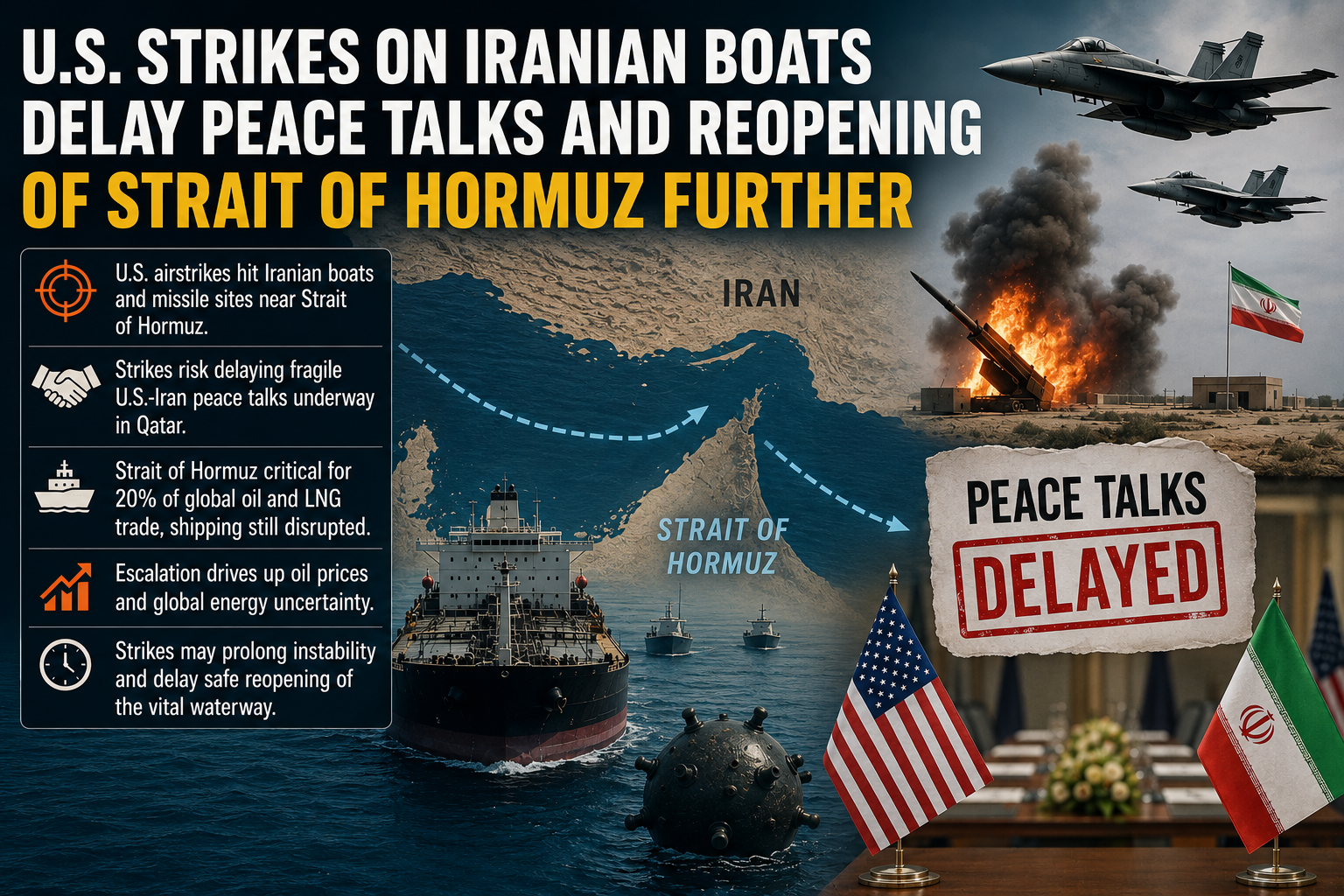
A large part of the world is eagerly following US-Iran negotiations for a quick peace deal and the normalisation of world energy markets with the reopening of the Strait of Hormuz. Despite positive noises from both sides, a final peace deal still looks days, if not weeks, away, and the latest act by the United States may have pushed it further down the road.
On Monday (US time), USA launched new strikes on southern Iran, targeting Iranian missile sites and boats attempting to place mines in the Strait of Hormuz. The strikes took place near Bandar Abbas, and came when US and Iran are locked in tense negotiations.
US Central Command (Centcom) said in a statement that the strikes were carried out in self-defence and were designed to protect US troops from threats posed by Iranian forces.
These strikes have once again pushed the US-Iran peace process, which was moving painfully slowly in the first place, into uncertainty. The latest strikes have also raised fears that they will further delay the reopening of the critical Strait of Hormuz.
The timing of the attacks is particularly significant because recent days had seen cautious optimism emerge around ongoing talks in Qatar. Officials from both sides had hinted at a possible framework agreement that could lead to a phased ceasefire, reopening of the Strait of Hormuz and gradual easing of tensions across the Gulf region. U.S. President Donald Trump had even suggested that negotiators were discussing the “final details” of a possible arrangement.
However, the renewed strikes have complicated the diplomatic atmosphere. Iranian officials and Revolutionary Guard-linked media have warned that any military escalation during negotiations undermines trust and could invite retaliation. The strikes also risk empowering hardliners inside Iran who have consistently argued that Washington cannot be trusted to negotiate while simultaneously conducting military operations.
The Strait of Hormuz remains central to the entire crisis. Roughly a fifth of global oil and liquefied natural gas trade normally passes through the narrow waterway connecting the Persian Gulf to the Arabian Sea. Shortly after US and Israel struck Iran on February 28 this year, Iran closed this maritime chokepoint.
Since Iran closed the strait, oil and gas prices have spiked around the world as this major supply route got closed. The consumers around the world have been forced to face rising retail prices as governments have been forced to pass down the increasing cost of the crude oil due to the blockade in Hormuz. Now, any hopes of a quick reopening of the strait have also taken a hit with these fresh strikes as Iran had warned US that any misadventure during the peace talks will get a befitting response.
Oil prices, which had cooled off a little last week after positive noises around the peace talks, climbed again over worries that the peace talks will now slow further down. Every additional week these peace talks drag on, the uncertainty in global energy markets rises, adding to the volatility of the oil prices.
Even though US and Iran haven’t stopped the negotiations yet despite these latest strikes, the mistrust between the two parties will continue to grow after this. And for now, hopes of a quick reopening of the Strait of Hormuz appear increasingly uncertain.

