
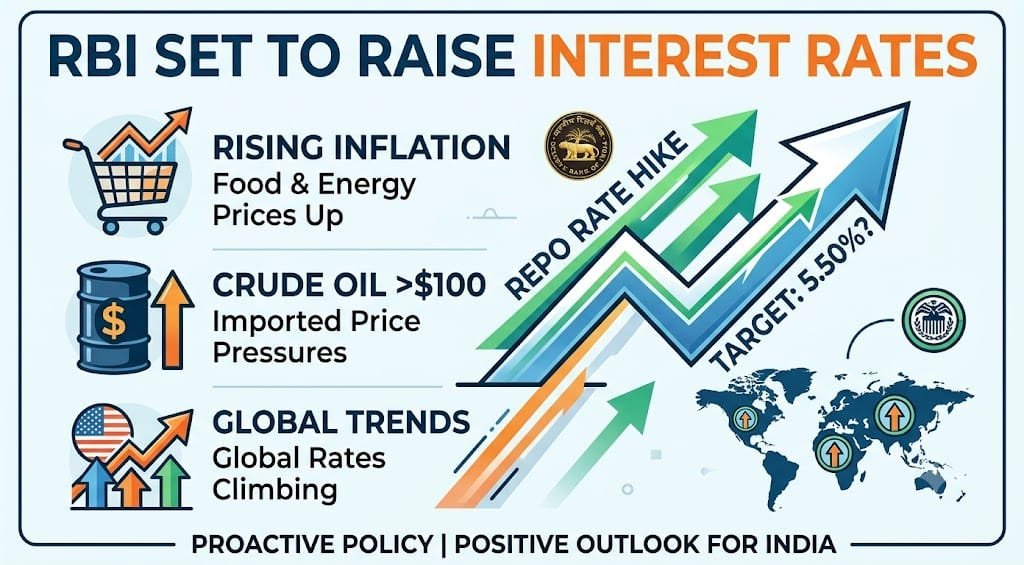
The Reserve Bank of India (RBI) is preparing to raise interest rates after nearly two years of keeping them steady, with the first increase expected to come on the October 7 policy meeting. This move is being driven by rising prices across the country, higher global interest rates, and crude oil crossing $100 a barrel.
Most experts believe the repo rate will go up by 25 basis points to 5.50%, which would be the first hike since early 2023. The decision reflects a careful balance between supporting growth and controlling inflation, showing that India’s economic management remains proactive and responsible.
Inflation has become broader in scope, affecting not just food but also energy and other daily essentials. Weather disruptions linked to El Niño have led to drought-like conditions in large parts of Maharashtra and raised concerns in Karnataka, Telangana, Andhra Pradesh, and Rajasthan.
Reservoir levels are about 20% lower than last year, which could impact the winter crop and keep food prices elevated. At the same time, global tensions in West Asia and the ongoing Russia-Ukraine conflict have pushed crude prices higher, adding to imported inflation.
Despite these challenges, inflation is expected to average around 5% in the coming financial year, with temporary peaks near 6%, indicating that price pressures are being monitored closely and managed with care.
Higher interest rates will mean slightly costlier loans for homes, vehicles, and personal needs, especially for those linked directly to the repo rate. Borrowers may see small increases in monthly repayments, while savers could benefit from marginally better returns on deposits over time.
Banks will adjust their lending rates based on funding costs and liquidity, ensuring stability in the financial system. This measured approach helps anchor inflation expectations without derailing the strong growth momentum seen in the economy.
India’s GDP grew at an impressive 7.8% in the first quarter of the current financial year, supported by robust consumption, investment, and exports. Healthy indicators like GST collections, auto sales, and bank credit show that economic activity remains vibrant.
Many analysts now expect full-year growth to be revised upward from the earlier 6.7% forecast, possibly reaching 7.3%. This resilience highlights the strength of India’s domestic demand and policy framework, even amid global uncertainty.
While higher rates may slow some spending and investment in the short term, they are essential to prevent inflation from becoming entrenched and to maintain India’s interest-rate advantage over countries like the US.
The Federal Reserve recently raised its rates, and global bond yields have climbed sharply, making it important for India to act decisively. By raising rates gradually, the RBI aims to ensure price stability while preserving long-term growth potential.
The overall outlook remains positive, with strong fundamentals, improving global positioning, and prudent policy choices guiding India’s economic journey. Rising rates are not a sign of weakness but a responsible step to safeguard purchasing power and financial stability.
With careful monitoring of weather, oil prices, and global trends, the economy is well-equipped to navigate current challenges and continue its path of sustainable progress.

