
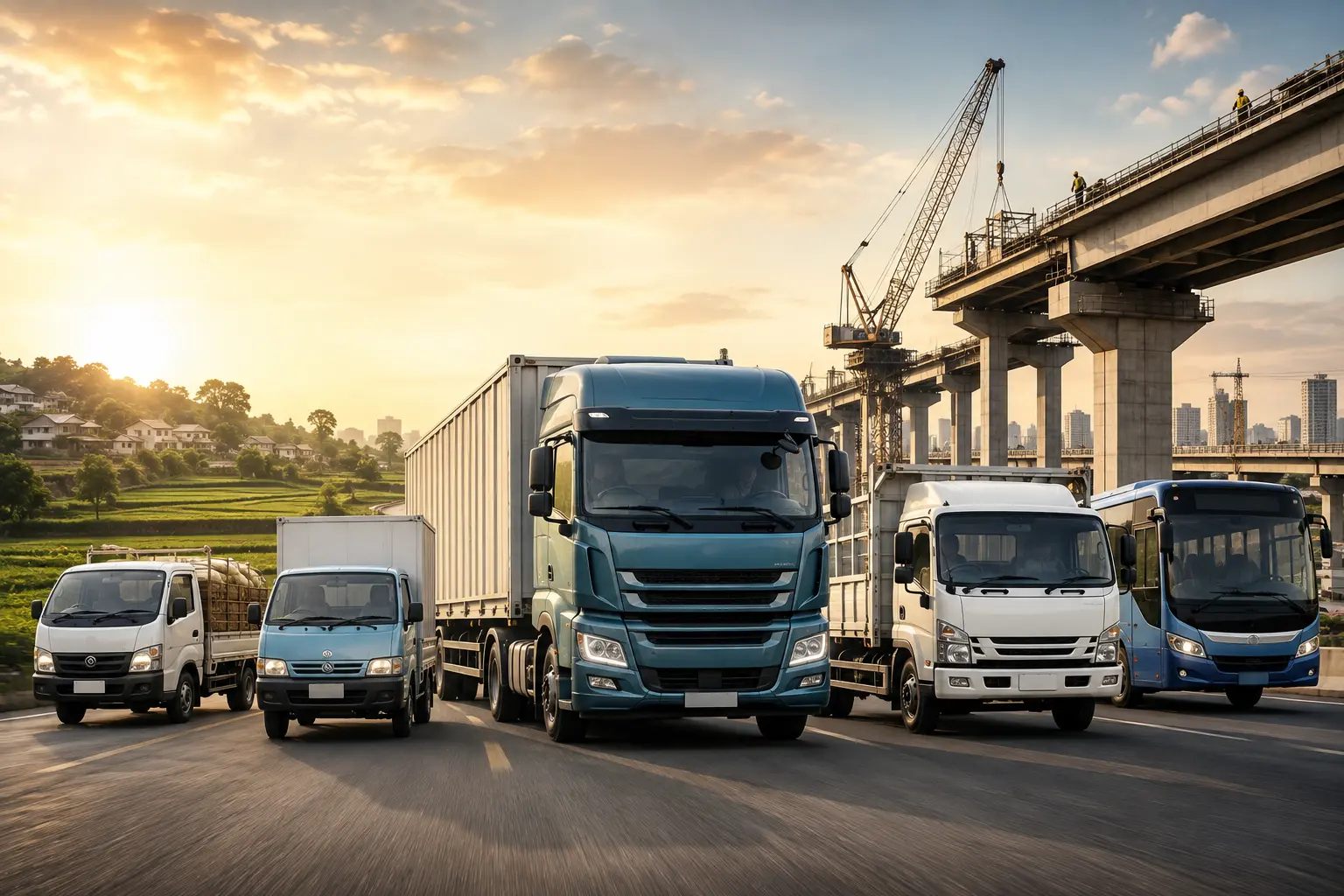
India’s commercial vehicle market is showing renewed momentum, with monthly sales edging closer to the significant one lakh mark. The trend reflects a combination of high rural demand, infrastructure spending by the government, improved ease of freight movement, increased construction activity and broader growth in the economy. Commercial vehicles, ranging from small goods carriers to heavy trucks and buses, are considered a key indicator of business and consumption conditions across the country. The rapid rise in their sales highlights the robustness of the Indian economy.
One of the biggest drivers behind the recent improvement is strengthening rural demand. An increase in agricultural activity, rising rural incomes and increased movement of goods are supporting demand for small commercial vehicles, light trucks and other utility vehicles. For many rural businesses, these vehicles are essential for transporting agricultural produce, construction materials, consumer goods and other commodities between villages, towns and the agricultural markets.
Infrastructure development is providing another major boost. Government spending on highways, roads, railways, ports, industrial corridors and urban infrastructure is creating sustained demand for heavy trucks and other construction-linked vehicles. As new infrastructure projects backed by the government continue to expand, logistics operators and contractors are adding vehicles to their fleets, while existing fleet owners are increasingly replacing older vehicles with newer, more efficient models.
The expansion of India’s logistics and e-commerce sectors is also changing the commercial vehicle landscape. Faster deliveries and the growth of organised supply chains have increased demand for vehicles capable of moving goods efficiently. The development of warehouses and distribution centres closer to consumption hubs is further supporting last-mile and regional transportation.
Another important factor is the replacement cycle. A significant number of older commercial vehicles are gradually reaching the end of their operating lives. Fleet operators are therefore looking at newer vehicles that offer better fuel efficiency, improved safety, lower maintenance costs and stronger reliability. The increased ease of financing and competitive offerings from manufacturers are also helping operators upgrade their fleets.
The near-one-lakh monthly sales milestone is consequently more than just a volume figure. It signals growing confidence among transporters, fleet owners and businesses that depend on the movement of goods. A sustained rise in commercial vehicle sales also has wider economic effects by supporting manufacturing, component suppliers, financing companies, fuel and energy demand, and employment.
Going forward, the pace of infrastructure investment, rural economic recovery, freight activity and replacement demand will determine whether the market can consistently remain around or above the one-lakh monthly level. If these factors continue to strengthen, India’s commercial vehicle industry will be an important beneficiary of the country’s broader growth story.

