
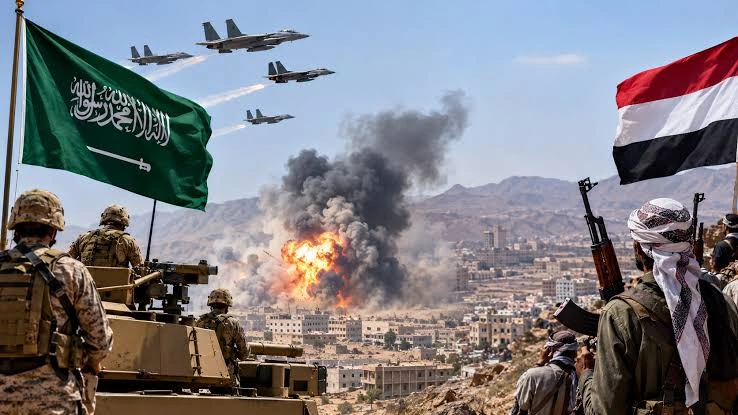
The spokesperson for the Pakistan Army has said that they are committed to the defense of Saudi Arabia but are not part of Yemen’s internal conflict.
In an interview, the spokesperson for the Pakistan Army expressed “cautious optimism” regarding mediation efforts between Iran and the United States, saying that Pakistan is committed to the defense of Saudi Arabia.
Pakistan Army spokesperson Lieutenant General Ahmed Sharif Chaudhry also said in an exclusive conversation with Reuters that Pakistan is not part of the mutual conflict between parties inside Yemen.
This is the first interview of the Pakistan Army spokesperson after a high-level delegation’s visit to Tehran this week. Field Marshal Asim Munir, who is playing the role of central mediator in Pakistani efforts to de-escalate tensions in the now eight-month-long war between Iran and the United States, has visited Tehran twice this month. His latest visit was accompanied by Saudi and Turkish officials.
In the interview, when asked about these visits being a positive indication, Lieutenant General Ahmed Sharif Chaudhry said, “Why would the Field Marshal go to Tehran twice if there was no positive development behind it? So yes, certainly that is the case.” No ban on inclusion of new members in the agreement. The Director General of Inter-Services Public Relations further said, “We will always use these words that we are cautiously optimistic.”
He declined to answer questions regarding the talks held in Tehran or the US’s support for this visit. Saudi Defense Minister Prince Khalid bin Salman and Turkish Intelligence Chief Ibrahim Kalin were accompanying Field Marshal Asim Munir on the visit to Tehran on Monday.
Turkey and Saudi Arabia had signed a joint defense agreement with Pakistan on August 7th, under which it was agreed that an attack on one country would be considered an attack on all three countries. The Mecca joint defense agreement is being considered important because the Iran war has brought a new alignment of alliances in the region and has increased fears of a wider conflict in the Middle East.
Although the three countries say that the purpose of this agreement is to prevent potential attacks through collective defense capability and to ensure regional security.
However, analysts see the evolution of this agreement as deeply linked to the efforts of regional powers to deal with the effects of tensions between Iran and the United States.
After the talks held in Tehran on Monday, the Secretary of Iran’s Supreme National Security Council,
Mohsen Rezaei, said that regional security should be ensured by the countries of the region without external interference.
On the question of whether Iran could also join this agreement, Lieutenant General Ahmed Sharif Chaudhry said, “The text of the agreement does not impose a ban on the inclusion of new members.” He said, “Why can any country that shares a common vision regarding the prevention of potential attacks through collective defense capability and regional peace not be included? Everyone will be welcomed.”
On the question of whether more Pakistani troops are being sent to Saudi Arabia under this agreement, he said that it will depend on the situation and the decision of the political leadership of both countries.
He said that Pakistan is committed to the defense of Saudi Arabia and the holy sites of Mecca and Medina. He further said, “We are not part of the Yemen conflict, which is a conflict between internal parties within Yemen.”
Regarding the internal situation of the country, the federal government on October 11th had suspended the provincial government of Khyber Pakhtunkhwa, led by the Pakistan Tehreek-e-Insaf (PTI) party of former Prime Minister Imran Khan, who is imprisoned in jail, and had taken Chief Minister Sohail Afridi into custody.
The government had accused the provincial administration of failing to deal with militancy. The PTI rejected these accusations, saying that its government had participated in counter-terrorism efforts. PTI leaders had described this move as a pretext to crush protest demonstrations.
On the question of whether large-scale operations led by the army will now be conducted in the province, Lieutenant General Ahmed Sharif Chaudhry said that the army does not conduct counter-terrorism operations in that manner.
He said, “Our counter-terrorism operations are based on intelligence-based operations. “In these operations, the speed and scope of acting independently will be further increased.”
By- Laiba yousafzai

