
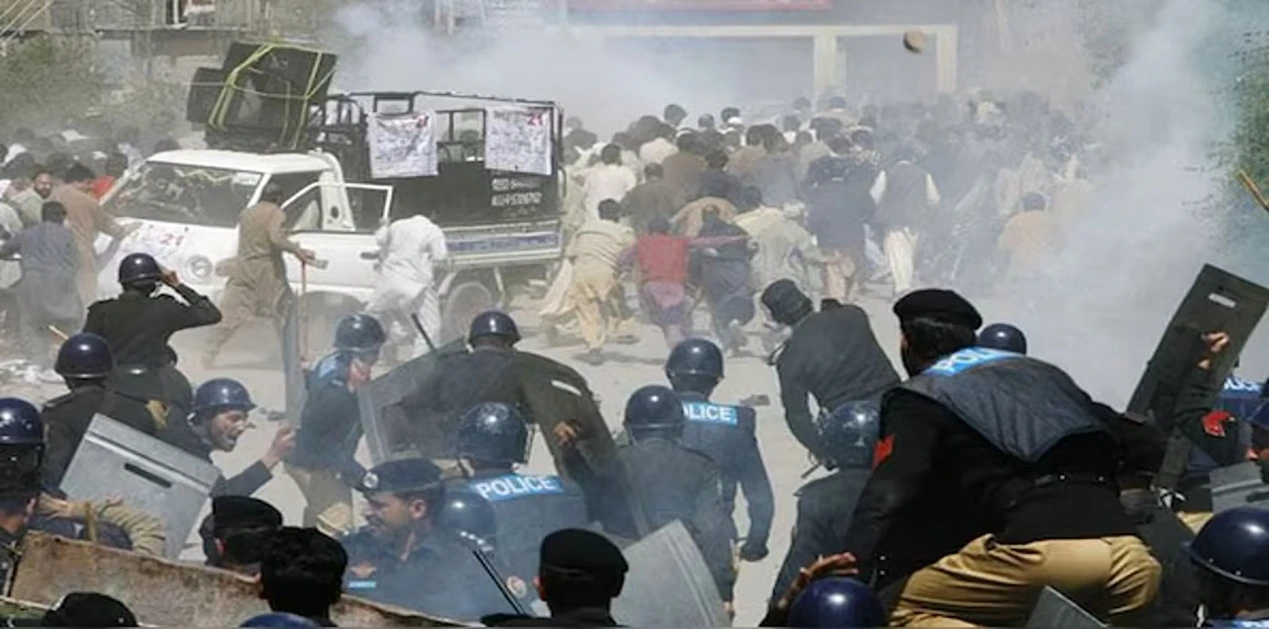
The protests in Pakistan-occupied-Kashmir show no signs of slowing down even though Pakistan government is resorting to collective punishment to break the protesters’ spirit. As per reports, supply of medicines and food essentials to the Pakistani occupied Indian territory has been disrupted as Pakistan establishment seeks to punish the protesters.
Along with shortage of medicines and food items, supply of fuel has also been severely impacted with several locals forced to buy Petrol in the black market.
The protests were triggered due to long-standing grievances, including rising inflation, unemployment, electricity shortages, and neglect by the Islamabad administration. The Pakistani forces tried to use force to suppress the protesting, including targeted killing of civilians. However, it only served to strengthen the resolve of the protesters. Now, a frustrated Pakistan government has apparently resorted to such measures as blocking the supply of essentials to try and end the protests.
Pakistan has denied the reports that they are blocking these supplies, but several reports contradict Islamabad’s claims.
Pakistan-occupied-Kashmir has remained a neglected region as Pakistani authorities oppress locals, and continue to do so. Protests led by Joint Awami Action Committee (JAAC) started earlier this month against this discrimination. The resulting crackdown by Pakistani authorities has left at least 58 dead by now, and is triggering a humanitarian crisis in the area.
Meanwhile, Pakistan Defence Minister Khawaja Asif triggered another controversy by saying that residents of Rawalakot and Mirpur in PoK are “not proper Kashmiris”, sparking outrage across the region. This sparked outrage in the region and led to more protests against Pakistani government.
Khawaja Asif has, however, refused to apologise for his comments. He said, “I will not apologise. There were no apologies yesterday, and there will be none today.”
The human rights violations in PoK hardly register on the radar, but this latest blockade of essentials may finally awaken the global community to take this crisis seriously and force Pakistan to straighten its act in the region.

