
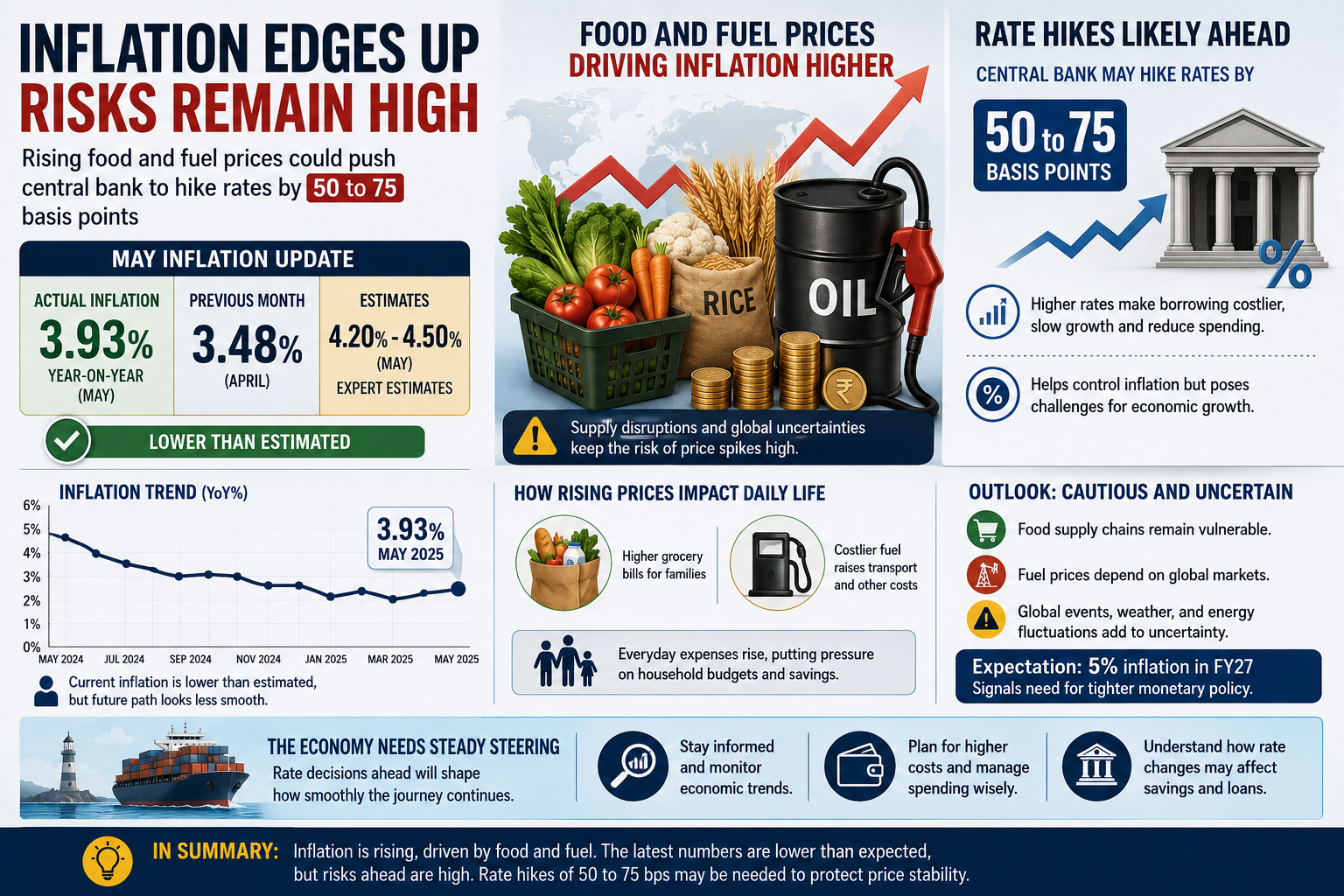
The upward trend of inflation comes as concerns grow over rising food and fuel prices, which could push the central bank to raise interest rates by 50 to 75 basis points. The situation reflects a cautious economic outlook where price stability remains a key challenge.
While the current inflation numbers for this year turned out to be lower than what was estimated, the path ahead seems less smooth due to ongoing risks in essential commodity markets.
The latest consumer price index data for May shows inflation at 3.93% year-on-year, which is slightly higher than the previous month’s 3.48%. However, this figure is still below the estimates as predicted by experts.
This means that the inflation number for this round came in lower than what experts had predicted. Even with this somewhat moderate figure, the future outlook points toward higher inflation. The report highlights that food items, especially vegetables and grains, along with fuel costs, are creating pressure that could push prices up more quickly than planned.
When food and fuel prices rise, it affects not just markets but also daily life. Families find their grocery bills increasing, and transportation costs go up, which in turn raises the price of many other goods.
This kind of pressure often leads policymakers to consider raising interest rates to control spending and bring inflation back under control. A rate hike of 50 to 75 basis points would mean borrowing becomes more expensive, which can slow down business growth and reduce consumer spending. While this might help control inflation, it also brings challenges for economic growth.
The report suggests that the central bank is likely to act soon if inflation continues to rise. With food supply chains still vulnerable and fuel prices dependent on global markets, the risk of sudden price spikes remains high.
These factors make it difficult for planners to keep inflation within the desired range. The expectation of 5% inflation in FY27 is not just a number but a signal that the economy may need to tighten its monetary policy to avoid bigger problems later.
Even though the latest inflation figure was better than expected, the underlying trends suggest caution. The fact that this year’s numbers came in lower than estimates is a small positive, but it does not guarantee that the same will happen in the future.
Global events, weather conditions, and energy market fluctuations can all influence domestic prices in ways that are hard to predict. This makes the economic landscape more uncertain and requires careful monitoring by policymakers.
The prices may start rising more noticeably in the coming years. Keeping an eye on spending, planning for higher costs, and understanding how interest rate changes might affect savings and loans can help manage the impact.
The economy is like a large ship that needs steady steering, and when inflation starts to rise, adjustments must be made to keep it on course. The upcoming rate decisions will play a big role in determining how smoothly this journey continues.
In summary, while the current inflation number is lower than expected, the forecast for FY27 points toward higher prices and possible interest rate increases. Food and fuel risks remain the main drivers of this trend, and the central bank is likely to respond with rate hikes if conditions worsen. Staying informed and prepared can help individuals and businesses navigate these changes more effectively.

