
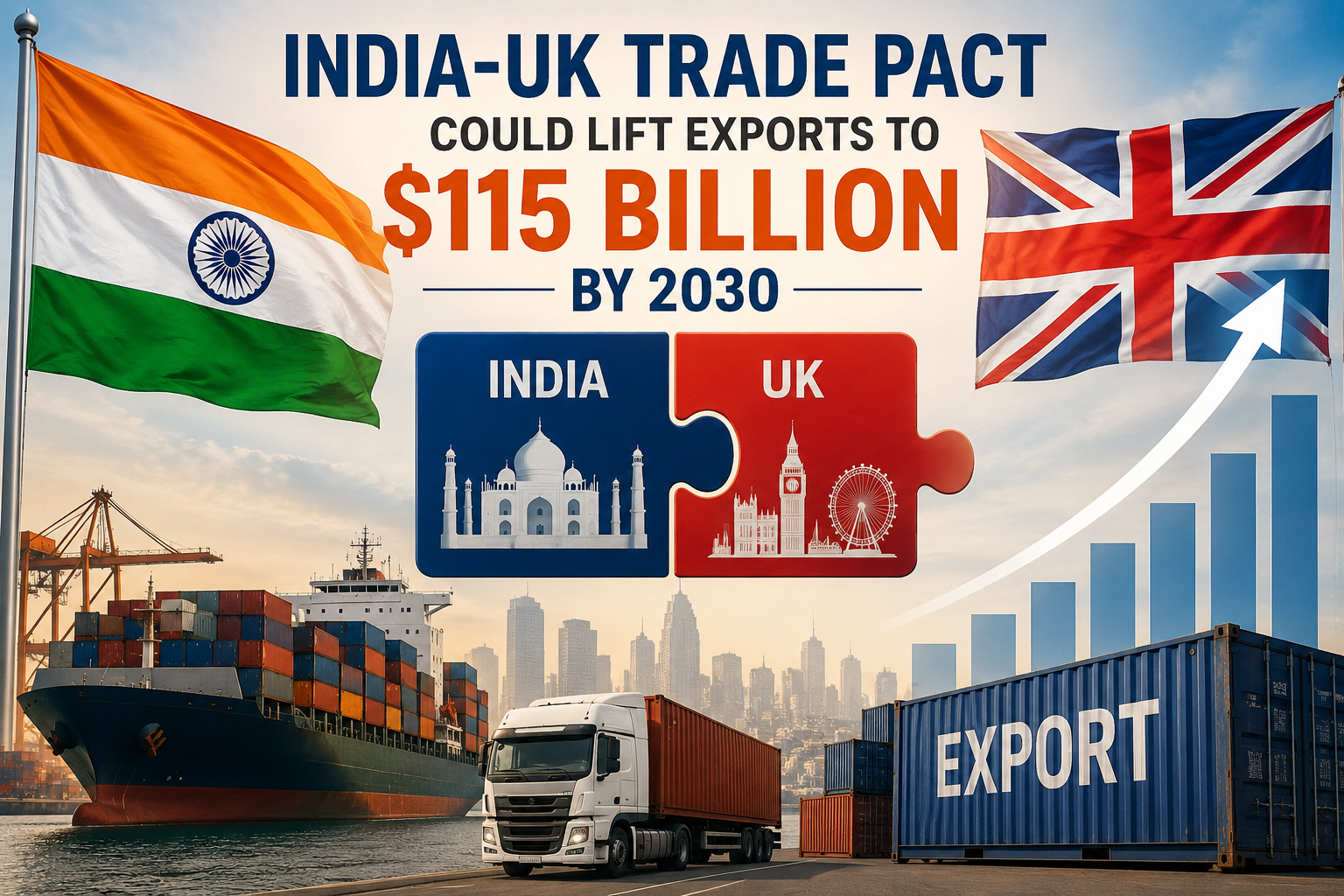
The new free trade agreement between India and the UK is being seen as a major step for trade growth, with Assocham saying exports to the UK may reach $115 billion by 2030. The chamber’s study says total bilateral trade could rise from $58 billion in 2025-26 to $115 billion by 2030, and this may also create about 7 to 10 lakh jobs.
This is important because it shows how a trade deal can affect not just big companies, but also workers, suppliers, transporters, and small businesses connected to exports.
The agreement came into force on July 15, and that is why it is now getting serious attention from exporters and policymakers. The basic idea is simple: when trade barriers come down, goods can move more easily, costs can fall, and businesses get a better chance to sell in a larger market.
For many companies, this means the UK is no longer just a foreign market, but a place where products from textiles to engineering goods can become more competitive.
Assocham says the biggest benefit will come only if businesses stay competitive on quality, certification, Rules of Origin compliance, and sustainability standards. In plain words, this means selling more will not depend only on lower taxes or easier access.
Exporters will also need to make products that meet international expectations, because buyers in the UK often care about quality, safety, packaging, and proof of where a product was made.
This is where the trade pact can become more than a headline. Sectors such as textiles, leather, marine products, toys, gems and jewellery, engineering goods, chemicals, and machinery are likely to gain from better access to the UK market.
These are also sectors that can create a large number of jobs, which is why the job estimate in the report matters so much for workers, especially in manufacturing and export-linked industries.
There is also a practical side to the story that many people can relate to. When exports grow, factories may need more workers, transport services may expand, and suppliers of raw materials may get more orders.
If a garment unit in Surat, a leather cluster in Kanpur, or an engineering goods maker in Rajkot gets more overseas demand, the effect is not limited to one company. It can spread to sewing workers, machine operators, packaging staff, truck drivers, and even small vendors around the industrial area.
At the same time, the deal is not an automatic success story. Lower tariffs and wider access help, but businesses still have to prove that they can deliver consistently and at the right standard. That is why the report repeatedly points to competitiveness as the real test. If exporters are not ready with quality control, timely shipment, and proper paperwork, the opportunity may remain only on paper.
The larger message is that this agreement could become a useful growth engine if it is matched by better infrastructure, smoother logistics, and stronger export planning. The projected rise from $58 billion to $115 billion by 2030 shows the scale of ambition behind the pact, but the final outcome will depend on how fast businesses adapt. The key question is simple: can exporters turn this policy opening into real orders, real jobs, and real income growth? The next few years will give the answer.

