
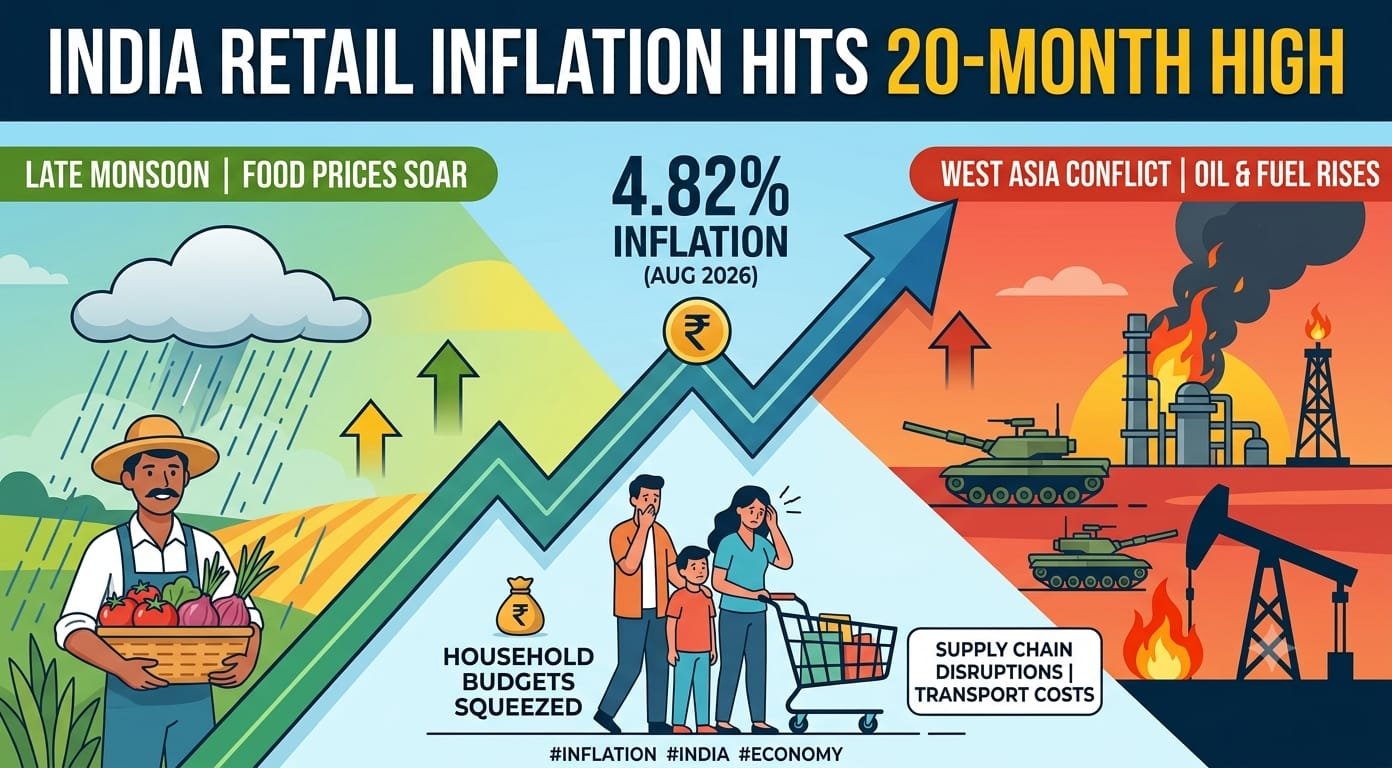
India’s retail inflation rose to 4.82 percent in August 2026, reaching a 20-month high. The main reason was not the rise in international crude oil prices. The immediate pressure came largely from food prices, especially as weak and delayed monsoon rains affected the supply of key items such as ginger, onion and garlic.
Food inflation climbed to 5.95 percent in August from 5.52 percent in July, making daily household purchases more expensive. A late monsoon can delay crop arrivals, affect harvesting and create shortages in local markets. When supply falls but daily demand remains the same, prices begin to rise quickly.
The increase in crude oil prices due to the West Asia conflict is important, but its effect is currently more visible in wholesale inflation than in retail inflation. Wholesale inflation, measured by the Wholesale Price Index or WPI, rose to 9.92 percent in August from 9.78 percent in July.
Fuel and power inflation rose sharply to 22.93 percent, reflecting higher crude oil prices and supply disruptions caused by the conflict. This means producers, transport companies, factories and traders are facing higher costs before products reach shops and consumers.
However, a rise in crude oil prices does not always appear immediately in the Consumer Price IndexI. CPI measures the prices paid by ordinary consumers for goods and services. The higher cost of oil becomes part of CPI only after it is passed on through petrol, diesel, transport fares, delivery charges, packaged goods and other everyday products.
At present, much of this higher cost may still be absorbed by companies, distributors or retailers, instead of being fully transferred to consumers.
This is why crude oil may be pushing WPI higher now, while its complete impact on CPI could appear later if the cost pressure continues. Supply-chain disruption is another important reason why prices of non-food items may rise.
Higher shipping costs, fuel expenses, transport delays, and uncertainty in global trade can increase the cost of many products.
Cosmetics, personal-care items, packaged goods, medicines, household products and other manufactured items may become more expensive when companies pay more for raw materials, packaging and transportation. The connection is simple: when it becomes costlier to move goods from factories to warehouses and shops, the final price can eventually rise as well.
Still, the August inflation rate of 4.82 percent remains within the RBI’s permitted tolerance band of 2 percent to 6 percent. In other words, inflation is higher than the preferred 4 percent level, but it has not crossed the RBI’s upper limit of 6 percent. The current rise is therefore a warning sign, not a breach of the official inflation range.
The difference between CPI and WPI helps explain the present situation clearly. WPI shows the price pressure faced by businesses at the wholesale stage. CPI shows what households finally pay in markets, shops and service outlets.
At the moment, the oil shock is more visible in WPI, while food inflation is the stronger force in CPI. If crude prices stay high for a long period, businesses may eventually pass on more of their costs. In that case, higher transport and manufacturing costs could raise retail prices in the months ahead.
For now, the main concern for households remains the cost of food. Higher vegetable and staple prices affect almost every family because these products are purchased regularly.
At the same time, rising wholesale costs suggest that the pressure may spread to other goods if supply conditions do not improve. Better monsoon progress, stronger crop arrivals and calmer crude oil markets would be important for keeping inflation under control.

