
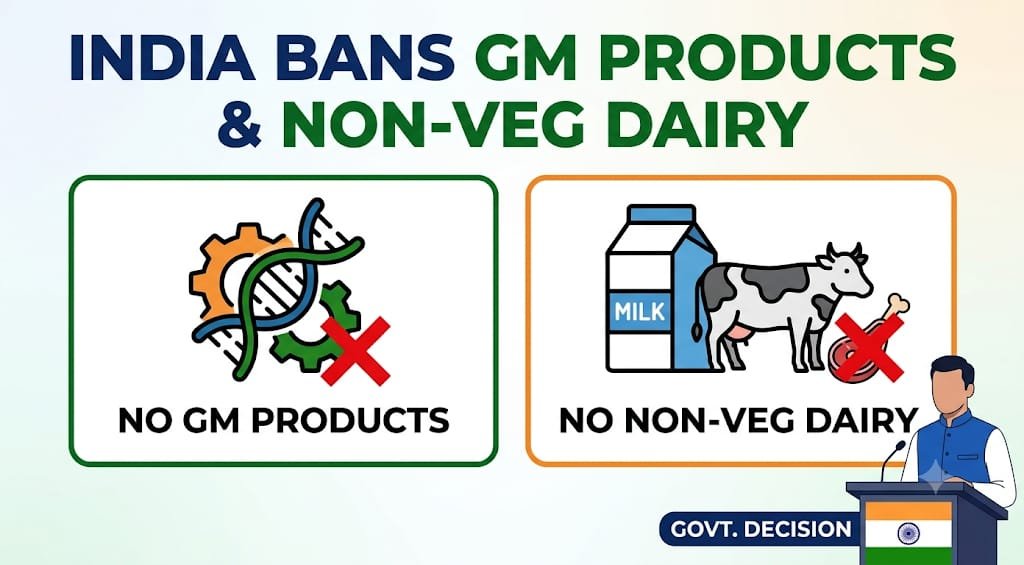
India has sent a clear message that genetically modified, or GM, products will not be allowed into the country, and neither will dairy items made using calf meat. Commerce and Industry Minister Piyush Goyal made this statement at a time when India and the United States are discussing a trade deal. The US has been asking for easier access to the Indian market for its GM products and dairy goods, but the Indian government has said that these concerns cannot come before the country’s food standards, farmers, and religious beliefs.
The minister explained that India has always been very careful about opening its dairy sector. He said the country has never allowed GM products to enter India and will not allow them in the future as well. This position is important because dairy is not just another business area in India. It is closely linked to millions of small farmers, cattle rearers, and rural families whose livelihood depends on milk production. Any sudden entry of foreign dairy products could affect their income and the larger dairy economy.
Another major reason behind India’s stand is the way some dairy products are made abroad. In many foreign countries, calf meat or rennet, which is an animal-based substance, is used during dairy production. For a large section of Indian consumers, such products are not acceptable because of religious and cultural beliefs. Goyal said that India has never permitted such dairy imports in the past and will not do so in the future. He also stressed that any imported dairy product must be strictly certified so that people know exactly what has gone into its production.
The United States has repeatedly raised this issue in trade discussions. In its report on non-tariff barriers, the US Trade Representative said that India’s dairy import rules create difficulties for American milk and dairy exports. The US has argued that India asks exporting countries to certify that dairy animals have not been fed products containing internal organs, blood meal, or tissues of ruminant or porcine origin. It has also said that high tariffs, new facility registration requirements, and health certificate rules limit access to India’s large dairy market.
However, from India’s point of view, these rules are not unnecessary barriers. They are safeguards for food safety, animal-health concerns, consumer trust, and religious sensitivities. India is one of the largest dairy markets in the world, and the government believes that protecting this sector is essential. The message from the Commerce Minister is that trade negotiations can continue, but India will not compromise on the standards that protect its people and its farmers.
This decision also shows that India wants a balanced trade relationship rather than a one-sided opening of markets. While the country remains open to trade and investment, it wants imports to match its social values and regulatory requirements. For ordinary consumers, the assurance is simple: dairy products available in India will continue to follow the country’s own food and cultural standards. For dairy farmers, the government’s statement offers reassurance that their interests will not be ignored during international trade talks.
The broader point is that India is drawing a firm line on sensitive products. GM foods and dairy items made with animal-derived ingredients are not being treated as ordinary trade goods. They are being viewed through the lens of public health, farmer protection, consumer choice, and religious faith. By making its position public, the government has indicated that any future trade agreement with the US will need to respect these red lines.

