
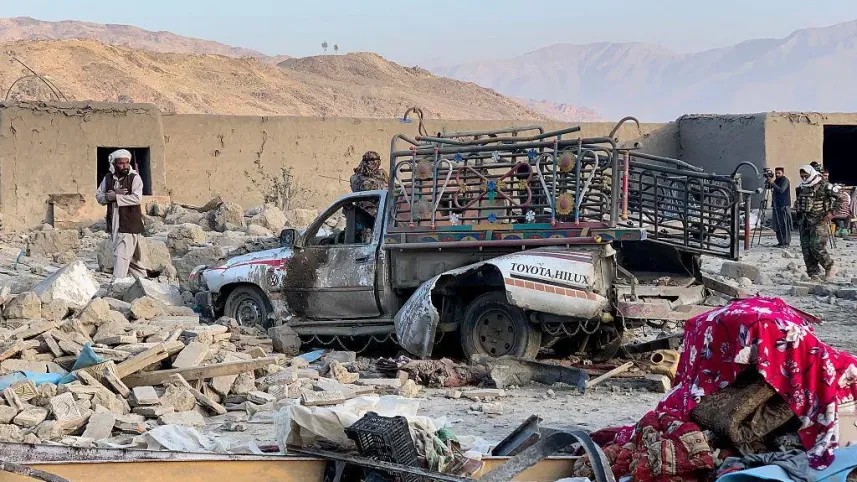
The tragic pattern of civilian casualties resulting from Pakistani military actions has once again come under scrutiny after the death toll from a recent Pakistani air strike inside Afghanistan rose to 19. Among the victims were 11 children, highlighting the devastating human cost of cross-border military operations.
Pakistan keeps claiming that it is launching strikes against terror hideouts in Afghanistan, but almost always kills Afghan civilians while conducting these operations across the border.
This latest strike has again increased tensions between the neighbours Pakistan and Afghanistan.
According to Afghan authorities, the air strike targeted areas in eastern Afghanistan near the Pakistan border. While Pakistani officials have claimed that the operation was aimed at terrorist hideouts, local Afghan sources reported that the majority of those killed in these strikes were civilians, including women and children. Images emerging from the affected villages showed destroyed homes, grieving families, and rescue workers searching through rubble for survivors.
The incident has sparked outrage across Afghanistan, with many questioning Pakistan’s repeated use of military force inside Afghan territory. Afghan officials condemned the strike as a violation of the country’s sovereignty and called for an international investigation into the deaths of civilians.
This is far from the first time that Pakistani military operations have been accused of causing civilian casualties. Over the years, cross-border shelling, air strikes, and security operations have frequently resulted in the deaths of innocent people living in border regions. Human rights groups have repeatedly warned that such actions fuel resentment, deepen instability, and undermine prospects for peace.
The fact that 11 children lost their lives in the latest strike has made the tragedy even more heartbreaking. Children often bear the heaviest burden of conflicts they have no role in creating. Their deaths serve as a grim reminder that military operations, regardless of their stated objectives, can have catastrophic consequences when conducted without adequate safeguards for civilian lives.
The strike also comes at a time when relations between Pakistan and Afghanistan remain strained. Border disputes, allegations of support for militant groups, and disagreements over security policy have created an atmosphere of distrust between the two neighbours. Incidents such as this are likely to further inflame tensions.
As families bury their loved ones and communities struggle to recover from the destruction, questions remain about accountability and the measures needed to prevent similar tragedies in the future. For the victims’ families, however, geopolitical arguments offer little comfort. Their loss is irreversible.

