
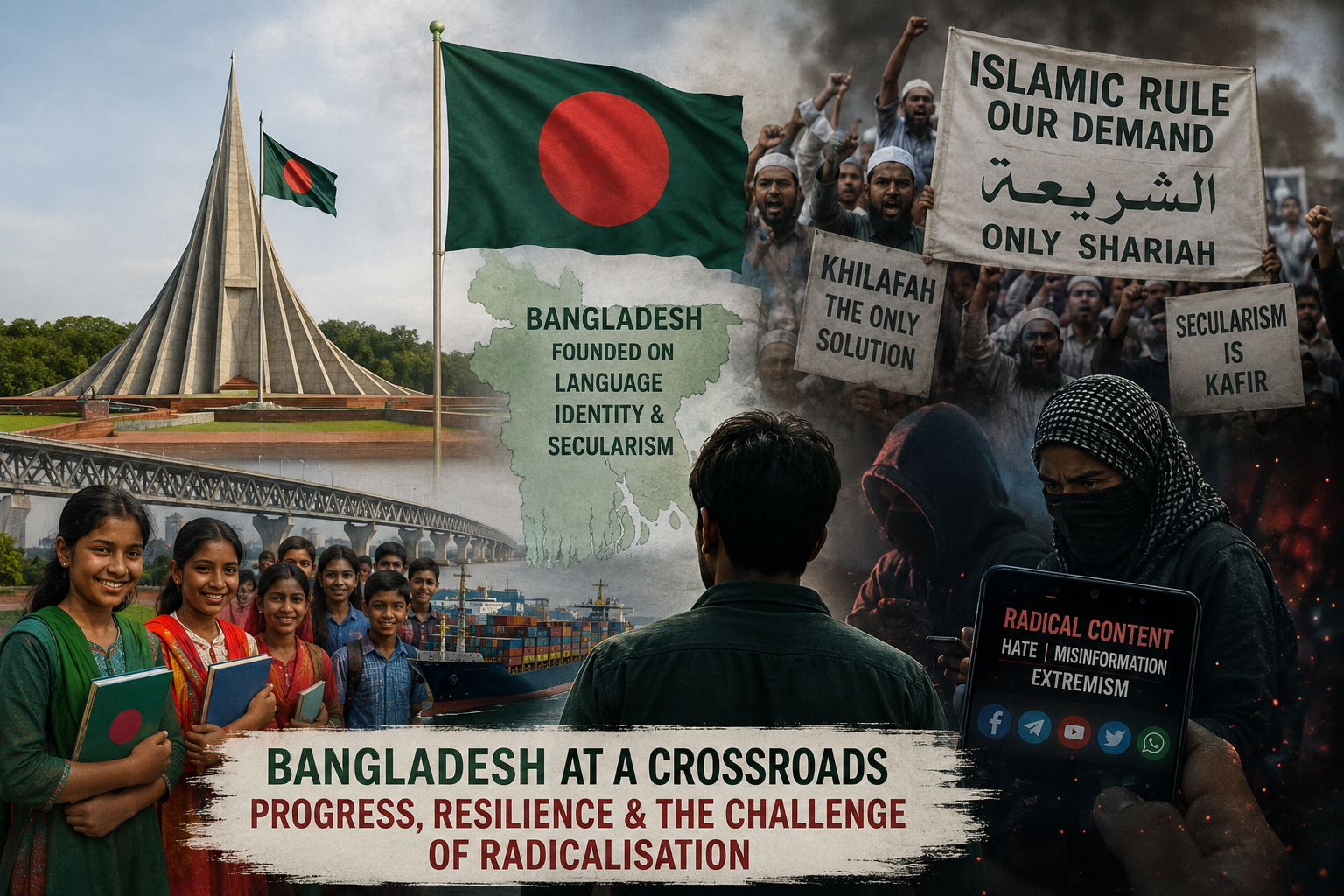
Bangladesh was a nation founded in 1971 on the principles of linguistic identity and secularism. Since its independence in 1971, secured by Indian victory over Pakistan, the country has experienced remarkable economic growth, improvements in social development, and increasing regional importance. However, developments over the past two years have raised concerns about the growth of Islamist radicalisation and the space being created for extremist narratives.
Notably, India has enjoyed friendly relations with Bangladesh for decades, but that relationship has also hit a rocky patch during the last couple of years.
The resurgence of hardline Islamist groups and the growing visibility of radical rhetoric has sparked debate about Bangladesh’s future direction. While Bangladesh is not yet “becoming another Pakistan,” there are warning signals that if extremist influences continue to expand unchecked, the country could face challenges similar to those experienced by Pakistan during periods when Islamist terror organisations gained greater influence over the country.
Political instability has created opportunities for ideological groups to expand their outreach. During periods of uncertainty, organisations with extremist agendas often attempt to present themselves as alternatives to mainstream political institutions. Public demonstrations featuring Islamist slogans, increased demands for stricter religious legislation, and greater online dissemination of extremist content have all attracted attention.
The digital sphere has also become an important battleground. Social media platforms have enabled radical Islamist preachers and ideological networks to reach young audiences more effectively than before. Online misinformation, sectarian narratives, and emotionally charged propaganda can spread rapidly, making it easier for extremist viewpoints to influence vulnerable individuals. This challenge is not unique to Bangladesh, but it has become increasingly visible in the country over the past two years.
Security experts have also pointed to renewed activity by some extremist organisations and the continued threat posed by extremist ideologies. Although Bangladeshi security agencies have historically taken firm action against terrorist groups, maintaining that success requires constant vigilance. Counterterrorism efforts alone are insufficient if they are not accompanied by educational reforms, economic opportunities, and community-based initiatives that reduce the appeal of extremist messaging.
At the same time, it is important to distinguish between religious conservatism and violent extremism. Bangladesh is a Muslim-majority country where religious practice plays a significant role in everyday life. The overwhelming majority of Bangladeshi Muslims reject violence and support peaceful coexistence. Equating ordinary religious observance with radicalisation would be both inaccurate and unfair. The concern lies specifically with groups that advocate intolerance, undermine democratic institutions, or encourage violence in pursuit of ideological goals.
Comparisons with Pakistan should therefore be made cautiously. Pakistan’s security challenges developed over decades through a complex combination of geopolitical conflicts, state policies, regional wars, and militant networks. Bangladesh has a different historical trajectory, political structure, and social fabric. Nevertheless, Pakistan’s experience serves as a reminder of the long-term consequences that can arise when extremist organisations gain legitimacy or are not effectively countered.
Bangladesh still possesses significant strengths that can help prevent such an outcome. A vibrant civil society, expanding educational institutions, an export-driven economy, and a population that has generally embraced economic progress provide resilience against extremist ideologies. Strong governance, protection of democratic institutions, promotion of inclusive education, and consistent enforcement of laws against violent extremist groups remain essential to preserving these advantages.
Ultimately, Bangladesh stands at an important juncture. The increase in reports and concerns regarding radicalisation over the past two years deserves careful attention from policymakers and society alike. Addressing these challenges through democratic institutions, effective law enforcement, educational initiatives, and economic inclusion is likely to prove more sustainable than relying solely on security measures. The country’s future will depend not on alarmist comparisons but on its ability to uphold pluralism, constitutional values, and social harmony while confronting genuine extremist threats with determination and fairness.

