
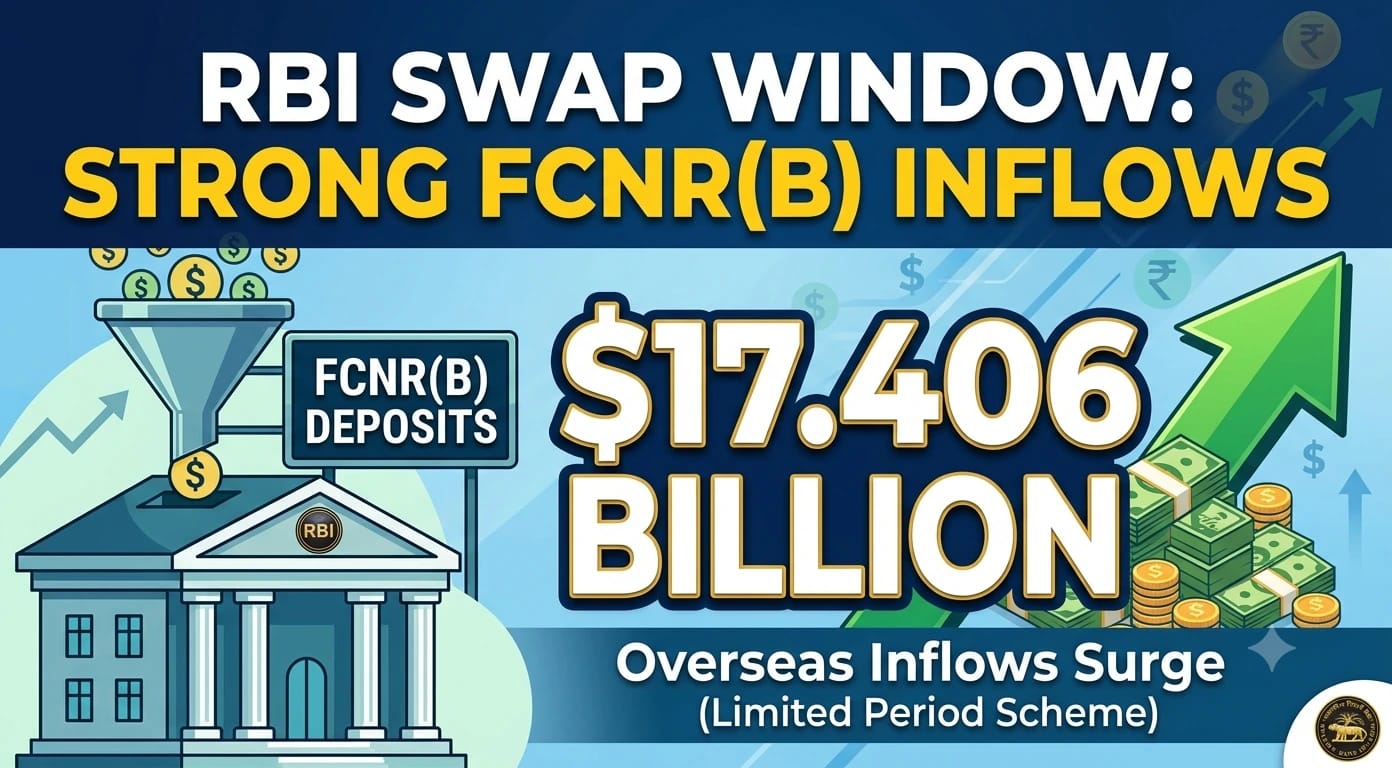
Fresh foreign currency deposits have shown a strong response after the central bank opened a limited-period swap facility for banks. The latest numbers show that FCNR(B) deposits alone have brought in $17.406 billion, which means the scheme has started on a solid note and is already attracting meaningful overseas money.
This development matters because FCNR(B) deposits are not ordinary savings deposits. These are foreign currency deposits brought in by non-resident Indians and similar eligible overseas savers, and they can help banks collect stable long-term funds while also supporting the broader foreign exchange position.
The special swap arrangement makes the deposits more attractive, because banks can raise the money in foreign currency and then swap it with the central bank under a concessional structure.
The scheme was designed to encourage fresh inflows during a specific window, and that limited timing appears to be one reason for the strong interest. The facility for FCNR(B) deposits was opened in June 2026 and is available only for deposits raised within the announced period, while the swap support has its own deadline. That time-bound structure creates a sense of urgency for banks and depositors alike, which can push quicker participation.
The broader aim is also easy to understand. When more foreign currency enters the banking system, pressure on the rupee can ease, banks can access better funding, and the system can gain more liquidity support.
In simple terms, this is a way to bring in outside money at a moment when stable inflows are useful for the financial system and for currency management. The arrangement also reduces the hedging burden for banks, making the product more workable and more attractive to offer.
Reports around the scheme show that banks have responded by improving rates on FCNR(B) deposits so that they can attract more overseas funds. This is important because dollar-based deposits in other markets often offer competitive returns, so banks need to stay appealing if they want to bring in large sums. The current inflow figure suggests that the strategy is working and that overseas savers are willing to place money through this channel.
The response has also been strong enough to draw attention from policy and banking circles. The combined inflows under the special swap facility have crossed a large mark, and FCNR(B) deposits have become the main driver of the total inflow under this window. That shows the route is not just symbolic; it is turning into a practical source of funds with visible numbers attached to it.
There is a larger message behind these inflows as well. When fresh foreign currency money comes in through bank deposits, it can support deposit growth, improve funding comfort for lenders, and reduce dependence on more expensive sources of money. For a financial system that constantly needs stable deposits, this is a useful outcome and may encourage similar measures in future if conditions call for them.
Overall, the early result of $17.406 billion in FCNR(B) deposits shows that the limited-period swap facility has found a strong market response. The numbers suggest that the combination of lower hedging cost, improved attractiveness, and a clear deadline has worked well so far.
In simple words, the scheme has managed to pull in serious foreign currency funds in a short time, and that makes it an important development for banks, depositors, and the wider economy.

