
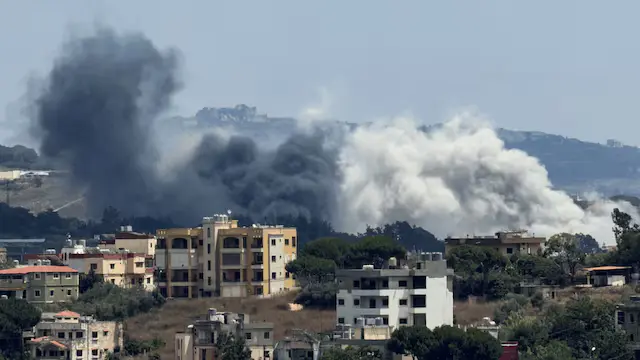
The latest phase of the US-Iran conflict has entered dangerous new territory. What initially revolved around military bases, missile launch sites and nuclear facilities has now expanded to include ports, bridges, airports and transport infrastructure. The widening list of targets has raised fears that the conflict is no longer confined to military objectives but is increasingly affecting the civilian backbone of Iran’s economy and daily life.
In recent days, US strikes have reportedly hit key bridges in southern Iran, damaged facilities at Chabahar Port and targeted transport infrastructure near Bandar Abbas. Reports also indicate that airports and railway stations have been struck as Washington attempts to disrupt Iran’s military logistics and supply chains. American officials argue that these facilities are being used to transport weapons, missiles and military equipment, making them legitimate military targets. Iran, however, insists that these are civilian assets serving millions of ordinary people and has accused the United States of violating international humanitarian law.
Among the most significant developments has been the repeated targeting of Chabahar Port, one of Iran’s most important commercial gateways. Located outside the Strait of Hormuz, Chabahar has strategic importance for regional trade and has also featured prominently in India’s connectivity plans to Afghanistan and Central Asia. Damage to port infrastructure could severely affect commercial shipping, imports and exports while complicating logistics for several countries with economic interests in the region.
Bridges have also become high-value targets. Military planners often view bridges as critical choke points because destroying them slows troop movements and interrupts supply routes. However, the same bridges are equally vital for civilians, carrying commuters, emergency services, food supplies and humanitarian aid. When bridges are destroyed, the immediate military impact is accompanied by long-term economic and humanitarian consequences that can affect entire regions.
The conflict is not one-sided. Iran has expanded its retaliatory campaign by launching missiles and drones against US military facilities and infrastructure in neighbouring Gulf countries that host American forces. Reports indicate attacks affecting airports, desalination plants and energy facilities, raising concerns that critical civilian infrastructure across the region could increasingly become part of the battlefield.
The economic consequences are already becoming visible. Damage to ports and transport networks threatens supply chains, while continuing disruptions around the Strait of Hormuz have pushed global energy markets into uncertainty. Since nearly one-fifth of the world’s seaborne oil trade passes through the narrow waterway, any prolonged disruption has implications far beyond the Middle East, affecting fuel prices, inflation and global trade.
The deliberate targeting of infrastructure marks a significant escalation in modern warfare. While military planners may see bridges, ports and transport hubs as strategic assets, they are also indispensable to civilian life. Every damaged bridge delays ambulances, every crippled port disrupts food and medicine supplies, and every closed airport isolates communities. As the US-Iran conflict continues to spiral, the distinction between military and civilian infrastructure appears to be fading, increasing the risk that ordinary civilians will bear the greatest cost of an increasingly destructive confrontation.

