
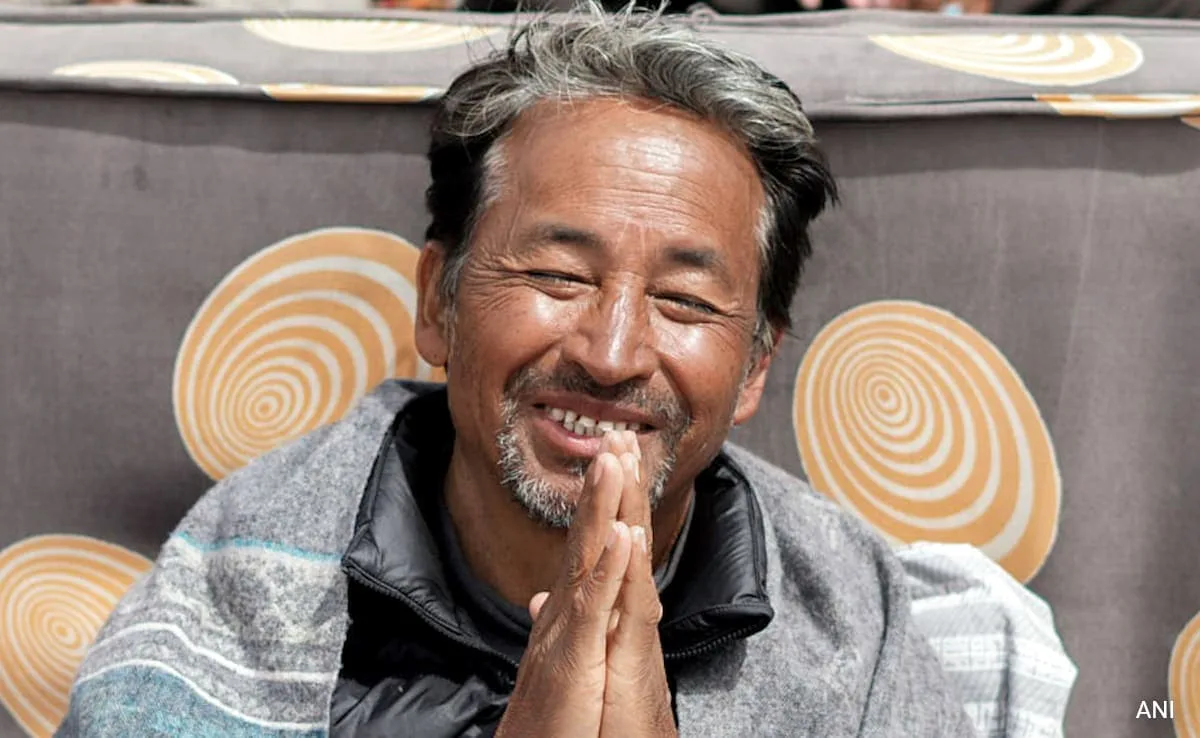
The emergence of high-profile advocates can be a turning point for underrepresented regions. In the case of Ladakh, few individuals have succeeded in drawing national attention to local concerns as effectively as Sonam Wangchuk. His campaigns on environmental sustainability, constitutional safeguards, and local representation have elevated issues that might otherwise have remained confined to regional discussions.
Yet the growing prominence of any single individual within a complex political movement raises an important question: At what point does personality-driven advocacy begin to undermine the very cause it seeks to advance?
This question is particularly relevant for Ladakh, a strategically significant and environmentally fragile region facing multiple, often competing, priorities. Its future depends not only on constitutional arrangements and political representation, but also on infrastructure development, employment generation, sustainable tourism, renewable energy, healthcare, education, and climate resilience.
These issues require broad-based institutional engagement, sustained policy dialogue, and consensus among diverse stakeholders. They cannot be resolved through symbolic campaigns alone.
The risk of personality-centric movements is not that they lack visibility—indeed, visibility is their greatest strength. The challenge is that public discourse can gradually become centred on the individual rather than the underlying issues.
Recent debates around Sixth Schedule protections and governance reforms illustrate this dilemma. While these demands reflect genuine concerns shared across sections of Ladakhi society, media coverage often frames them primarily through the lens of one prominent activist. In doing so, it risks overshadowing the contributions of elected representatives, hill councils, civil society groups, environmental experts, business associations, and local community leaders who also shape Ladakh’s future.
Complex policy questions are rarely served well by singular narratives.
There is also a practical concern. Prolonged cycles of high-visibility protests and public confrontations can contribute to perceptions of policy uncertainty. Investors, businesses, and development agencies typically seek predictability, especially in regions requiring long-term commitments in sectors such as tourism, infrastructure, renewable energy, and logistics.
Ladakh’s development trajectory depends on balancing ecological concerns with economic aspirations. Public scrutiny of major projects is both legitimate and necessary. However, when debates become personalised, policy discussions can become more polarised, making compromise and consensus more difficult to achieve.
Examples from around the world suggest that movements built around individuals often struggle to translate awareness into durable institutional outcomes. As media attention shifts, momentum can dissipate unless strong local institutions are prepared to carry the agenda forward.
The most successful advocacy movements ultimately evolve beyond their founders. They create platforms for multiple voices, strengthen representative institutions, and develop mechanisms for continuous engagement with policymakers.
For Ladakh, the challenge is not whether prominent advocates should have a role—they undoubtedly should. The challenge is ensuring that no single personality becomes the sole vehicle through which the region’s aspirations are understood.
Ladakh does not need less advocacy. It needs broader advocacy.
Its long-term interests will be best served when debates move beyond personalities and focus instead on institutions capable of delivering sustainable development, effective governance, and inclusive representation.
The future of Ladakh should not depend on the prominence of any one voice, however influential. It should rest on the strength of its institutions and the diversity of the people they represent.

