
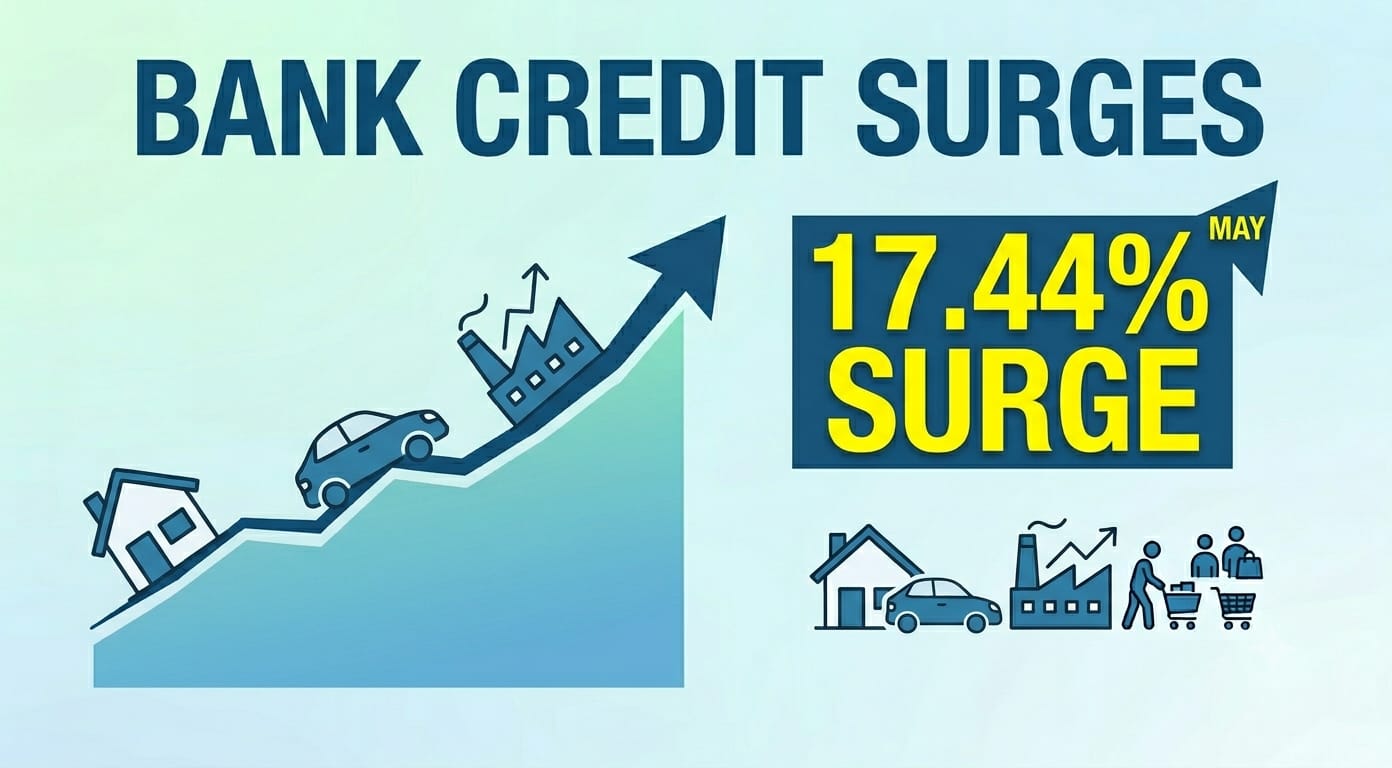
Bank credit has shown remarkable strength with a 17.44 % year-on-year growth in May, continuing a pattern of double-digit expansion for nine months straight. This sustained upward trend reflects how individuals and businesses across the country remain confident about borrowing money for their needs.
The Reserve Bank of India’s latest data reveals that demand for loans from both retail borrowers and corporate entities continues to stay high, creating a healthy environment for the banking sector. Since January, credit growth has consistently remained above 13 %, with figures ranging between 14 and 17 % in the months following.
The momentum became particularly noticeable from September 2025, when growth accelerated to around 10.21 % and 10.29 % in successive fortnights before firmly entering double-digit territory. By October and November, lending growth moved past 11 % and hovered in the 11 to 11.4 % range, supported by festive season demand, expanded retail lending, and increased trade financing.
December saw even stronger performance as growth climbed from mid-month readings of 11.63 % and 11.87 % to reach 14.39 % by month-end, driven by stronger year-end corporate drawdowns and balance sheet expansion by businesses.
On May 15, credit growth was recorded at 16.06 %, indicating a sharp pickup in lending activity by the end of the month when it reached 17.44 %. This sharp increase shows that borrowers were particularly active in the final weeks of May.
The trend continued into January and February 2026, with credit growth rising between 13 % and 14.41 %, demonstrating that the strong borrowing pattern did not slow down after the festive season. Such consistent growth over nine months suggests that the economy is experiencing genuine demand for credit rather than temporary spikes.
The simplified two-tier tax structure of 5% and 18% approved by the GST Council in September 2025 appears to have improved compliance clarity and boosted business sentiment. This policy change likely contributed to the improved borrowing environment as businesses felt more confident about their financial planning.
The festive demand during October and November further supported retail loan expansion, while higher trade financing needs added to the overall credit growth. These factors combined to create a sustained period of strong lending activity that has continued through the first half of 2026.
For everyday people, this credit growth translates into easier access to home loans, car loans, personal loans, and business financing. When banks are lending more confidently, it usually means that individuals can find better loan options and businesses can secure funding for expansion plans.
The fact that this growth has persisted for nine months suggests that the borrowing trend is not just a short-term phenomenon but reflects genuine economic confidence. Businesses are investing in expansion, individuals are purchasing homes and vehicles, and trade activities are increasing, all of which require bank financing.
The banking sector benefits significantly from this sustained credit growth as it indicates healthy demand for their primary product. Banks earn interest on loans, so higher lending volumes directly improve their profitability. The consistent double-digit growth also suggests that banks are comfortable with their risk assessment and are willing to lend to various borrower categories.
This environment creates a positive cycle where economic activity fuels borrowing, and borrowing further supports economic growth. The data shows that the banking system is functioning effectively and meeting the credit needs of both retail customers and corporate clients.
Looking at the broader picture, this credit growth pattern indicates that the economy is moving forward with confidence. When businesses and individuals are willing to take on loans, they are essentially betting on their future ability to earn and repay.
The nine-month consistency of this trend suggests that such confidence is widespread and not limited to specific sectors or regions. This kind of sustained credit expansion is often seen during periods of economic strength and can be a reliable indicator of overall economic health. The banking sector’s ability to meet this growing demand while maintaining stability demonstrates the strength of the financial system.

