
The story of how fruit and vegetable farming has grown in recent years is both simple and meaningful. It touches daily life, from the breakfast table to the evening meal, and reflects how farming communities are adapting to meet growing needs.
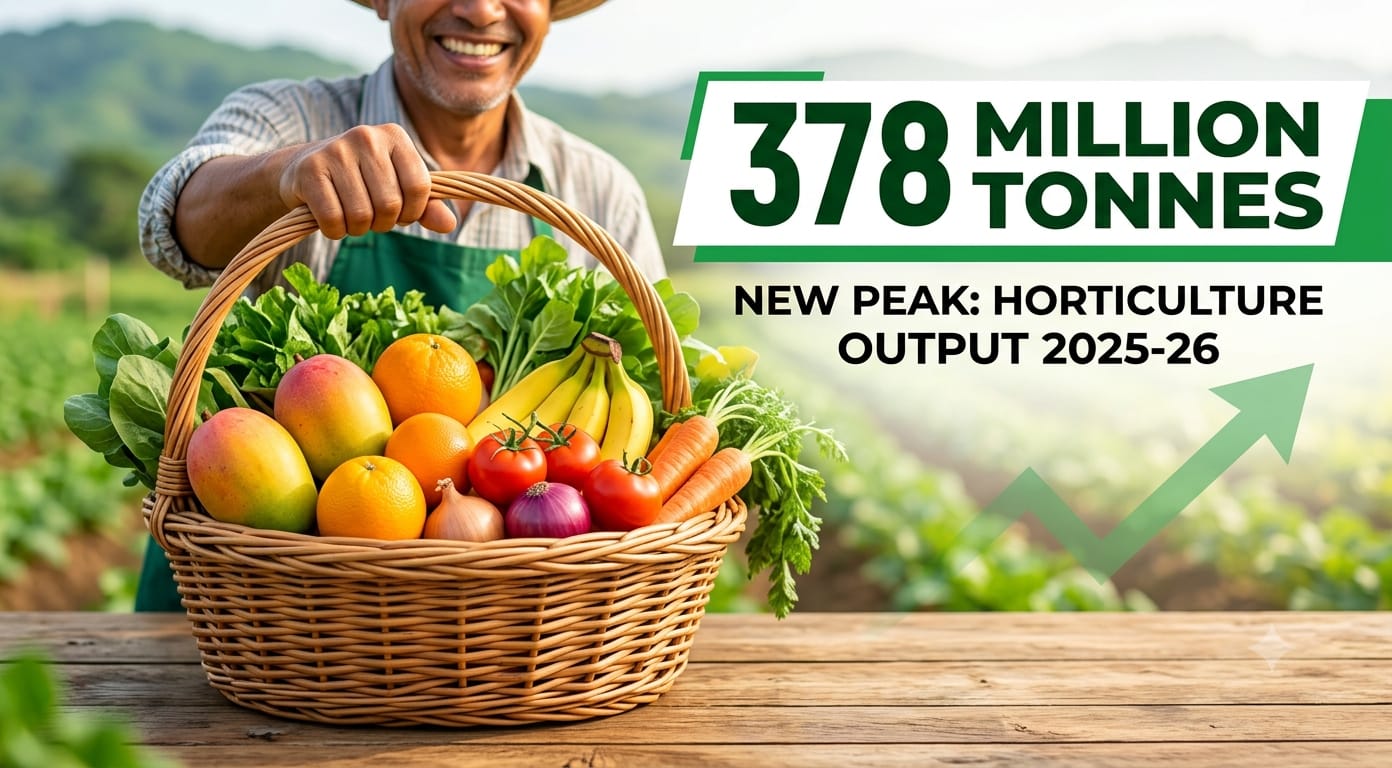
According to the latest government figures, the total output of horticultural crops in the nation has reached 378 million tonnes during the FY2025-26. This marks a clear rise from previous years and shows that the systems supporting fruit and vegetable cultivation are working more effectively than before .
Horticulture includes a wide range of crops like tomatoes, onions, potatoes, mangoes, bananas, citrus fruits, leafy greens, and many more. These are not just commodities; they are essential parts of nutrition for families across regions.
The increase to 378 million tonnes suggests that more land is being used wisely, farming techniques are improving, and supply chains are helping fresh produce reach markets faster. When farmers can grow more with better methods, households gain access to fresher, healthier food at more stable prices .
One of the reasons behind this growth is the steady push toward better irrigation, timely support for seeds and fertilizers, and training programs that help farmers adopt modern practices. Many rural areas have seen improvements in how water is managed, which is critical for crops that need consistent moisture.
Alongside this, storage facilities and transport networks have expanded, reducing the amount of produce that gets wasted before it reaches consumers. These changes may not always be visible in city life, but they shape what appears in local markets and grocery stores .
The rise in production also reflects a shift in how agriculture is viewed not just as a way to grow staple grains, but as a dynamic sector that can deliver diverse, high value crops. Fruits and vegetables often bring higher returns per acre than traditional crops, which encourages farmers to invest time and care in horticulture.
When incomes rise in farming communities, it strengthens local economies and creates a ripple effect: more schools, better roads, and improved access to healthcare. This kind of growth is quiet but powerful, building resilience from the ground up.
Another important aspect is the balance between supply and demand. As urban populations grow and diets change, the need for fresh produce increases. The jump to 378 million tonnes helps meet this demand without relying heavily on imports.
It also means that seasonal shortages are less severe, and prices remain more predictable. For families managing budgets, this stability makes planning easier and reduces the stress of sudden price spikes during offseasons.
The government’s role in sharing this data is also significant. By publishing clear, up to date figures, it allows researchers, policymakers, and farming groups to understand trends and plan accordingly. Transparency builds trust and helps everyone involved from the farmer in the village to the consumer in the city see how progress is being made.
It also opens space for discussion on where more support might be needed, such as in cold storage, digital market access, or climate resilient crop varieties.
Looking ahead, the path forward includes continuing to support small and medium farmers who form the backbone of horticulture. With the right mix of training, technology, and infrastructure, the sector can keep growing while staying sustainable.
Climate change poses challenges, but smarter farming practices like watersaving techniques and crop rotation can help adapt. The goal is not just higher output, but output that lasts, feeds well, and respects the land.
In the end, this story is about connection. It connects soil to stomach, farmer to family, and policy to daily life. The rise to 378 million tonnes is more than a number; it’s a sign that when systems work together, real progress happens. And that progress shows up in the freshness of a mango, the crunch of a carrot, and the nourishment of a meal shared at home.

