
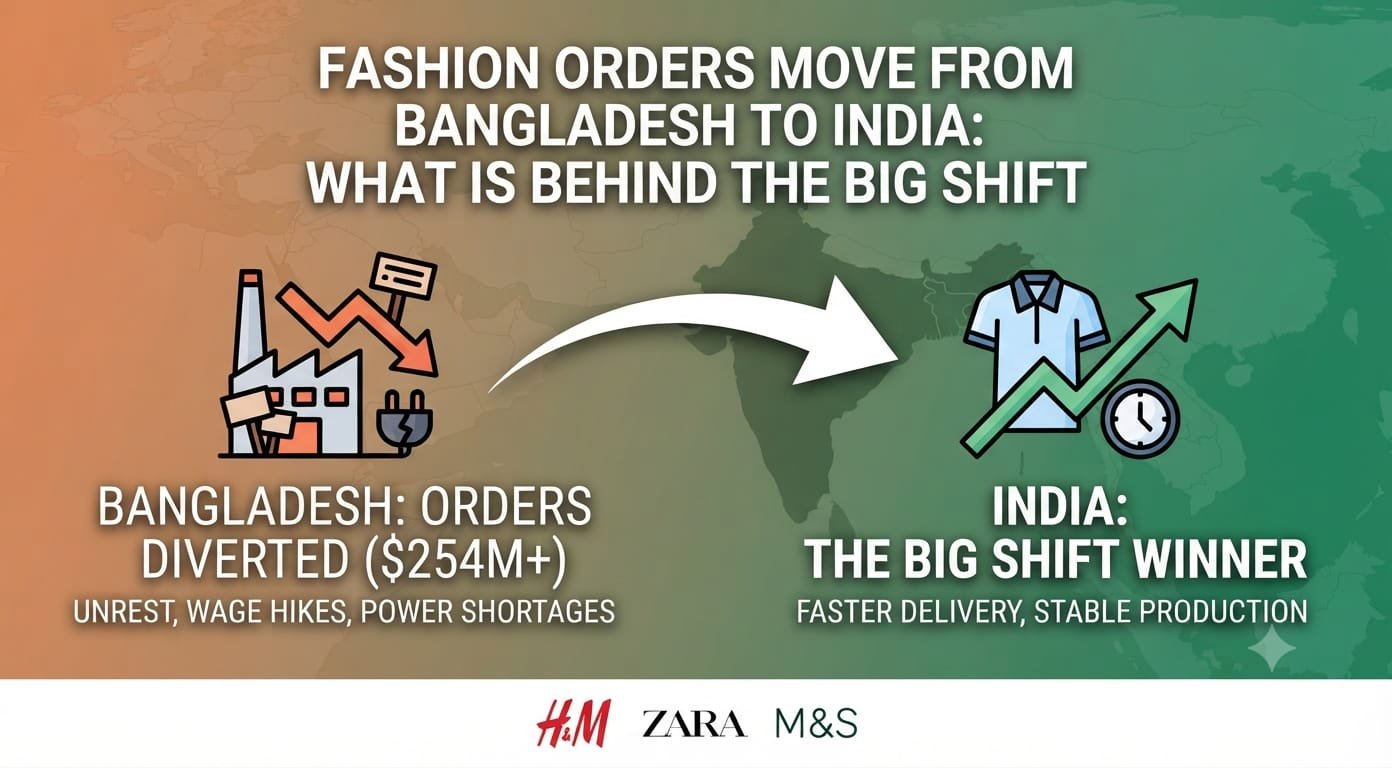
Clothes sold by popular global names such as Zara and H&M often start their journey in factories across South Asia. In the first half of November, a big part of that business changed direction. Between November 1 and 18, brands moved about $254 million worth of orders away from Bangladesh. Three factory owners shared this, according to Reuters reporting carried by The Economic Times. That is close to a tenth of the monthly orders. Most of the diverted business went to neighbouring India.
The reason is a mix of problems that hit at the same time. Labour unrest disrupted production in Bangladesh. Wages, utility bills and raw material costs went up. Energy shortages, made worse by the Middle East crisis, forced some factories to use costlier backup power. Political uncertainty added to the worry. Together, these weakened the low-cost edge that made Bangladesh the world’s second-largest apparel exporter after China.
The scale of the damage is large. The Bangladesh Garment Manufacturers and Exporters Association (BGMEA) says the protests have caused more than $400 million in production losses. Garments make up more than 80% of the country’s export earnings and nearly 40% of its manufacturing jobs, so any shock here is felt across the economy. Factories around Dhaka are said to have lost an estimated 20 to 25 production days. Some are considering overtime and expensive air freight to meet delivery promises.
Wages are at the centre of the unrest. On Wednesday, Bangladesh approved a 36% rise in the minimum wage for garment workers. It was the smallest increase in four decades. Workers had wanted wages to more than double, so fresh clashes with police followed. A senior labour ministry official called the raise “satisfactory” and hoped work would resume from Saturday. Industry leaders say the hike still narrows Bangladesh’s labour-cost advantage over India. Unions argue that pay is still low by global standards.
Speed matters as much as price in this story. A BGMEA director said brands under pressure to meet tight deadlines care less about cost and more about on-time delivery. India can offer a delivery advantage of about a week. Vietnam and Cambodia can cut lead times by as much as 15 days. Rival hubs can usually finish production and delivery within 60 to 90 days, while Bangladesh takes about 120 days. For a fashion brand, a late shipment can mean missed seasons and unsold stock.
India is the biggest winner for now, but it is not the only one. Buyers are also looking at Vietnam, Cambodia and Indonesia to spread risk and improve reliability. This fits a wider pattern in which global retailers avoid depending on a single country.
The worry for Bangladesh is that this may not be temporary. One factory group head said that since November 1, most of his buyers had stopped placing orders. They told him orders were shifted, postponed or cancelled, and that alternatives had already been found. Factory owners fear that diverted orders could be followed by the loss of future business. The BGMEA president said moving some orders for a short time helps the industry keep global clients and limit losses. Still, a director warned that brands “will not wait” if instability continues. Political tension over former Prime Minister Sheikh Hasina’s possible return to Dhaka from India adds another layer of uncertainty.
The big brands have not confirmed any of this. Inditex, which owns Zara, declined to comment. M&S, H&M and Celio did not respond to Reuters. The names and figures come from factory owners who spoke anonymously, to protect their ties with international buyers. That is worth remembering, as the numbers are not official company data.
For India, the opportunity is real, but it comes with a test. Winning orders needs steady capacity, quick delivery and fair prices. Textile workers, small units and exporters could gain if the extra demand lasts. For Bangladesh, the path ahead depends on restoring calm and buyer trust quickly. Trade often follows confidence, and once a buyer finds a reliable new partner, returning is not guaranteed. The coming weeks will show whether this is a short detour or a lasting change in how the world’s clothes are made.

