
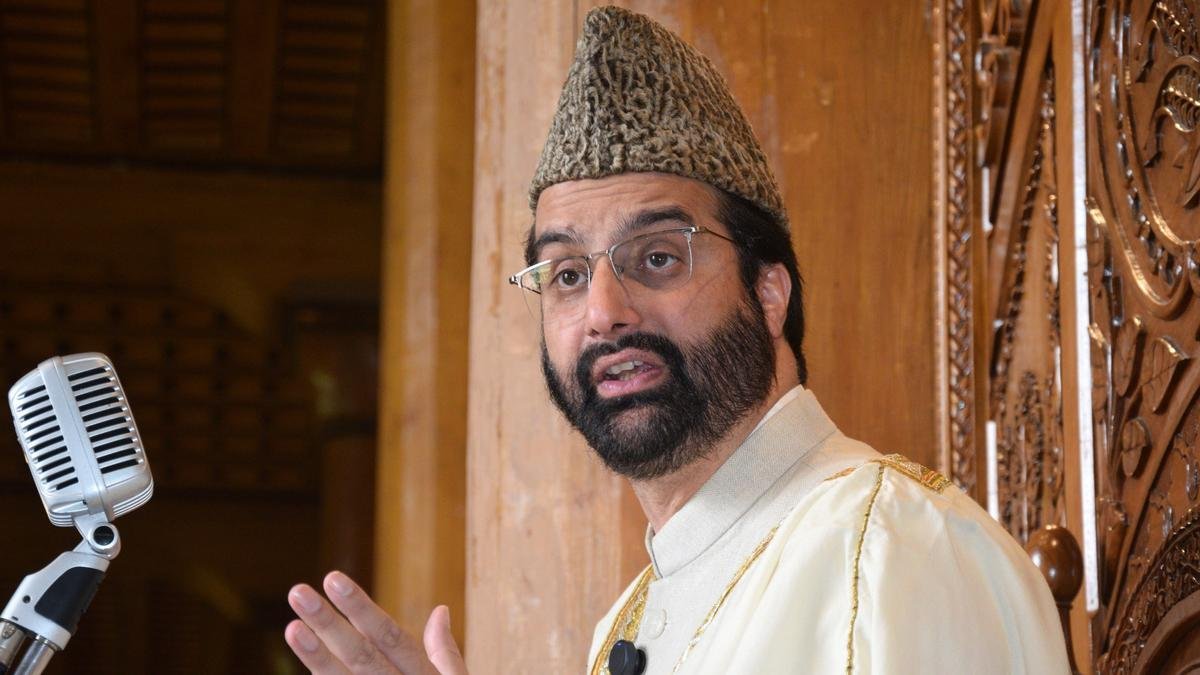
Apparently, even India’s National Song has become controversial in Jammu and Kashmir. The Mutahida Majlis-e-Ulama (MMU), headed by Mirwaiz Umar Farooq, has objected to the playing of Vande Mataram at a Waqf Day function in Srinagar, claiming that its religious imagery conflicts with the Islamic principle of Tawheed. The organisation is now considering legal action against what it calls the forced imposition of the song at official functions. The function was even attended by Union Minister Kiren Rijiju.
The obvious question is – Why should India’s National Song be unwelcome in any part of India, including Kashmir? It is LITERALLY the national song.
Vande Mataram is not a political party’s campaign anthem, nor is it the property of any particular religious community. It is a national song that has been part of India’s freedom struggle and national consciousness for generations.
Its history predates Independence. Bankim Chandra Chatterjee wrote it in the nineteenth century, and it became an important rallying cry during the freedom movement.
Now, nobody is suggesting that people should be forced to violate their religious beliefs. The Constitution protects freedom of religion, but National Song is National Song, at least you are expected to respect it.
Should the National Song itself be excluded from public events in Kashmir because one community doesn’t want to sing it? Well, don’t sing.
If Vande Mataram can be played at official functions in Delhi, Mumbai, Chennai and Bengaluru, why should Srinagar be treated differently? Does Kashmir’s geographical location or religious demography make India’s national symbols somehow less relevant there?
The irony is that national integration cannot be built by constantly treating national identity as something that must be negotiated separately in different parts of the country.
Kashmir is as much a part of India as any other state or Union Territory. Its people have every right to practise their religion, preserve their traditions and express their opinions. Equally, India’s national symbols deserve recognition and respect across the country.
The MMU is entitled to express its religious objections. But disagreement should not automatically translate into demands for exclusion.
India’s National Song should not need a separate permission slip to be played in Kashmir. Patriotism and religious freedom need not be competing ideas. Both can coexist in a constitutional democracy.

