
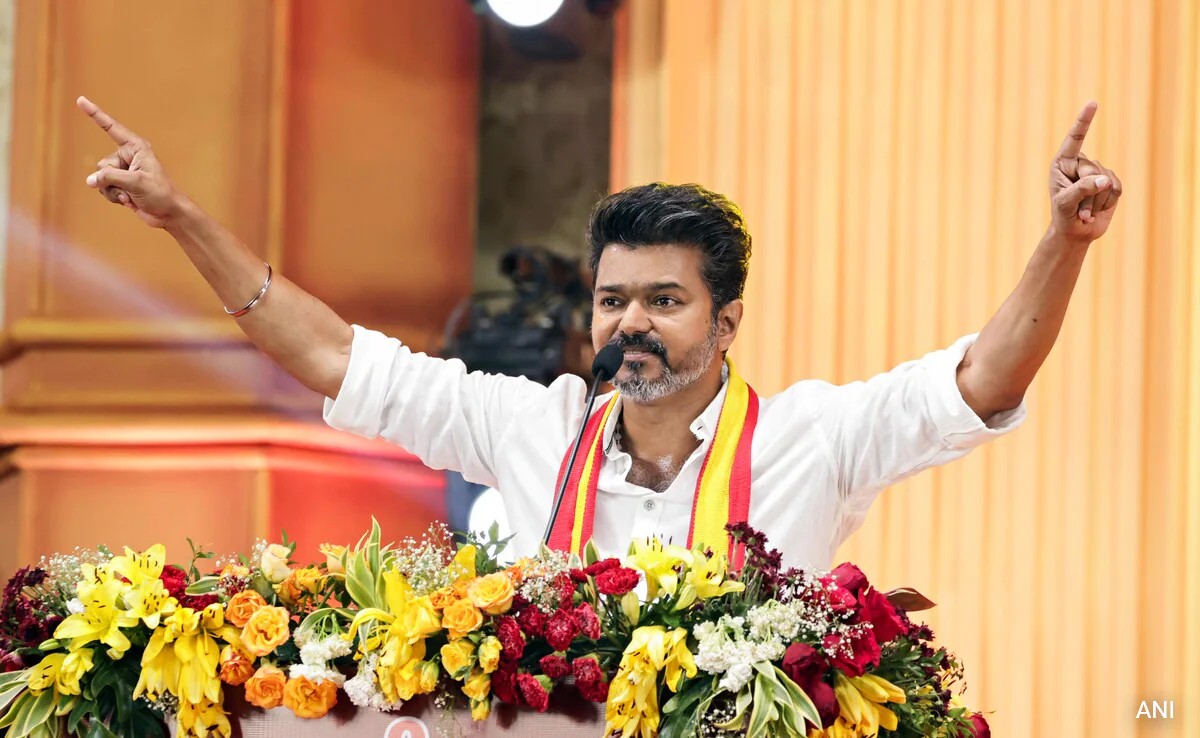
In a secular country where freedom of religion is constitutionally guaranteed, one would imagine that lighting a traditional Hindu lamp during a religious festival would be a fairly straightforward affair. Apparently, not in Tamil Nadu, where the Karthigai Deepam has turned into a major controversy, forcing the administration of newly elected Chief Minister C Joseph Vijay to apologise before the Supreme Court.
The controversy centres around Thiruparankundram hill in Madurai, where devotees wanted to light the traditional Karthigai Deepam at the Deepathoon, a stone pillar situated near a dargah.
On November 20, the Supreme Court permitted the lighting of the ceremonial lamp at the disputed location on November 24. That Hindus had to seek court intervention to light the lamp is strange as it is. Meanwhile, the court also directed the district administration to coordinate the arrangements and ensure compliance.
However, November 24 arrived, and the Deepathoon remained unlit.
The lamp was instead lit near the Uchipillaiyar temple. The Madurai District Collector subsequently appeared before the Supreme Court with an unconditional apology, blaming the temple’s Board of Trustees that they had refused to authorise the team proposed to conduct the ritual.
In simple words, the administration had a Supreme Court order, arrangements were reportedly made, but the ceremony still did not happen at the location permitted by the court.
The Supreme Court declined to initiate contempt proceedings on its own, although it allowed the petitioners to file an appropriate contempt application. The larger dispute is scheduled for a final hearing in January 2027.
Joseph Vijay’s Tamilaga Vettri Kazhagam came to power promising a new political alternative. Yet, this controversy raises questions about how his government intends to balance religious traditions, constitutional freedoms, administrative responsibility and competing claims over religious spaces, and whether the TVK will ignore Hindus and their traditions in the state?
There is nothing wrong with maintaining communal harmony. But harmony cannot become an excuse for administrative confusion or selective sensitivity towards religious sentiments.
When a government needs to explain before the Supreme Court why a permitted religious ceremony could not take place, perhaps the real question is not about the lamp, but about the government’s commitment to implementing the court orders, the rule of law, and secularism.

