
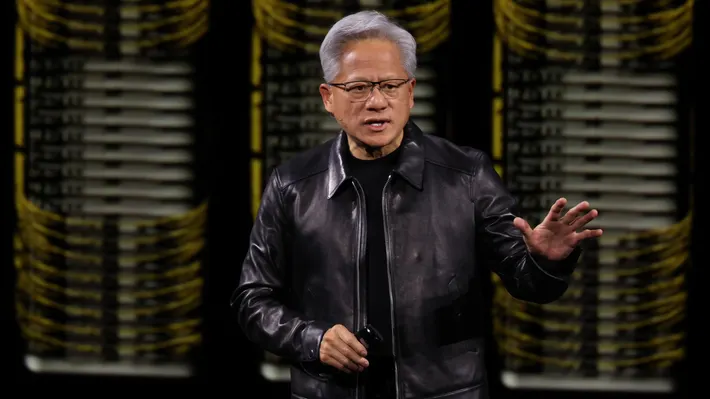
There are ordinary CEOs, then there are celebrated CEOs, and then there is Jensen Huang, a man whose return to the corner office at Nvidia was enough to boost financial markets. Apparently, when you are the face of the artificial intelligence revolution, even a major scandal and Chinese spying claims can turn out to be a temporary career break.
On November 12, 2026, Huang stepped down as Nvidia’s President and CEO following revelations about his personal relationships, including allegations involving a woman suspected of having links to Chinese intelligence. The company’s board announced a leadership transition, appointing CFO Colette Kress as interim CEO and beginning the search for a permanent successor.
Of course, the corporate drama did not last long because Jensen Huang is apparently too valuable. Even US President Donald Trump got involved in ensuring Huang’s reinstatement.
Less than two weeks after his departure, Nvidia announced that its board had unanimously reinstated Huang as President, CEO and board director. The company cited discussions with Huang and input from senior US government officials in reaching its decision. Investigations, however, remain ongoing.
And the markets? They responded as though someone had announced the discovery of another planet.
Nvidia shares surged 31.5%, adding close to $1 trillion in market value in a single trading session. The broader technology market also rallied, demonstrating just how closely investor confidence in the AI industry has become associated with one individual.
So, what does this extraordinary comeback tell us?
First, it demonstrates the growing importance of leadership personalities in the technology industry. Huang is not simply another CEO managing quarterly targets. He co-founded Nvidia more than three decades ago and helped transform it from a graphics-chip company into a central player in the global AI revolution.
Second, it exposes a fascinating corporate governance dilemma. Can a company become so dependent on one individual that removing him becomes more expensive than retaining him? When the departure of a CEO wipes out enormous market value, boards are forced to confront precisely this question. After all, it is all about the money.
Third, it highlights how technology, national security and geopolitics are increasingly interconnected. Nvidia’s advanced chips are strategic assets, and Huang’s relationships with governments, investors and technology companies carry consequences far beyond Silicon Valley.
Of course, being indispensable should never mean being above scrutiny. The investigations surrounding Huang must reach their conclusions, irrespective of his importance to Nvidia.
But one thing is clear: that Jensen Huang’s return demonstrates that in today’s AI-driven economy, some individuals become so central to an industry that even their exit cannot last.
At Nvidia, the CEO’s chair was never quite ready for a new occupant.

