
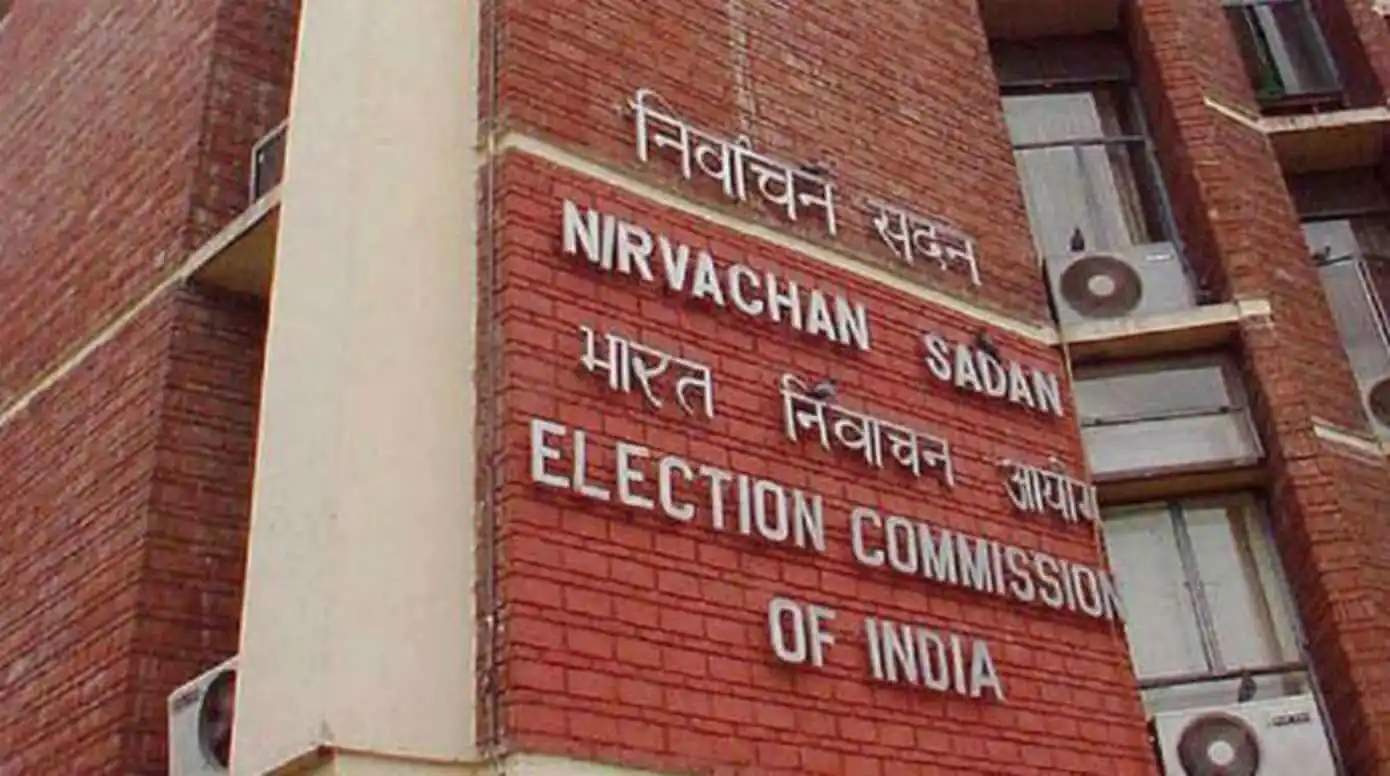
Why should disagreement inside the Election Commission of India automatically be treated as evidence of institutional weakness? In fact, in a constitutional body entrusted with conducting elections for the world’s largest democracy, the ability of its members to raise questions, record concerns and challenge proposals should be viewed as an important part of institutional checks and balances.
A recent report by The Indian Express has brought this issue into focus. The report said Election Commissioners Sukhbir Singh Sandhu and Vivek Joshi had formally raised objections on at least 14 occasions over a period of 10 months on matters connected with electoral rolls, voter deletions, and the handling of electoral-roll data. The report also said some of these objections questioned whether certain decisions or administrative steps had been taken without their knowledge.
Now the question is – is disagreement itself a problem? The answer should be a resounding no.
The Election Commission is a multi-member constitutional body under Article 324. The members are not required to think alike on every issue. The Commission should, as far as possible, transact business unanimously; where the members differ, the matter is decided according to the majority view.
That framework itself recognises the basic democratic principle that deliberation among the members can involve disagreement before a decision is reached.
That is precisely the argument the Election Commission itself has now made in response to the report.
Responding to The Indian Express report, the ECI said that “differing views and observations are a normal part of deliberation in any institution”. It said written notes, observations, technical suggestions and internal checks are standard practices intended to improve transparency, legal compliance and operational rigour. The Commission further said that the suggestions made by the two Commissioners were aimed at improving electoral processes.
At the same time, the ECI rejected the suggestion that these objections meant that its final decisions were divided. According to the Commission, the decisions taken by the full Commission during the past year, including those relating to electoral-roll revision and SIR, were eventually unanimous.
Internal disagreement and institutional breakdown are not the same thing
A healthy institution should allow its members to ask uncomfortable questions before a decision is finalised. If a Commissioner believes a procedure requires greater legal scrutiny, records that concern and asks for clarification, that should not automatically be interpreted as a crisis. Indeed, an institution where everyone simply agrees without questioning anything would arguably provide fewer safeguards.
Questions concerning voter registration, deletion of names, access to electoral databases and the rights of eligible voters deserve transparency because they directly affect the electoral process. ECI has provided explanations for all these questions and shown that its decisions were lawful and unanimous.
Democracy does not require constitutional institutions to be disagreement-free. It requires them to have mechanisms through which disagreement can be converted into better decisions.
And in that sense, differing views within the Election Commission need not be a sign of an unhealthy institution. They can be evidence that the institution’s internal checks are actually functioning.

