
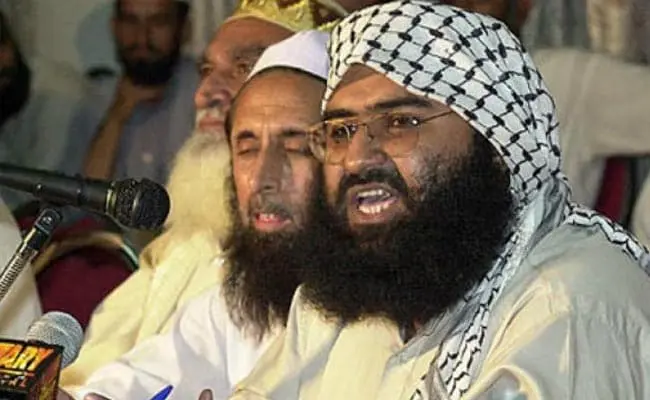
Pakistan has once again raised questions about the seriousness of its fight against terrorism after announcing a PKR 7 million (₹70 lakh) reward for information leading to the arrest of Jaish-e-Mohammed chief Masood Azhar. The move comes as Pakistan faces renewed international scrutiny over its record on terror financing and extremist groups. Azhar has also been listed in Pakistan’s Federal Investigation Agency (FIA) Red Book of most-wanted terrorists.
On paper, the announcement appears to be a significant step. In reality, it is difficult to ignore the irony. Masood Azhar is not an unknown criminal whose whereabouts have suddenly become a mystery. He is the founder of JeM, a Pakistan-based terrorist organisation designated by the United Nations, and has for years been one of India’s most-wanted terrorists. Further, Osama bin Laden lived freely in Abbottabad in Pakistan right next to the Army cantonment before US forces took him down. And then there of course is Hafiz Saeed, and of course Dawood Ibrahim. Words will fall short if we describe all the terrorists harboured by Pakistan.
Pakistan has previously maintained that Azhar fled to Afghanistan, but recent reporting has cast doubt on that explanation. The Taliban government has rejected claims that Azhar is currently in Afghanistan, further increasing questions about where the JeM chief is actually hiding and whether Pakistani authorities genuinely lack information about his whereabouts.
That is why the 70 lakh bounty looks less like a dramatic counter-terrorism breakthrough and more like a carefully timed public-relations exercise. Pakistan’s announcement comes ahead of a crucial Financial Action Task Force (FATF) review, giving Islamabad an obvious incentive to demonstrate that it is taking action against internationally designated terrorists.
The contradiction is hard to overlook. Pakistan is effectively offering money to find a terrorist whose organisation has operated from Pakistani territory for decades. If Islamabad genuinely wants to demonstrate its commitment to combating terrorism, the meaningful test is not announcing a bounty, it is locating, arresting and prosecuting Azhar.
Until that happens, the announcement risks being viewed as another performative gesture designed to satisfy international scrutiny rather than a decisive move against the terror infrastructure that has long operated from Pakistan.

