
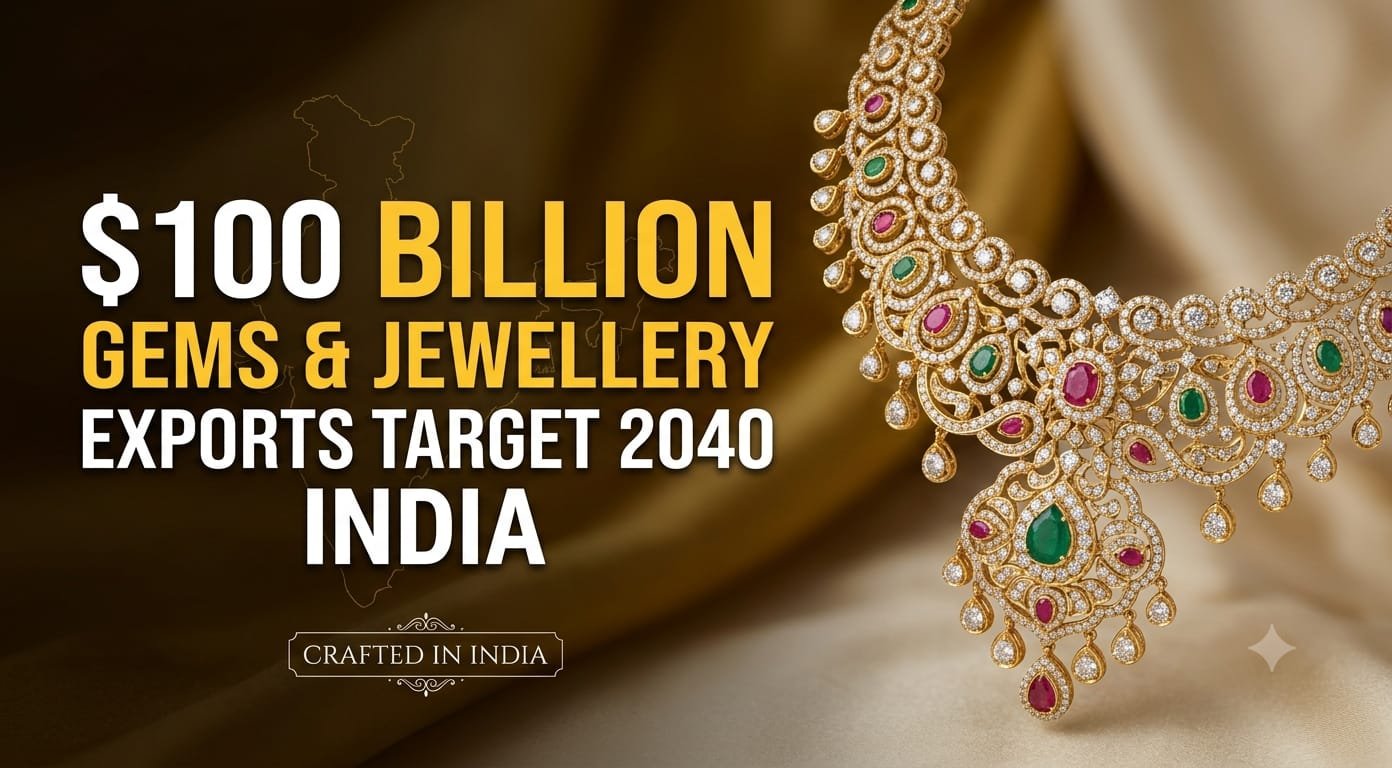
India has set an ambitious target of increasing its gems and jewellery exports to $100 billion by 2040. The plan aims to transform the sector from a largely manufacturing-focused industry into a global centre for design, innovation, branding and high-value jewellery.
At present, the sector’s exports stand at around $28 billion, recorded during 2025-26. Reaching the new target will require exports to grow more than three times over the next fourteen years.
The vision was presented during the “Chintan Shivir – 2040 Roadmap for Gems & Jewellery”. The event was organised by the Department of Commerce in association with the Gem & Jewellery Export Promotion Council, also known as GJEPC.
Commerce Secretary Rajesh Agrawal explained that the sector would need a complete and trusted ecosystem to achieve such rapid growth. Innovation, international-quality design, technology and stronger branding are expected to play an important role in this transformation.
India already has a major advantage in this sector because of its skilled artisans and long tradition of craftsmanship. For generations, Indian workers have been known for their ability to cut, polish and design precious stones and jewellery.
However, the government now wants the industry to move beyond low-margin original equipment manufacturing. Instead of producing goods mainly for other international brands, Indian companies are being encouraged to create their own designs, build trusted brands and sell finished products in global markets.
This shift could change the way Indian jewellery is viewed around the world. The focus is not expected to remain limited to gold, diamonds or precious stones. Indian history, culture, traditions and regional art could become important parts of modern jewellery design.
Such an approach may help Indian products stand apart from competitors and create a stronger global identity. The idea behind the “Crafted in India” approach is to present Indian jewellery as a product of skilled hands, unique stories and modern design.
Technology is also expected to support this major change. Artificial intelligence and 3D printing can help designers develop new patterns, test product ideas and create more personalised jewellery.
Digital systems may also improve transparency in domestic and international supply chains. Better technology-based trust networks can help buyers verify the origin, quality and value of jewellery, which is essential in a sector where consumer confidence plays a central role.
The roadmap has identified five broad areas for future action. These include increasing access to global markets, helping small and medium-sized enterprises expand, making export and import procedures faster, promoting “Crafted by India” products, and developing the next generation of skilled workers and designers.
These priorities are important because the industry includes a large number of MSMEs, artisans and small manufacturing units that may need finance, technology and easier regulations to compete internationally.
Director General of Foreign Trade Lav Agarwal said India must move higher in the value chain and become a preferred destination for design-based and value-added jewellery. GJEPC Chairman Kirit Bhansali also described the sector as being at an important turning point.
New free trade agreements, government support and measures for MSMEs could create better opportunities for Indian exporters, particularly in markets where lower customs duties can improve competitiveness.
The long-term plan is not limited to exports. It also proposes doubling manufacturing output to nearly Rs 15 lakh crore and expanding the sector’s total economic value to around Rs 60 lakh crore. By 2040, the sector is projected to contribute about 1.2 per cent to India’s GDP and account for nearly 14 per cent of the country’s merchandise exports.
The target is large, but its success will depend on practical implementation. Easier trade procedures, affordable credit, modern training, reliable technology and strong international marketing will be necessary.
If these areas receive consistent attention, Indian gems and jewellery may gradually move from being known mainly for craftsmanship to being recognised worldwide for original design, trusted quality and globally respected brands.

