
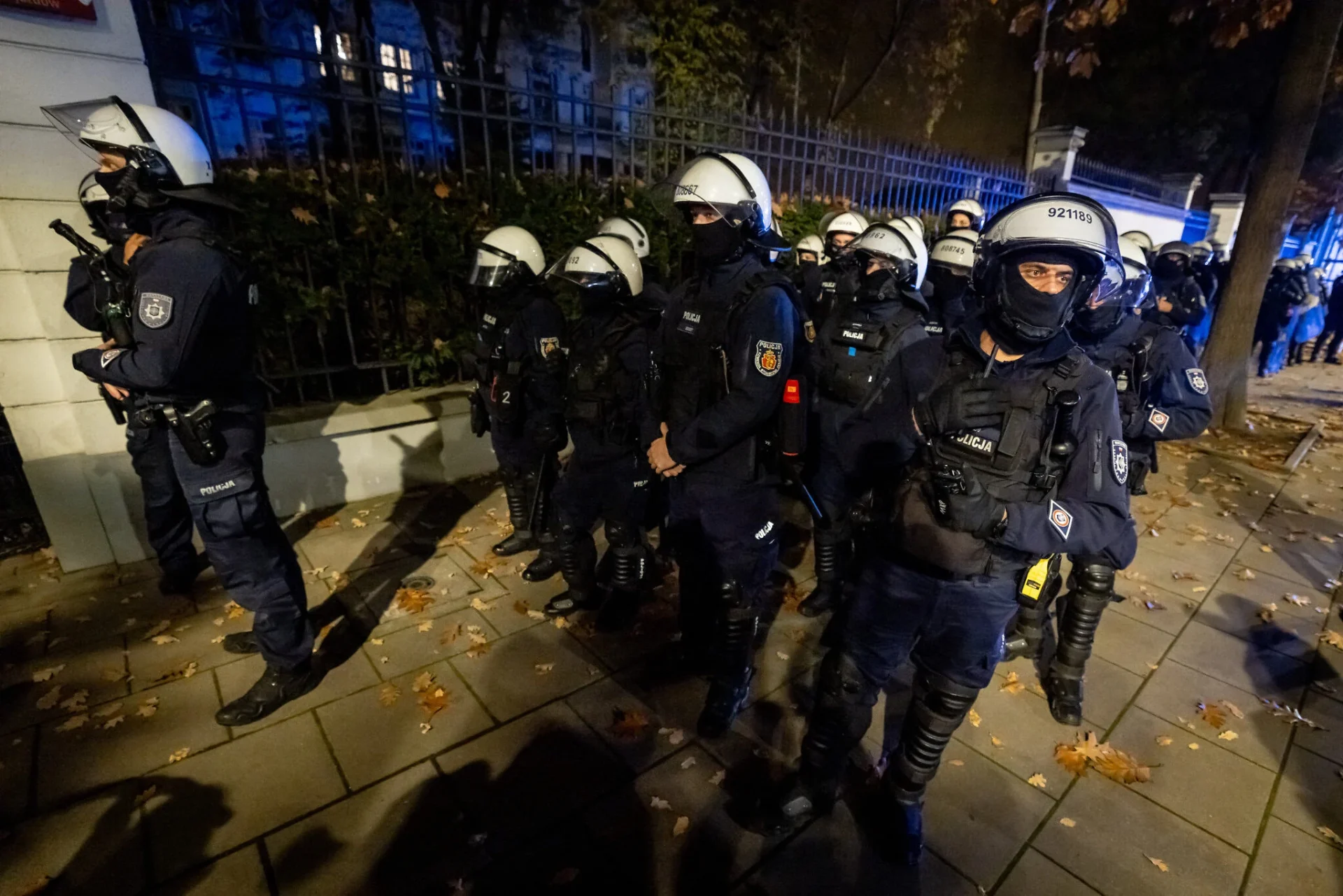
Poland is witnessing an extraordinary political and constitutional confrontation. Accusations of a coup, street protests, riot police guarding the country’s highest constitutional court, and the President cutting short an overseas visit have brought the country’s deepening institutional crisis into the international spotlight. What exactly has gone wrong in a country that is a member of the European Union and NATO?
The immediate trigger is the suspension of Bogdan Święczkowski, president of Poland’s Constitutional Tribunal, on October 30. Senior judge Anna Korwin-Piotrowska announced the suspension, saying the move was necessary to restore the court’s functioning. Święczkowski, however, refuses to accept the decision, and the Tribunal’s official social media account described the development as a “coup d’état”.
The confrontation has its roots in a political battle dating back to 2015, when the nationalist Law and Justice (PiS) party came to power and reshaped Poland’s judicial institutions. Critics, including the European Union, accused the party of compromising judicial independence by placing political allies in key positions.
In 2023, Donald Tusk’s pro-European coalition returned to power, promising to restore the rule of law and reverse the controversial judicial changes. But implementing those reforms has proved considerably more complicated. President Karol Nawrocki, aligned with PiS, has resisted several judicial appointments proposed by the parliamentary majority, leading to a confrontation with Prime Minister Tusk. Meanwhile, the existing Tribunal leadership has refused to recognise judges elected by the new parliamentary majority.
The latest escalation brought hundreds of demonstrators outside the Tribunal in Warsaw. Riot police were deployed, some protesters attempted to breach security barriers, and three people were detained. PiS leader Jarosław Kaczyński accused the government of pushing Poland towards authoritarianism.
President Nawrocki also abandoned trip to Senegal mid-flight and returned to Warsaw, declaring that the situation demanded his presence. Prime Minister Tusk defended his government’s actions, arguing that restoring the rule of law required decisive measures.
The central question is whether the government’s actions constitute legitimate judicial reform or an overreach that risks undermining constitutional safeguards. Both sides claim to be defending the constitutional order, while questioning the legitimacy of their opponents.
The confrontation between the Prime Minister and the President has thrown Poland into a constitutional crisis. A country does not need tanks on its streets to experience a constitutional crisis. Sometimes, the most consequential political battles take place inside courtrooms, with riot police standing outside.

