
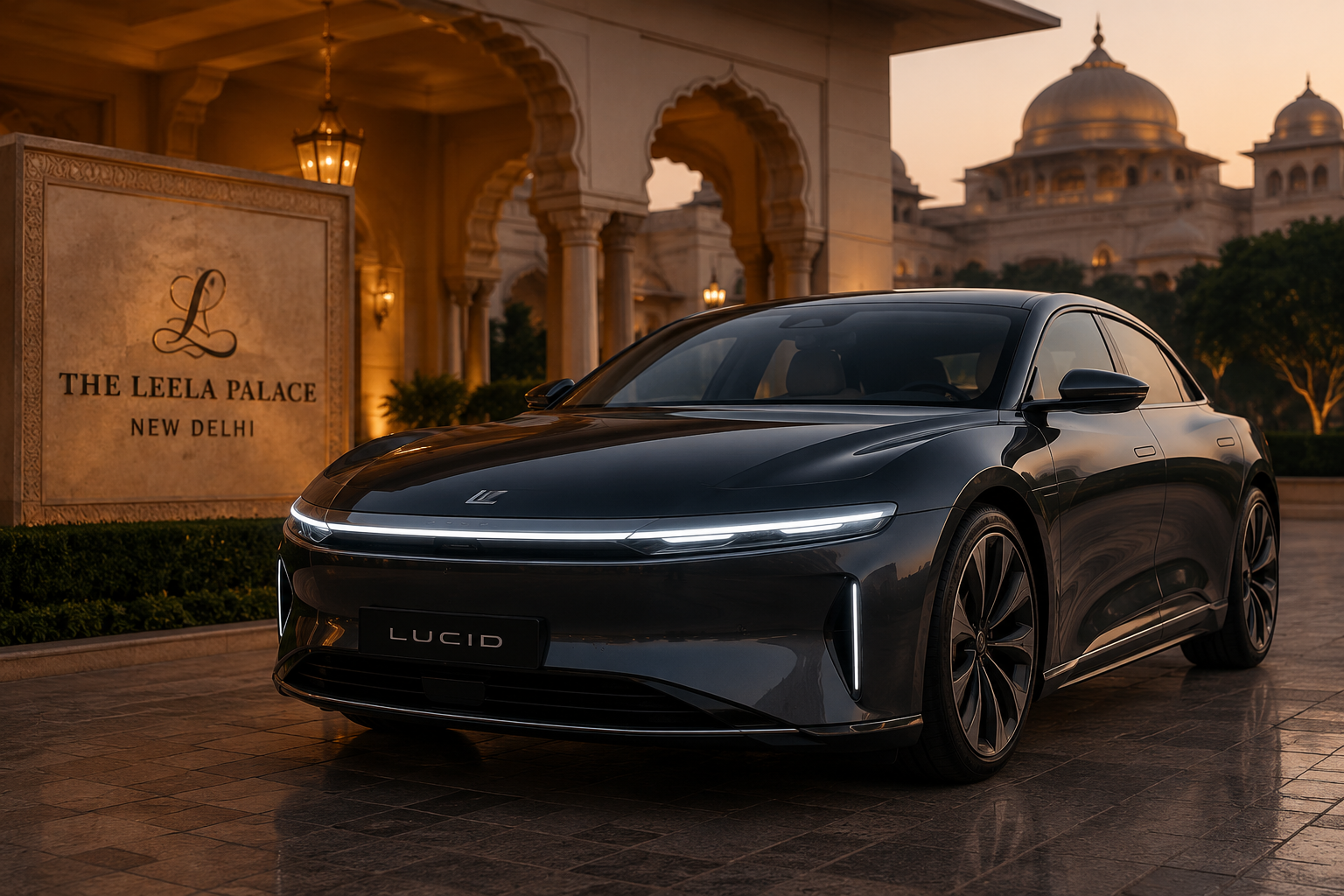
India’s electric vehicle (EV) revolution is entering a new phase—and it’s moving steadily toward the premium segment. What was once seen as an emerging, cost-sensitive market, is now witnessing a clear tilt toward higher-end electric passenger vehicles.
In FY26, India’s electric passenger vehicle market recorded an impressive growth of 87.4%, with total sales reaching 2.33 lakh units. But the real story lies beneath this growth: the surge has been driven largely by premium EVs priced between ₹20 lakh and ₹30 lakh.
According to data from JATO Dynamics, vehicles in this price band accounted for 35.7% of the EV market share in FY26—a dramatic jump from just 8.6% in FY24. In contrast, the share of entry-level EVs priced below ₹10 lakh has been steadily declining.
Why premium EVs are gaining popularity
Several factors are driving this shift toward premium electric cars. Buyers are increasingly prioritizing better driving range, advanced features, and overall performance. There’s also a noticeable evolution in consumer mindset: EVs are no longer just about environmental consciousness or status signaling. Today’s buyers expect value beyond the “electric” label—focusing on technology, comfort, and reliability.
As Ravi Bhatia, President of JATO Dynamics, notes, the ₹15–30 lakh segment strikes the right balance between affordability, range, and features. This “sweet spot” is attracting a growing number of consumers who want a well-rounded electric driving experience.
Charging infrastructure: From concern to confidence
One of the biggest barriers to EV adoption in India has historically been charging infrastructure. Range anxiety—fear of running out of charge mid-journey—used to deter many potential buyers. But that concern is gradually fading.
Between December 2022 and December 2024, the number of public charging stations in India increased nearly fivefold—from 5,151 to 25,202. By November 2025, this number had grown further to 29,277 stations.
Government initiatives are playing a crucial role in this expansion. Under the PM E-Drive scheme, ₹2,000 crore has been allocated to install 72,000 public chargers across the country. Notably, 91% of highways now have a fast charger available within a 50-kilometer radius, making long-distance EV travel far more practical than before.
Strong growth, but challenges remain
Overall EV sales in India reached 24.52 lakh units in FY26, growing at nearly twice the pace of the broader automobile market. Automakers are capitalizing on this momentum. For instance, Mahindra & Mahindra saw its EV sales surge from 8,426 units to 42,721 units, driven by its “Born Electric” SUV lineup.
However, the rapid growth in EV adoption is also exposing gaps in infrastructure. Despite the increase in charging stations, the ratio currently stands at about one public charger for every 235 EVs—far from ideal. This indicates that while infrastructure is expanding, it is still struggling to keep pace with the accelerating demand.
The road ahead
India’s EV journey is still in its early stages, but the momentum is undeniable. The shift toward premium vehicles signals a maturing market where consumers are willing to invest more for quality and performance. At the same time, improvements in charging infrastructure are steadily removing one of the biggest psychological barriers to EV adoption.
The road ahead will depend on how well infrastructure development keeps up with demand. If current trends continue, India could be on the cusp of a major transformation in personal mobility—one driven not just by electrification, but by aspiration and innovation.

