
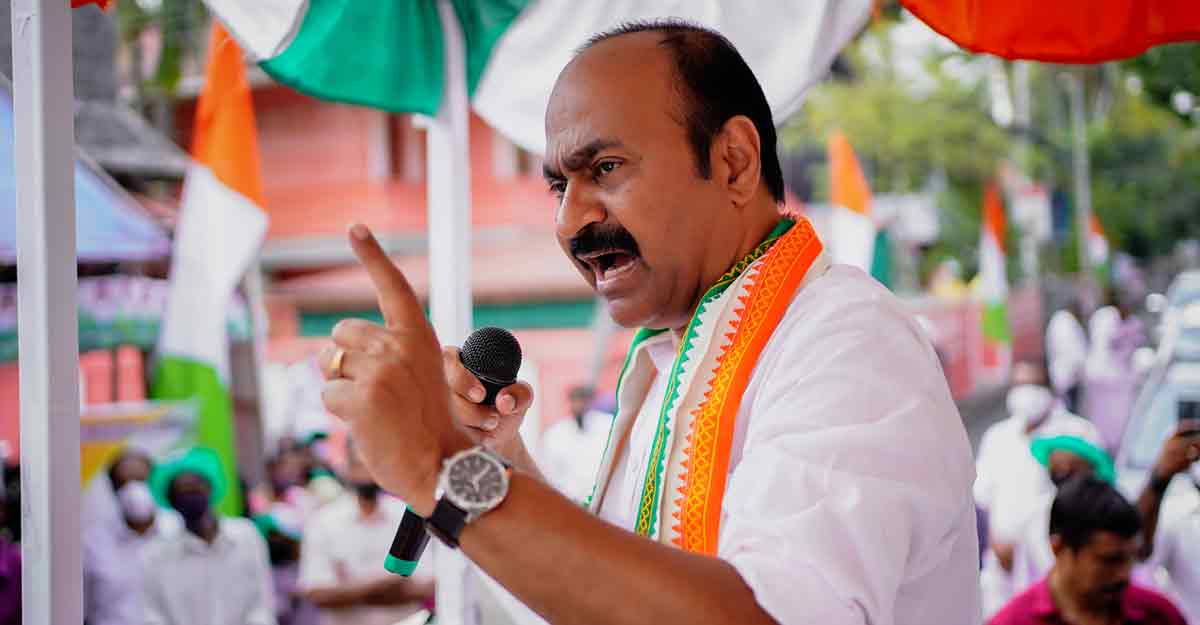
In the recently held Kerala state elections, Congress-led United Democratic Front (UDF) swept to power blowing away the incumbent Left Front LDF. UDF got 102 seats in the 140 seats assembly. However, then the question arose that who will be the Chief Minister, choice of local cadre VD Satheesan, or K. C. Venugopal or Ramesh Chennithala.
Following the election results, the Congress-led United Democratic Front (UDF) ended days of suspense by naming V. D. Satheesan, the face of their campaign in Kerala, as the next chief minister. The announcement comes after an intense power struggle, online and offline, within the Kerala Congress unit, but it may not necessarily mark the end of internal tensions.
If anything, the events leading up to Satheesan’s elevation have once again highlighted a recurring problem within the Congress party whenever they win a state election (which happens rarely), factional rivalry after electoral success.
In fact, many see his elevation as the CM as the victory of Priyanka Gandhi Vadra camp over Rahul Ganhi camp in Congress. Notably, Priyanka is an MP from Wayanad in Kerala now, a seat vacated by Rahul Gandhi.
Satheesan emerged victorious in this internal power struggle, after nearly ten days of consultations, lobbying, and negotiations involving senior Congress leaders, the party high command and UDF allies (Indian Union Muslim League). His principal rivals included K. C. Venugopal and veteran leader Ramesh Chennithala, both of whom were believed to have substantial backing among legislators and party functionaries. KC Venugopal was said to have significant support among the local MLAs but he couldn’t clinch the CM chair.
The delay itself became politically significant. While the UDF had secured a sweeping mandate against the Left Democratic Front, public attention quickly shifted from celebration to questions about Congress factionalism. Supporters of rival camps in Congress Party openly demonstrated across Kerala, social media campaigns for all the leaders intensified and reports of disagreements within the Congress Legislature Party surfaced.
Even after the final decision, signs of resentment remain visible. Chennithala skipped the Congress Legislature Party meeting after Satheesan’s selection, reportedly unhappy with how the leadership decision was handled. Though Venugopal publicly accepted the decision, the long tussle exposed deep divisions within the state unit.
The challenge before Satheesan therefore is not merely governance. His first and perhaps most difficult task may be political management inside his own party.
Satheesan enters office with clear strengths. He was widely seen as the public face of the UDF campaign and enjoys significant grassroots support. Many within the Congress cadre viewed him as the architect of the party’s revival in Kerala after a decade in opposition. UDF allies, especially the Indian Union Muslim League, were also reportedly more comfortable with Satheesan leading the government.
But history suggests that Congress chief ministers often struggle when rival power centres remain active after leadership contests.
In Rajasthan, the long-running rivalry between Ashok Gehlot and Sachin Pilot paralysed the party for long. What began as a dispute over leadership and succession evolved into repeated rebellions, public criticism and organisational instability. Pilot’s revolt in 2020 nearly brought down the Congress government and exposed how unresolved factional ambitions can weaken governance even after electoral victory.
A similar story unfolded in Madhya Pradesh. The uneasy relationship between Kamal Nath and Jyotiraditya Scindia eventually culminated in Scindia’s exit from the Congress in 2020. His rebellion brought down the Kamal Nath government despite the Congress having returned to power only months earlier.
In Karnataka, the Congress leadership attempted a balancing act after the party’s 2023 victory by accommodating both Siddaramaiah and D. K. Shivakumar. While the arrangement initially ensured peace, speculation over rotational chief ministership and competing camps still generates uncertainty. Congress leaders in Kerala are aware that Karnataka’s model has prevented open revolt but has not eliminated factional competition.
The situation in Himachal Pradesh also serves as a cautionary tale. The Congress government led by Sukhvinder Singh Sukhu faced repeated internal instability after sections loyal to senior leader Pratibha Singh expressed dissatisfaction over power-sharing and appointments. The rebellion by Congress MLAs during the Rajya Sabha elections in 2024 exposed the fragility of the government and underlined how unresolved factional issues can threaten survival itself.
Kerala Congress leaders are acutely conscious of these precedents. Analysts have already warned that the Kerala unit risks repeating the mistakes seen in Rajasthan, Madhya Pradesh and Karnataka if rival camps are not accommodated carefully.
For Satheesan, the political equation is delicate. He has to balance competing ambitions while simultaneously delivering governance after the UDF’s emphatic return to power. Cabinet formation, allocation of portfolios and appointments within the party organisation could become the first real tests of his leadership.
Another complication is that Satheesan’s rise represents a generational shift within Kerala Congress politics. While this has energised younger workers and sections of the electorate, it has also unsettled parts of the old guard. The Congress high command may have settled the immediate question of leadership, but it cannot easily erase the ambitions of senior leaders who believed the chief minister’s post was within reach.
The Congress has often struggled with this problem in various states, it wants generational change, but without alienating entrenched veterans. Kerala is now the latest test case of whether the party can manage both simultaneously.
For the moment, Satheesan enjoys public goodwill and the momentum of a historic mandate. Yet Congress governments in several states have shown that electoral victories alone do not guarantee political stability. The real question is whether the Kerala Congress can avoid turning internal competition into open conflict.
As it is, Congress struggles to win state elections these days (and indeed doesn’t come close in national elections), so these internal power struggles when they do win an election only create friction within the party.
We have to wait and watch to see if Kerala witnesses the same pattern of internal turbulence that has repeatedly troubled Congress governments elsewhere in India.

