
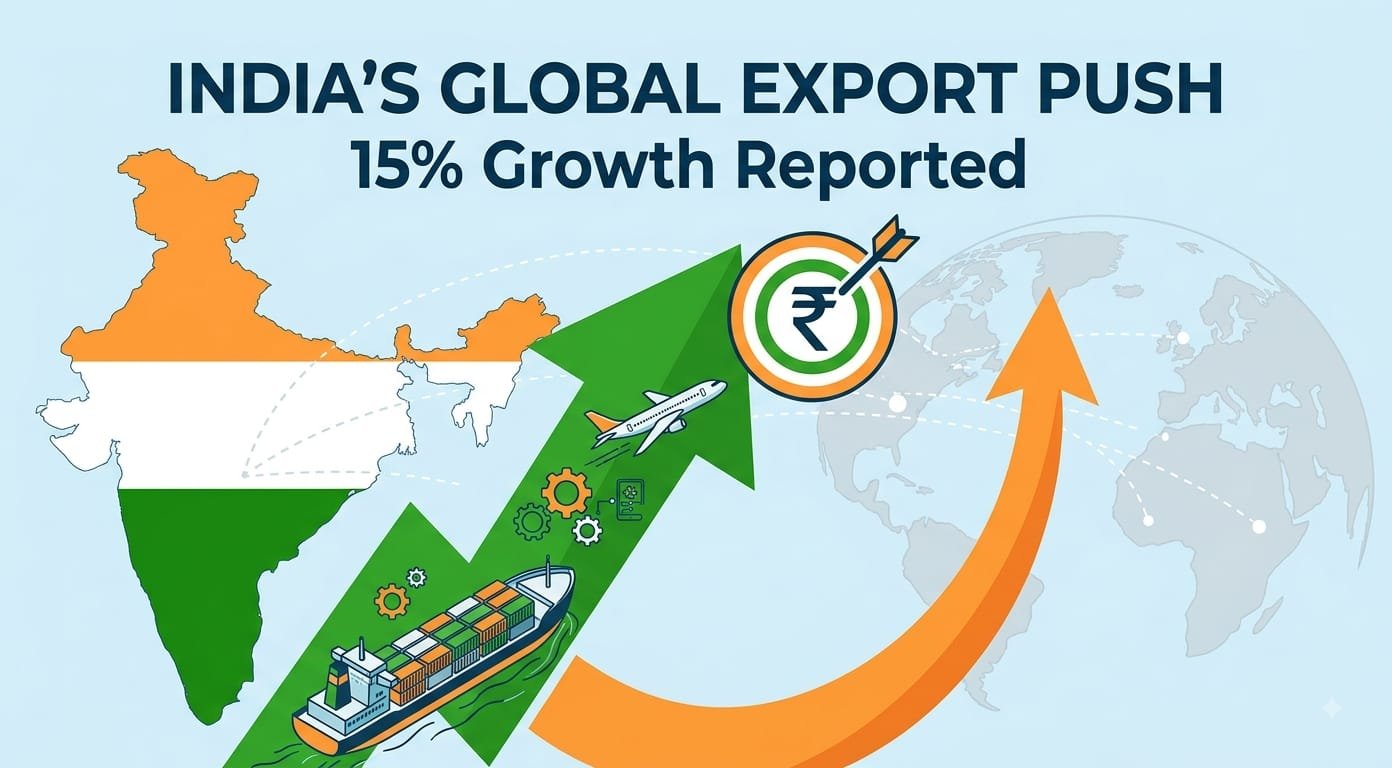
India has shown a strong export performance in the first four months of the current financial year, with exports rising by about 15 percent . The value of exports during this period reached around 363 billion US dollars, while the target now being discussed is far bigger and more ambitious, with the country aiming to touch 1 trillion US dollars in exports in the coming years.
This growth matters because exports are not only a number in a trade report; they reflect factory output, farm products, services activity, shipping strength, and the confidence of foreign buyers in Indian goods and services.
The recent rise has come at a time when the global economy is still facing uncertainty. Even then, India has managed to improve its trade position by expanding across goods and services.
The increase has been supported by stronger performance in sectors such as engineering goods, electronics, petroleum products, and services exports.
The idea behind this progress is simple: when more products and services are sold abroad, more income comes into the country, more businesses grow, and more jobs can be created across supply chains.
The export story also connects with a larger policy push. The government wants India to move beyond being seen as only a large consumer market and instead become a major global supplier. That means improving product quality, reducing logistics delays, strengthening ports, and helping industries become more competitive.
The message is clear that India should not just export more, but export better. When production standards improve and delivery becomes faster, buyers in other countries are more likely to return.
This momentum is also linked with manufacturing and “Make in India” efforts. A stronger export base gives local companies a bigger reason to invest in plants, technology, and skilled workers. It also helps smaller suppliers, transport businesses, and service providers.
In practical terms, one export order can support many layers of the economy, from raw material suppliers to packaging units and shipping agents. That is why export growth often becomes a sign of wider industrial health.
The export growth can support employment in factories, warehouses, ports, farms, and offices. It can open space for new business opportunities in districts and towns that are connected to trade networks.
For many families, this matters in a very direct way because steady industrial activity often brings more regular income and more confidence in the future. In that sense, export growth is not only about economics on paper; it is about movement, work, and daily life.
The one trillion dollar target is large, but it is not unrealistic if current trends continue and policy support remains steady. Reaching that level will require more investment, better infrastructure, smoother regulations, and stronger links with international markets.
It will also need Indian firms to become more innovative and more adaptable in a fast-changing world. If the country can keep improving quality, scale, and efficiency together, the export sector may become one of the biggest drivers of growth in the years ahead.
In simple terms, this is a positive sign for the economy. Strong exports usually mean stronger production, stronger confidence, and stronger global presence. The latest numbers suggest that India is moving in that direction with more energy than before, and that creates hope not just for businesses, but for the broader economy as well.

