
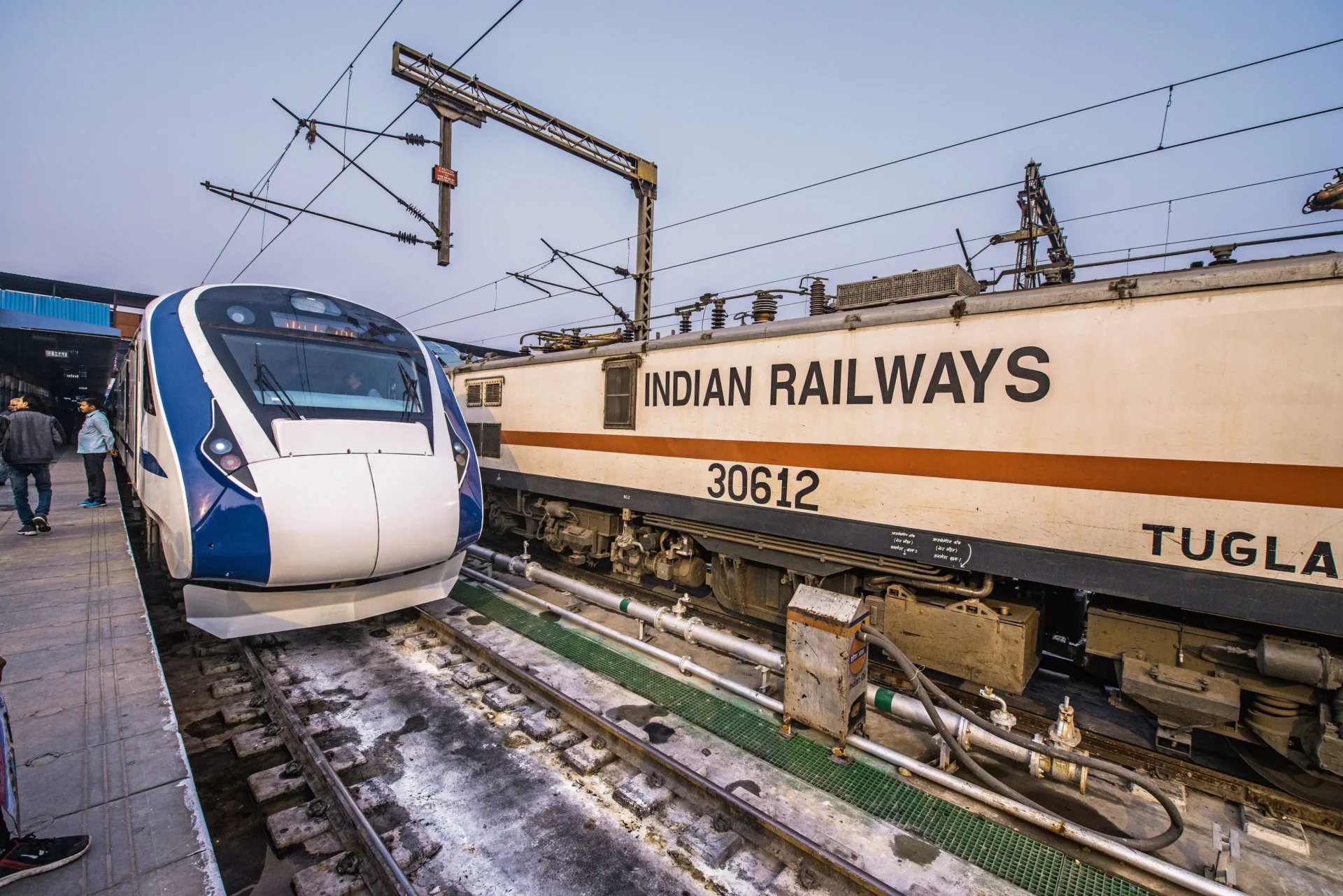
Modernisation of Indian Railways has been one of the major achievements of Modi government ever since they came to power in 2014. PM Narendra Modi highlighted this achievement at Jind in Haryana yesterday where he was launching another major milestone in Indian Railways, the first Hydrogen Train.
PM Modi underlined that India’s rapid railway electrification has protected train operations from disruptions linked to the Strait of Hormuz crisis. The reduced dependence on diesel ensured that even when the imports through Strait of Hormuz were blocked, Indian Railways didn’t suffer at all. Notably, over 99% of Indian broad gauge network is now electrified, making India one of the world’s largest fully electrified rail systems.
Strait of Hormuz is still witnessing unrest with oil tankers being targeted and US and Iran mocking the peace deal they signed, but it still won’t affect the Indian Railways thanks to this mega electrification drive that was undertaken by Modi government. Railways, which is the lifeline of millions and millions of Indians will not be affected as nearly the entire broad gauge network has been converted to electric.
This rapid increase in electrification, and reduced dependence on Diesel, took place in the last 12 years of the NDA government. Not only has it made Railways more efficient and modernised, but has also ensured it doesn’t suffer shocks due to any global supply chain problem.
PM Modi also said that advance planning and practical implementation has strengthened India’s transport and the country’s energy resilience significantly.
Indian Railways’ transformation hasn’t come overnight. The country, which was once known for slow trains, ageing infrastructure and dependence on diesel locomotives, has witnessed rapid electrification, indigenous technology development, modern stations, improved safety and the introduction of futuristic projects such as hydrogen-powered trains. This has taken place in the last 12 years as the government’s focus has been on making the railways faster, cleaner, safer and more efficient while reducing its carbon footprint.

