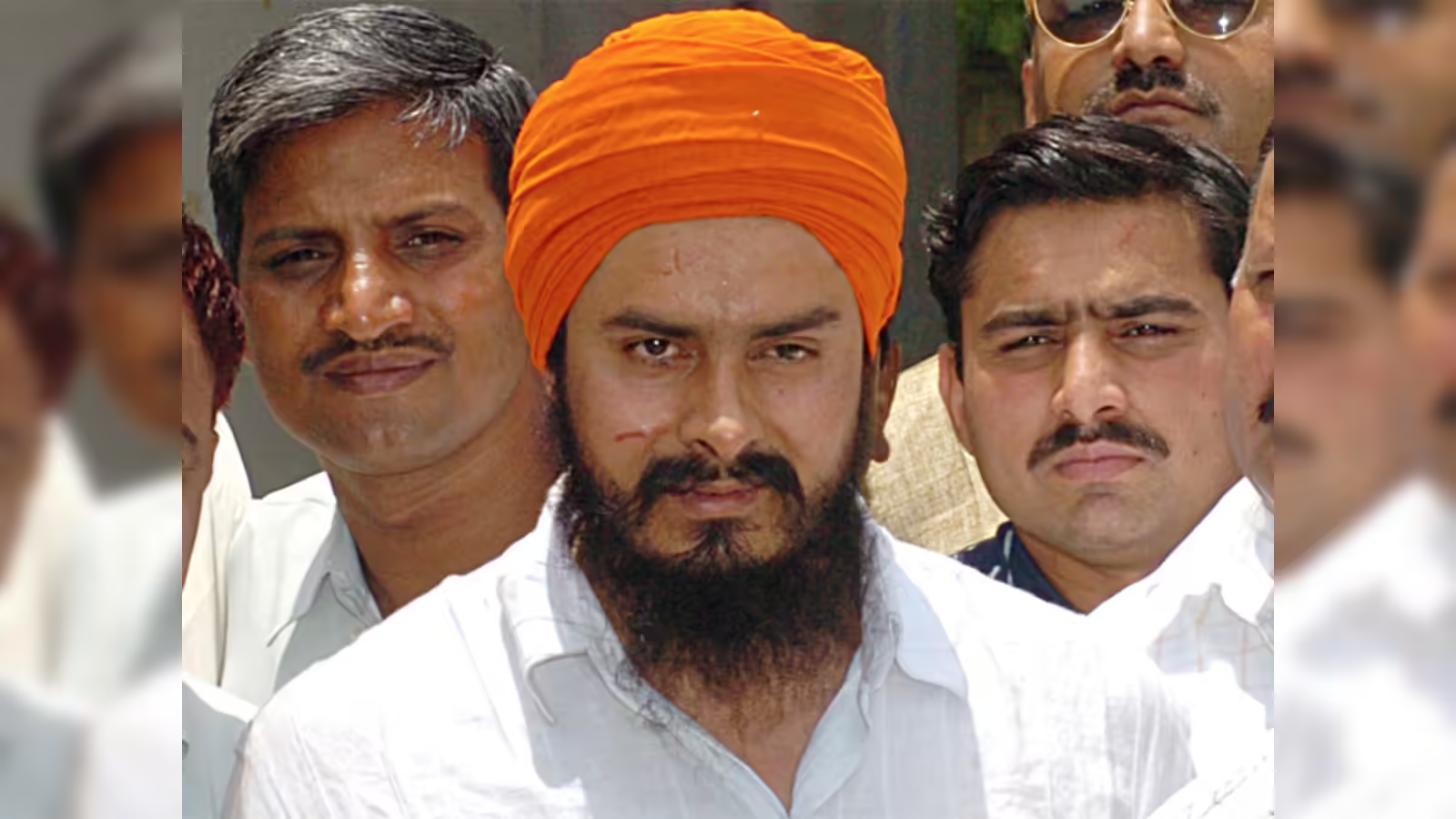

The appeal for parole of Jagtar Singh Hawara, a convict serving a life sentence in connection with the 1995 assassination of former Punjab Chief Minister Beant Singh, has drawn significant attention in recent weeks. Hawara, associated with the banned Babbar Khalsa outfit, has been incarcerated for approximately 31 years. His application, filed in June 2025, seeks temporary release primarily to meet his ailing mother, Narinder Kaur, whose health has deteriorated due to age-related issues, leaving her in a semi-conscious state. The Punjab and Haryana High Court directed authorities at Delhi’s Mandoli Central Jail, where he is currently lodged, to decide the matter in a time-bound manner after obtaining necessary recommendations.
The Punjab government, through Chief Minister Bhagwant Mann, has sought a 10-day parole, assuring full responsibility for maintaining law and order during the parole period.Support for the plea has emerged strictly on humanitarian grounds. Similar expressions of support, framed solely around the mother’s health and the long separation of over three decades, have come from other political figures and organizations, including voices associated with the BJP, AAP and Panthic leaders in Punjab. These interventions emphasize compassion for an elderly parent. Reports have highlighted that jail authorities in Delhi earlier offered a two-day custody parole, involving continuous police escort, which Hawara declined in favour of regular parole without such restrictions.
While the humanitarian dimension is undeniable- a mother’s wish to see her son after decades: the conditions of any potential release warrant careful examination. Granting a full 10-day parole without police protection could carry broader implications for public order and societal stability in Punjab. Such an unrestricted release risks providing space for radical elements to mobilize. Hawara’s profile, rooted in events from the period of extremism in the 1980s and 1990s, remains sensitive. An open presence in the state without security oversight might allow gatherings, processions or public displays that radical groups could interpret and amplify as a symbolic success.
This perception of victory for radical elements is particularly concerning. If framed as a concession secured purely through sustained advocacy around the mother’s health, it could encourage narratives that portray the system as yielding to pressure. In the past, similar high-profile cases have been leveraged by fringe groups to claim moral or political wins, potentially energizing online propaganda and local networks that seek to keep old fault lines alive. Punjab has worked hard over decades to move beyond the turbulence of militancy; any development that radical voices can celebrate risks reopening wounds that communities across the state have sought to heal through peace and development.
Moreover, an unrestricted parole could revive long-pending demands for the release of “BandiSinghs”- Sikh prisoners accused or convicted in cases linked to terror or extremist activities from the militancy era. These demands have persisted among certain organizations for years, focusing on individuals who completed sentences or sought remission under applicable rules. Hawara’s case has long featured in these discussions. A full, unsupervised release, even temporary, might be cited as a precedent or breakthrough, prompting renewed campaigns, protests, or calls for similar relief for others. This could place additional strain on administrative and security resources at a time when the state prioritizes stability, economic progress and social harmony. Security considerations are not abstract. Hawara is classified as a high-risk prisoner, with a history that includes a dramatic jail escape in the past and multiple cases registered against him over the years. Police assessments have previously highlighted concerns related to these records. Custody parole, with continuous escort, represents a measured approach that balances the mother’s condition with the need to prevent any misuse of the temporary freedom. Declining such an arrangement in favour of unrestricted movement raises legitimate questions about the risks involved, including the possibility of large assemblies or messaging that radical elements could exploit.
It is important to recognize that support for the parole plea from various sides, including the state government and BJP-linked voices in Punjab, has been articulated exclusively on humanitarian grounds: the deteriorating health of an elderly mother and the natural desire for a family meeting after 31 years. This framing keeps the focus on “compassion” rather than any endorsement of past actions. The challenge for authorities lies in honouring genuine human concerns while ensuring that the manner of any release does not inadvertently create openings for those who seek to stir division.
Punjab’s journey from the difficult years of extremism to relative peace demonstrates the value of measured decisions. Temporary relief that prioritizes family reunion under supervised conditions can address the immediate humanitarian need without signaling broader shifts. Unrestricted parole, by contrast, carries the potential to embolden fringe elements, revive dormant demands around BandiSinghs, and allow radical narratives to claim a win. Careful calibration, rooted in both compassion and caution- remains essential to protect the hard-earned stability of the region while responding to the personal circumstances of the case.
Balancing these considerations, decision-makers must ensure that any temporary release safeguards the mother’s welfare while upholding public order and preserving broader social cohesion. The balance between individual humanitarian considerations and collective security is delicate, yet vital for sustaining the peaceful trajectory Punjab has pursued.
Balancing Compassion and Caution: The Debate Over Jagtar Singh Hawara’s Parole