
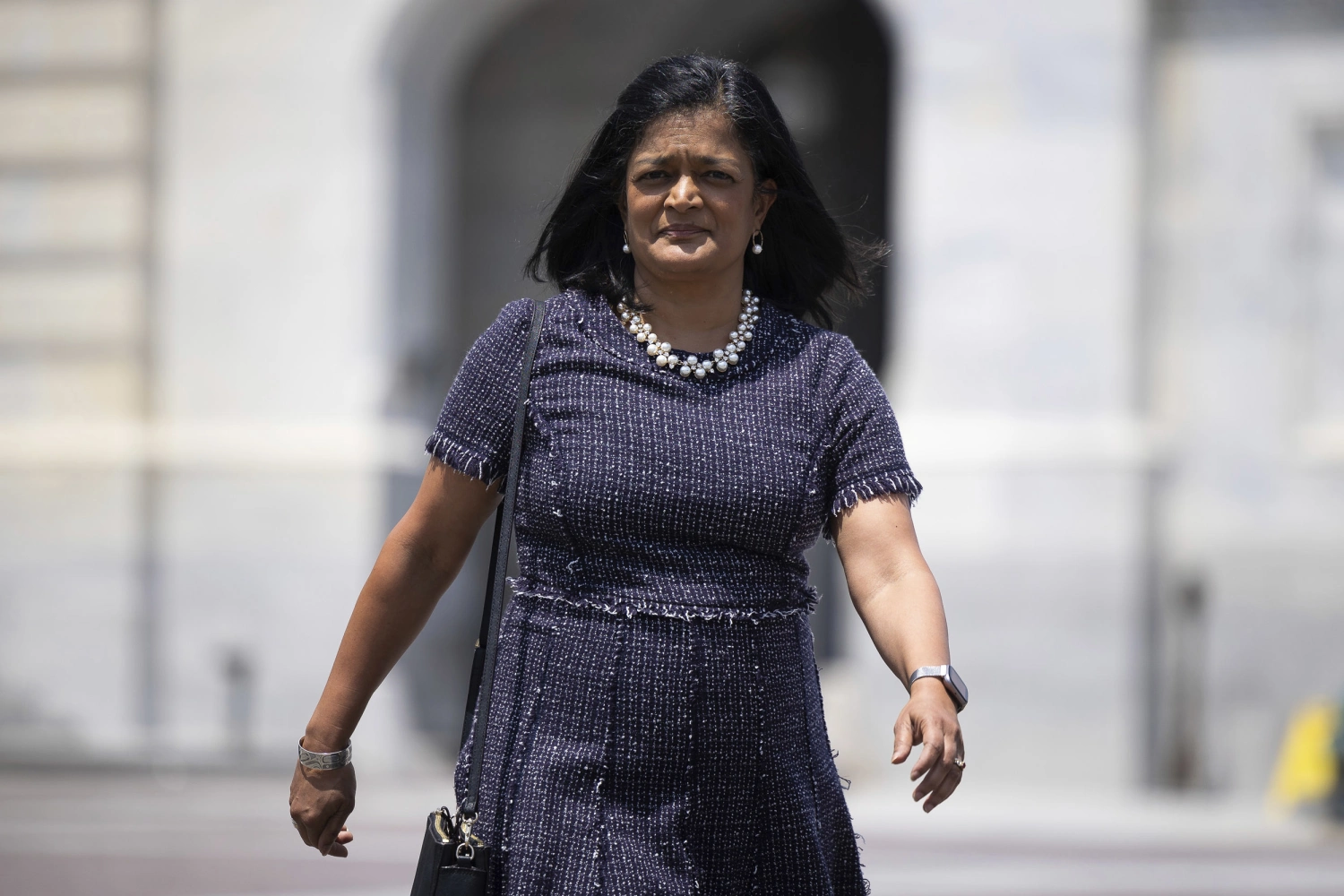
Apparently, India’s electoral system has acquired another international supervisor. This time, it is US Congresswoman Pramila Jayapal, who has expressed concern over India’s Special Intensive Revision (SIR) of electoral rolls. One can only admire the enthusiasm with which American politicians monitor India’s democracy. After all, what better way to demonstrate concern for democratic values than by keeping a watchful eye on elections thousands of miles away?
Of course, asking questions about electoral processes is legitimate. Electoral rolls must be accurate, eligible voters must not be excluded, and the process must be transparent. These are important principles in any democracy. But if Jayapal is worried about the integrity of elections, perhaps she could spare a little of that concern for the electoral system back home in the United States.
America’s elections are hardly a masterclass in simplicity or uniformity. The country operates a decentralised electoral system in which rules, registration procedures, identification requirements and voting arrangements vary across states. Some states make registration relatively easy, while others impose additional requirements. Voter identification laws remain a fiercely contested political issue, and disputes over ballot access, mail-in voting and election administration regularly generate controversy.
Then there is the American Electoral College, a system in which a presidential candidate can win the White House despite receiving fewer votes nationwide than the opponent. It has happened more than once. Imagine the outrage if India announced that the candidate receiving fewer votes nationally could become Prime Minister because of a complicated arrangement involving states. Washington would probably hold a conference, issue a statement and discover a new human right by lunchtime.
And let us not forget the endless American arguments over voter suppression, gerrymandering, and the drawing of electoral boundaries to favour particular political parties. In some states, disputes over who gets to vote and how votes are counted have become almost as predictable as presidential campaign rallies. Yet American politicians rarely treat every domestic electoral controversy as evidence that their entire democratic system requires international intervention.
The point is not that America has no right to comment on India. Democracies can learn from one another, and legitimate concerns deserve examination regardless of where they originate. But there is a difference between constructive scrutiny and the impression that India must constantly submit its democratic credentials for approval from abroad.
India’s SIR exercise should be judged on its actual implementation, whether eligible voters are protected, whether ineligible entries are removed according to the rules, and whether affected citizens have meaningful opportunities to correct errors. These are measurable questions, not matters to be settled by political grandstanding from Washington.
Perhaps Jayapal could begin by examining how American states maintain their electoral rolls, how voting access differs across state lines, and why the world’s self-appointed champion of democracy still uses an Electoral College system that can override the national popular vote.
That might make for an interesting congressional discussion. It could even produce some useful reforms.
India’s electoral administration can surely survive a little international concern. The country has its own institutions, laws and democratic debates to navigate. It does not need every American politician with an opinion to arrive as an unsolicited examiner.
After all, if every country’s electoral system were subjected to the same level of scrutiny, Washington might find that its own democracy has a few questions to answer.

