
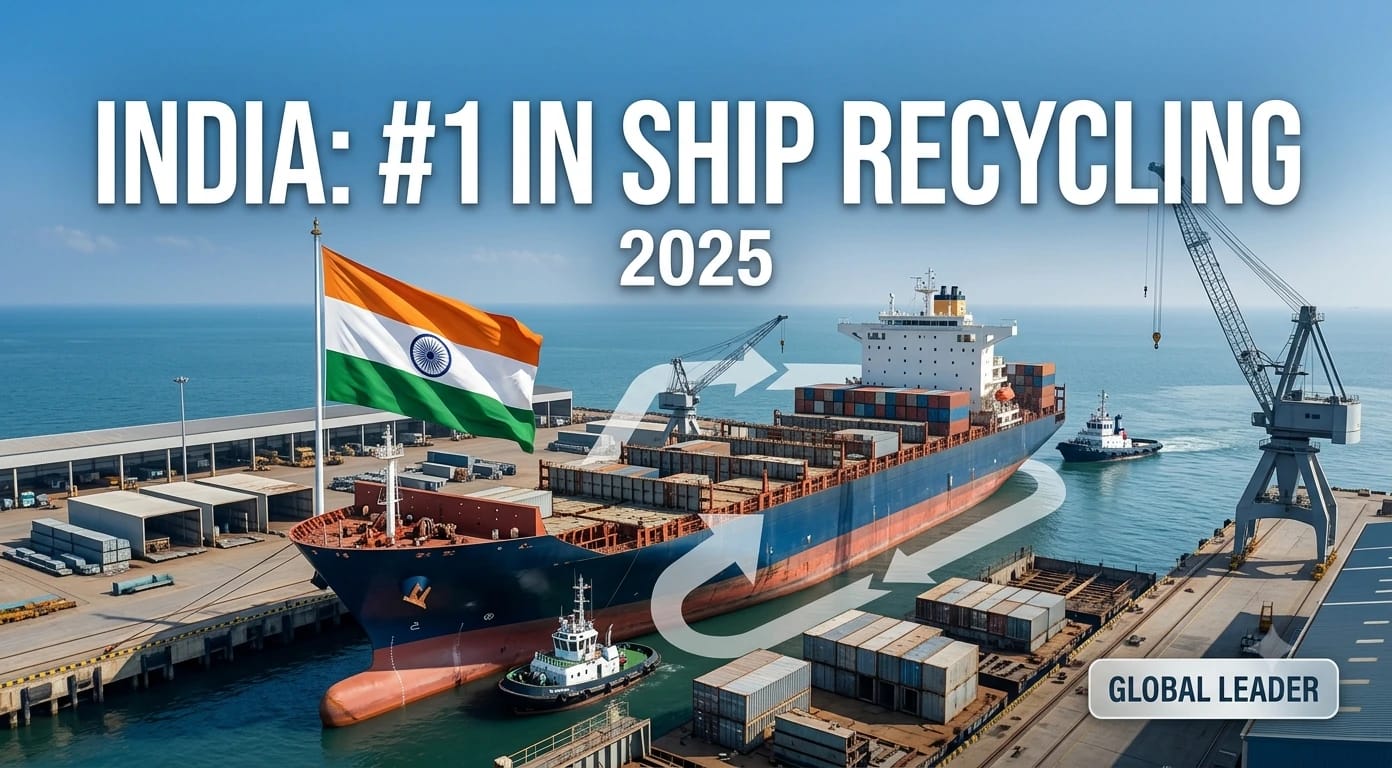
A major change has taken place in the ship recycling sector, as the country has moved to the top position in the world in 2025.
According to the latest UNCTAD-based report, the global market share rose to 35.4 percent, compared with 30.1 percent in 2024, while recycling volume increased to 2.99 million gross tonnes from 1.86 million gross tonnes a year earlier. This rise shows a clear and steady growth in an industry that has long been part of the coastal economy and industrial landscape.
The achievement is important because it came earlier than expected. The target under Maritime India Vision 2030 was to reach this position later, but the goal has now been reached five years ahead of schedule.
That makes the result more than a simple ranking update; it reflects a larger shift in how the sector has developed, how rules have changed, and how industry players have adapted to new standards.
Several factors appear to have supported this progress. Better policy direction, stronger infrastructure, and closer attention to safety and environmental rules all seem to have played a part.
The public statement linked the success to reforms, industry effort, and commitment to international safety and environmental practices. In simple terms, the industry has not only grown in size, but also improved in quality and compliance.
One key point behind this growth is the effort to make ship recycling more responsible. The system has moved toward safer working methods and cleaner processing, which matters because ship breaking can affect workers, the coast, and the surrounding environment if it is not handled carefully. The shift toward compliance with international standards gives the sector a more stable future and improves its image in global trade circles.
The role of shipyards has also been central. Alang, one of the best-known ship recycling locations, remains closely connected with this sector’s development.
The planned expansion of recycling capacity is expected to strengthen the industry further and allow more ships to be handled in a structured way. This also suggests that the sector is preparing not just for present demand, but for future growth as well.
The economic meaning of this development is easy to understand. More ship recycling activity can support jobs, local business, transport services, steel recovery, and industrial supply chains.
It can also improve the value of discarded ships by turning old material into usable resources again. In that sense, the process is not only about breaking ships apart, but about giving materials a second life in the economy.
The policy environment has also been important. The Recycling of Ships Act, 2019, and the country’s ratification of the Hong Kong International Convention for the Safe and Environmentally Sound Recycling of Ships helped build a stronger legal base for the sector.
Financial support has also helped many facilities become compliant with required standards, which is a sign that the industry is moving from informal practice toward more organized and responsible operations.
Another useful step has been the credit note scheme linked to ship recycling and shipbuilding. This kind of support creates a connection between dismantling old ships and building new ones, which helps both sides of the maritime economy.
It also encourages ship owners to recycle vessels locally rather than sending them elsewhere, which keeps more value within the domestic system.
The overall message is simple and encouraging. A sector once seen as limited to breaking old ships has now become part of a larger story of industrial growth, cleaner practices, and national maritime progress.
The rise to the top in 2025 shows what can happen when policy, industry, and infrastructure move in the same direction. It is a result that can be understood not just as a statistic, but as a sign of changing strength in the maritime economy.

