
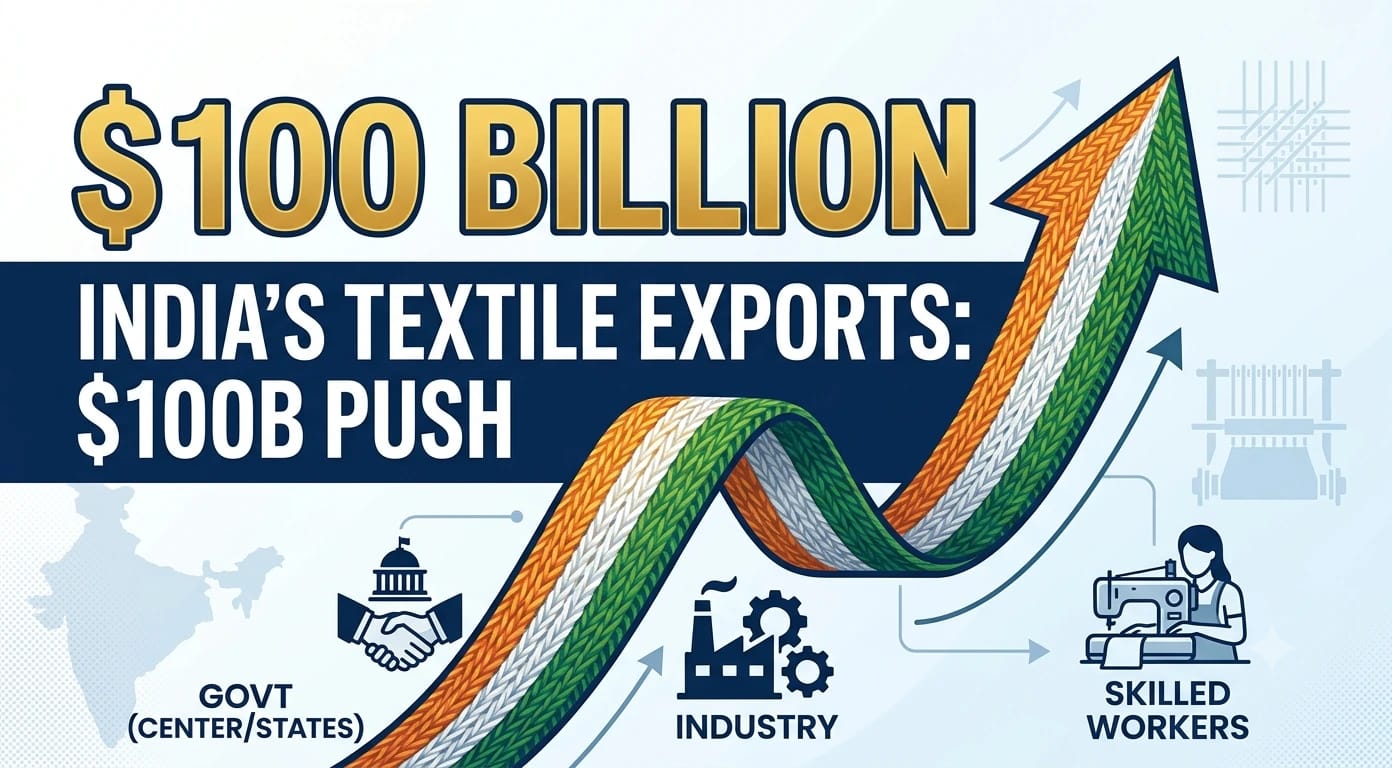
The textile sector is stepping into a decisive phase, with a clear and ambitious goal of reaching $100 billion in Textile exports by the end of this decade. To move closer to this target, a coordinated effort has been launched that brings together policymakers, state governments, and industry leaders on a single platform. This effort is not just about increasing numbers, but about reshaping the way the textile ecosystem functions, from production to global market reach.
At the center of this initiative is a two-day national summit, where key stakeholders have gathered to discuss practical strategies. The conversations are not limited to broad goals but are focused on specific textile clusters such as Tiruppur, Surat, Ludhiana, and Bhadohi, which are already known for their specialized production. These hubs are being seen as growth engines that can drive export expansion if supported with the right infrastructure, policies, and market linkages.
One of the most important aspects of this push is the shift towards diversification. Traditional textile products continue to play a major role, but there is a growing emphasis on technical textiles and man-made fibre products. These segments are witnessing rising global demand, and tapping into them could significantly improve export performance. At the same time, there is attention on premium and GI-tagged products, which carry unique regional identities and have the potential to attract higher value in international markets.
Another key idea emerging from the discussions is the importance of value addition. Instead of exporting raw or low-value goods, the focus is now on creating finished and branded products. This approach not only increases export earnings but also strengthens the overall positioning of the textile sector in global trade. Branding, quality standards, and design innovation are being seen as essential tools in this transformation.
The role of districts has also taken center stage in this initiative. A nationwide consultation covering all states, union territories, and nearly 200 districts has already been completed. Based on this exercise, detailed export action plans have been prepared at both state and district levels. This district-led model aims to identify local strengths and align them with global demand, ensuring that growth is more balanced and inclusive.
Alongside production and product strategies, structural challenges are also being addressed. Issues such as logistics, infrastructure gaps, and technology adoption were key points of discussion during the summit. Efficient transportation, modern processing facilities, and digital integration are considered critical for reducing costs and improving competitiveness. Without these improvements, scaling exports to the targeted level would remain difficult.
Skill development and sustainability have also been highlighted as essential pillars of the future roadmap. A skilled workforce is necessary to handle advanced manufacturing processes, especially in emerging segments like technical textiles. At the same time, global markets are increasingly demanding environmentally responsible production. Meeting these expectations requires investment in sustainable practices, cleaner technologies, and better resource management.
The initiative is also closely linked with broader efforts to improve market access. Trade agreements and international partnerships are being viewed as important tools to open new markets and reduce barriers for exporters. By aligning domestic production capabilities with global demand trends, the textile sector aims to secure a stronger foothold in international trade.
This entire exercise is part of a larger framework aimed at strengthening cooperation between the central administration and state governments. By working together, different levels of governance can ensure that policies are implemented effectively and that local challenges are addressed quickly. This collaborative approach reflects a shift towards more coordinated economic planning.
The outcomes of the summit and the nationwide consultations will be compiled into a comprehensive Textile Export Roadmap 2030. This roadmap is expected to serve as a guiding document, outlining clear strategies for improving competitiveness, enhancing value chains, and expanding global reach. It represents not just a policy document, but a long-term vision for transforming the textile sector into a major contributor to export growth.
As the global textile market continues to evolve, this initiative signals a clear intent to adapt and lead. The combination of local strengths, policy support, and industry participation creates a foundation for sustained growth. While challenges remain, the structured and inclusive approach offers a pathway to achieving the ambitious export target and strengthening the sector’s role in the broader economy.

