
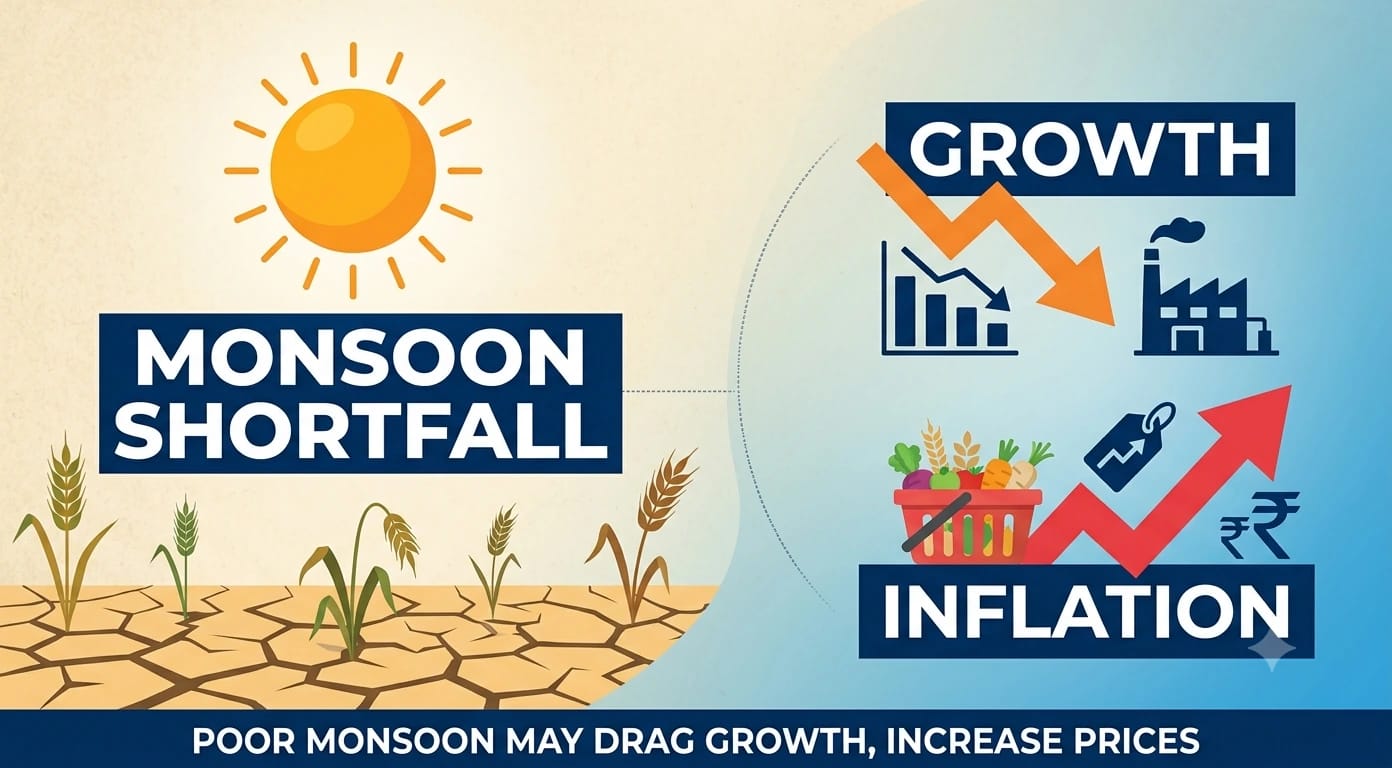
The Reserve Bank has said that a poor southwest monsoon may put pressure on both growth and inflation. This matters because rainfall is closely linked to farm production, rural spending, and food prices, which affect daily life for a large section of households.
The central bank’s June assessment came at a time when weather data already showed a clear rainfall gap. One report said the country had a 42.2 per cent rainfall deficit as of June 21, while another reported a 46 per cent deficit between June 4 and June 22.
In simple terms, less rain can mean weaker crop output, lower income in villages, and higher prices for basic food items. That chain reaction can slow consumption in rural markets and make inflation harder to control, especially if the shortfall continues through the key sowing period.
The Reserve Bank also noted that the wider economic setting remains fragile, with global tensions and trade disruptions still present. Even so, the domestic economy has shown strength, with growth of 7.8 per cent in the fourth quarter of 2025-26 supported by private spending and fixed investment.
This combination gives a mixed picture. On one side, the economy is still moving with decent momentum; on the other, weak rains could slowly cut into that momentum by affecting food supply and farm income.
The central bank has already adjusted its outlook for the coming year. It has projected real GDP growth at 6.6 per cent for FY27 and consumer price inflation at 5.1 per cent, reflecting caution about supply-side risks and price pressures.
Food inflation is especially important here because households feel it quickly. When crops are hit by poor rain, the effect is often seen first in vegetables, cereals, and other everyday items, which then influences the overall price level.
A small example makes this easier to understand. If rainfall stays weak, a farming family may harvest less, local supply may tighten, and market prices may rise; at the same time, that family may spend less on other goods, which can slow demand in shops and local businesses.
At the same time, the Reserve Bank has pointed out that some support still exists in the system. Strong reserves, steady fiscal progress, and healthy economic fundamentals can help absorb shocks, even if weather-related pressure builds in the months ahead.
The main message is straightforward. The economy is not weak overall, but a poor monsoon can still create trouble by hurting crops, lifting food costs, and softening rural demand, which is why weather progress will remain an important factor for the months ahead.

