
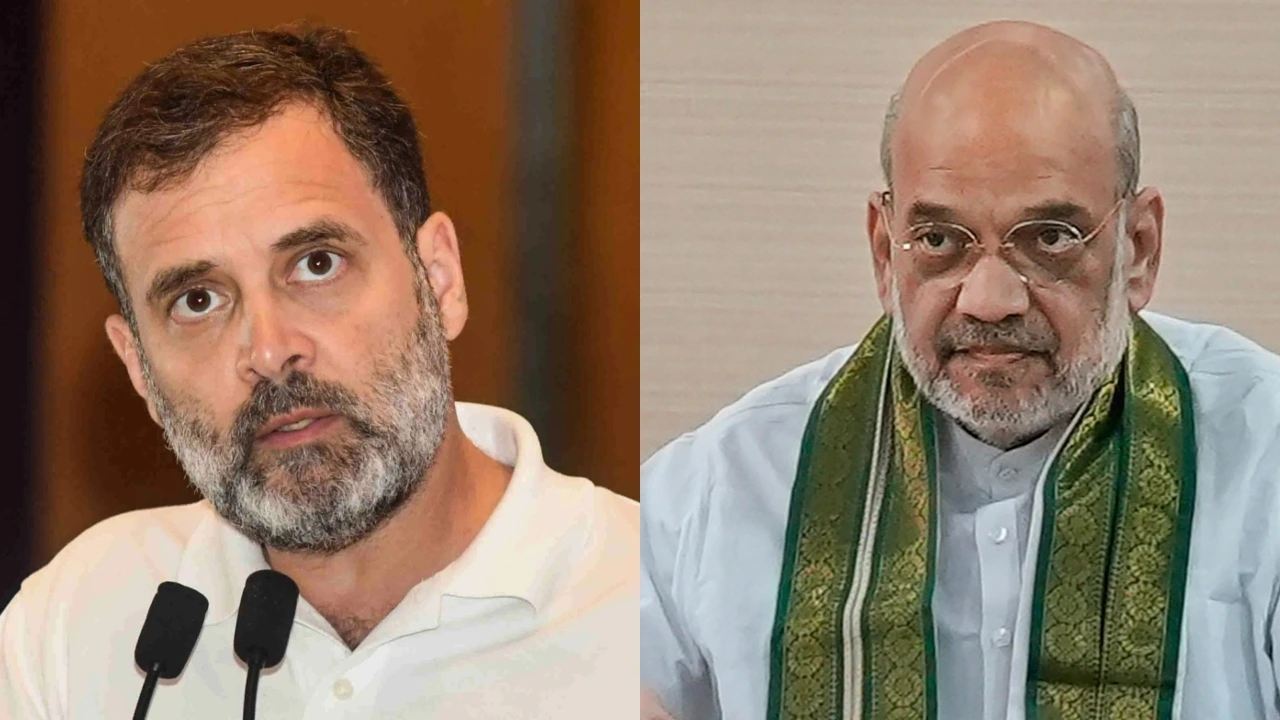
The debate over Rahul Gandhi’s repeated allegations of ‘vote chori’ has raised a straightforward question, if the Congress leader believes that India’s electoral process has been compromised, why not put the evidence before Parliament and debate it openly? Home Minister Amit Shah has challenged Rahul Gandhi to discuss the allegations in Parliament, turning the political confrontation into a test of competing claims and accountability.
Rahul Gandhi has repeatedly questioned the Election Commission and alleged irregularities in electoral rolls and voting processes. The Congress maintains that these concerns deserve serious investigation. The Election Commission has rejected the allegations and ensured great transparency of its processes, whether SIR or EVMs. The BJP has now demanded that Rahul Gandhi substantiate his allegations with specific evidence rather than rely on political speeches and public rallies.
The challenge from Amit Shah comes at a politically significant moment. The INDIA bloc has planned a symbolic ‘public impeachment’ of Chief Election Commissioner Gyanesh Kumar, followed by a major protest at Delhi’s Ramlila Maidan on November 1. Rahul Gandhi has described these programmes as part of a fight to protect democracy and has accused the government and the Election Commission of undermining the electoral process.
But Parliament is precisely where such serious allegations deserve scrutiny. If the Congress has documentary evidence of manipulated voter lists, wrongful deletions or suspicious additions, it should be willing to present that evidence, answer questions and allow the government to respond. Equally, the government should be prepared to provide explanations and relevant records rather than dismiss every allegation as political propaganda.
Street protests are a legitimate democratic instrument. Opposition parties have every right to mobilise supporters, question institutions and demand accountability. However, protests cannot become a substitute for parliamentary scrutiny.
Rahul Gandhi’s challenge so far seems just political rhetoric. Now is an opportunity to establish whether the ‘vote chori’ campaign is backed by evidence that can withstand detailed examination. Amit Shah, too, must ensure that his offer translates into a meaningful parliamentary discussion rather than another exchange of political accusations.
The country needs answers, not another round of speeches designed for television cameras. If Rahul Gandhi is confident about his allegations, Parliament offers a national platform to put them on record.
Ultimately, the credibility of India’s electoral institutions is too important to be reduced to competing slogans. The real question is whether both sides are prepared to submit their claims to democratic scrutiny. BJP seems ready to do it, Congress is yet to respond to Amit Shah’s challenge for a discussion.

