
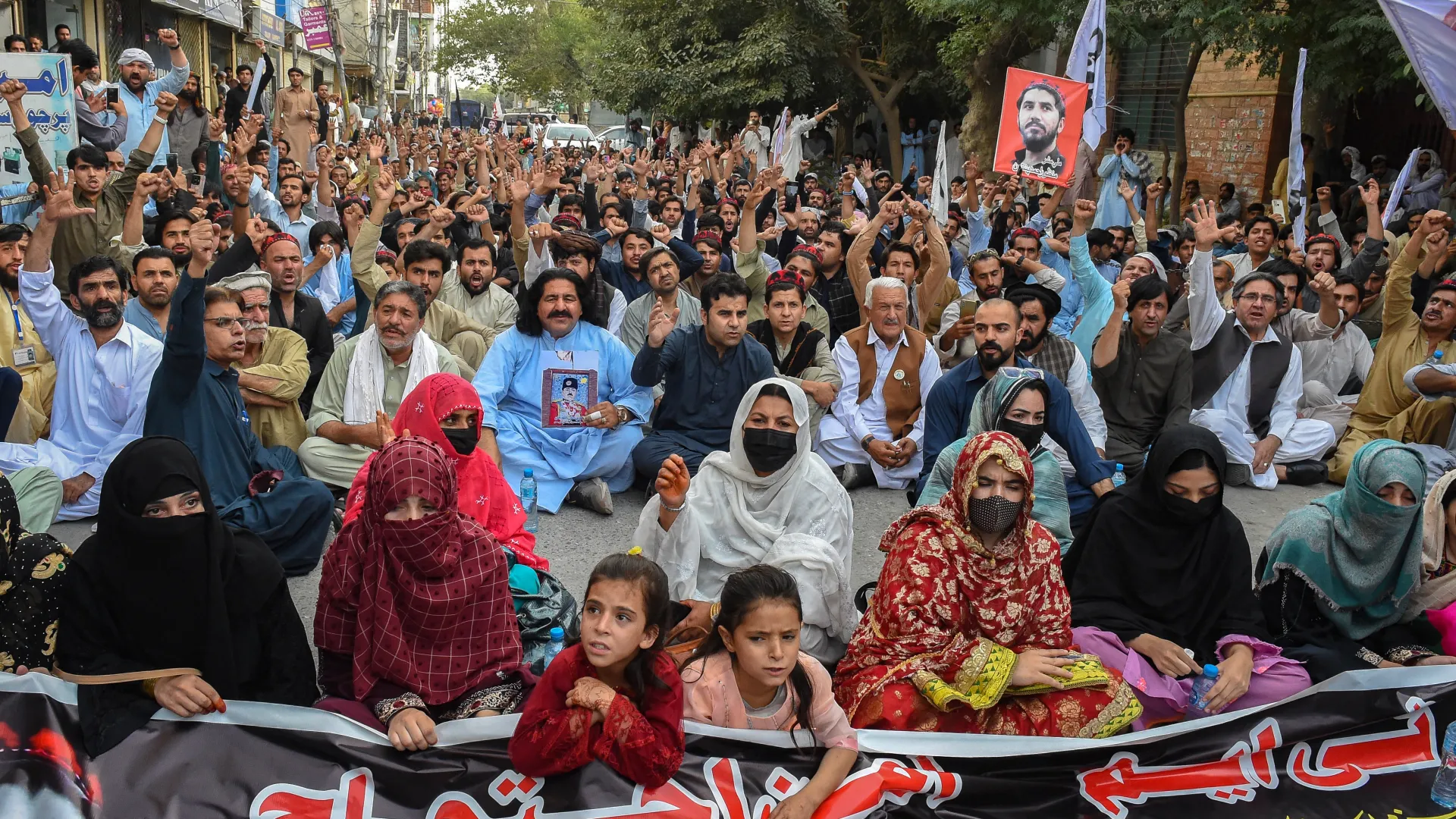
The editorial written by Pakistan’s credible newspaper Daily Dawn on the increasing trend of police encounters in Punjab, Islamabad, Karachi and Peshawar may not have been liked by the power-drunk, authority figures bordering on madness, and the trigger-happy individuals and social circles reflecting social frenzy, obviously they want to see justice done in a filmy style, otherwise what is the use of TikToks and Reels.
By the way, when the most influential civilian face of the current political setup, Mr. Mohsin Naqvi, announced the collapse of the system, his allied and rival political circles did not like it, but if we look practically, the condition of the political setup panting and staggering under its own weight is evident.
For example, if the economic and administrative structure of the state is paralyzed to a large extent, then it fails to provide basic security, economic stability or transparent justice to its citizens, then to cover up its structural failures and divert attention, it looks for easy targets, i.e., scapegoats, and openly and nakedly demonstrates Performative Cruelty and Scapegoating against them at the administrative and political level.
Whether it is celebrating “justice has been served” by political representatives and supporters by dropping dead bodies in “fake police encounters” in Karachi, Lahore and Islamabad, or running bulldozers on the Ring Road in Peshawar by ignoring the decisions of the official and judicial meeting of 2015, the proprietary status of setback and revenue records, and causing losses worth crores of rupees to the lower and middle business classes, both these actions are a negation of the constitutional and legal procedure.
The state, by suspending its own made laws, courts and investigation system, has given the claw of the excavator and the trigger of the gun the status of “court and executioner”.
In light of the concepts of left-wing intellectual and writer Isabella Weber, a state suffering from economic crisis shows a naked dance of power to hide its bureaucratic incompetence and is presenting poor cart vendors, stall owners, middle-class traders, vendors, and private owners as “villains” and scapegoats.
The most heartbreaking turn of this performative cruelty is in the form of public reaction on social media, as one supporter of Muslim league party wrote that it is good that bulldozers are being run on their shops; they have earned lakhs from illegal occupation.
When fairly political people express happiness over crores of assets of other people turning into a pile of rubble or defend the extrajudicial killing of citizens in police encounters, it is the realization of the sad fact that the state’s “spectacle” through its performative cruelty has robbed society of its moral sense and sympathy and turned it into a spectator crowd that applauds the destruction of other people’s economic and legal rights.
A famous concept is People as Infrastructure, which teaches that a city is not just the name of bricks, stones, bulldozers and official maps. Individuals working in the nooks and crannies of the city, footpaths, small shops, and the informal economy (such as vendors, laborers, and small businesses) are not merely irregularities or “encroachments”. They are the dynamic human bones and muscles that hold together the economic and social structure of the city.
The lending and borrowing transactions between them, family or regional connections, and mutual trust are such an unseen communication system on the support of which millions of people run the wheel of life; these human relationships, mutual economic networks of survival and social fabric, the poor and working class themselves build on their own.
During an operation against encroachments in Shangla, one child died, and 7 children drowned. The administration demolished a building during the operation; children were standing on the stairs of the building. The stairs broke; 8 children fell into the drain, and one died.
Social media is outraged after a crane reportedly crushed a pharmacy sign bearing the sacred name “Muhammad” in Khyber Pakhtunkhwa, Peshawar.
With this, old mosques are also being demolished on the pretext of encroachments in Khyber Pakhtunkhwa.
The incident has sparked widespread anger, with people demanding accountability and respect for religious sentiments. Authorities must clarify what happened and ensure such incidents are handled with due care.
The youth of Khyber Pakhtunkhwa, Yasin Malik Afridi, earned money through hard work abroad and transferred it to Pakistan and built a beautiful restaurant in Peshawar, but in an operation against encroachments, his restaurant was destroyed. Today that young man has left the country again.
Maulana Attta-ur-Rehman has told the Governor of Pakhtunkhwa, ” Governor Sahib! If half the road in front of the Corps Commander Peshawar’s house is closed, don’t you see encroachments? If you have the courage, then dare to look up at the Corps Commander’s house, let alone lay a hand on it.”
There is no law which allows this. You cannot damage private property, and you cannot confiscate any private property without due process. Where are the champions of civil society, lawyers who claim they are defenders of fundamental rights? The poor people being brutalized so not have the strength to protest and resist an oppressive govt.
By- Laiba yousafzai

